GDR garage courts: the legacy of the ‘Typ I Dresden’
On the edges of eastern German towns they stand in their thousands – once a simple parking space, today a contested piece of everyday culture.
By Adam Beyer (photos), Finn Winkler (text)


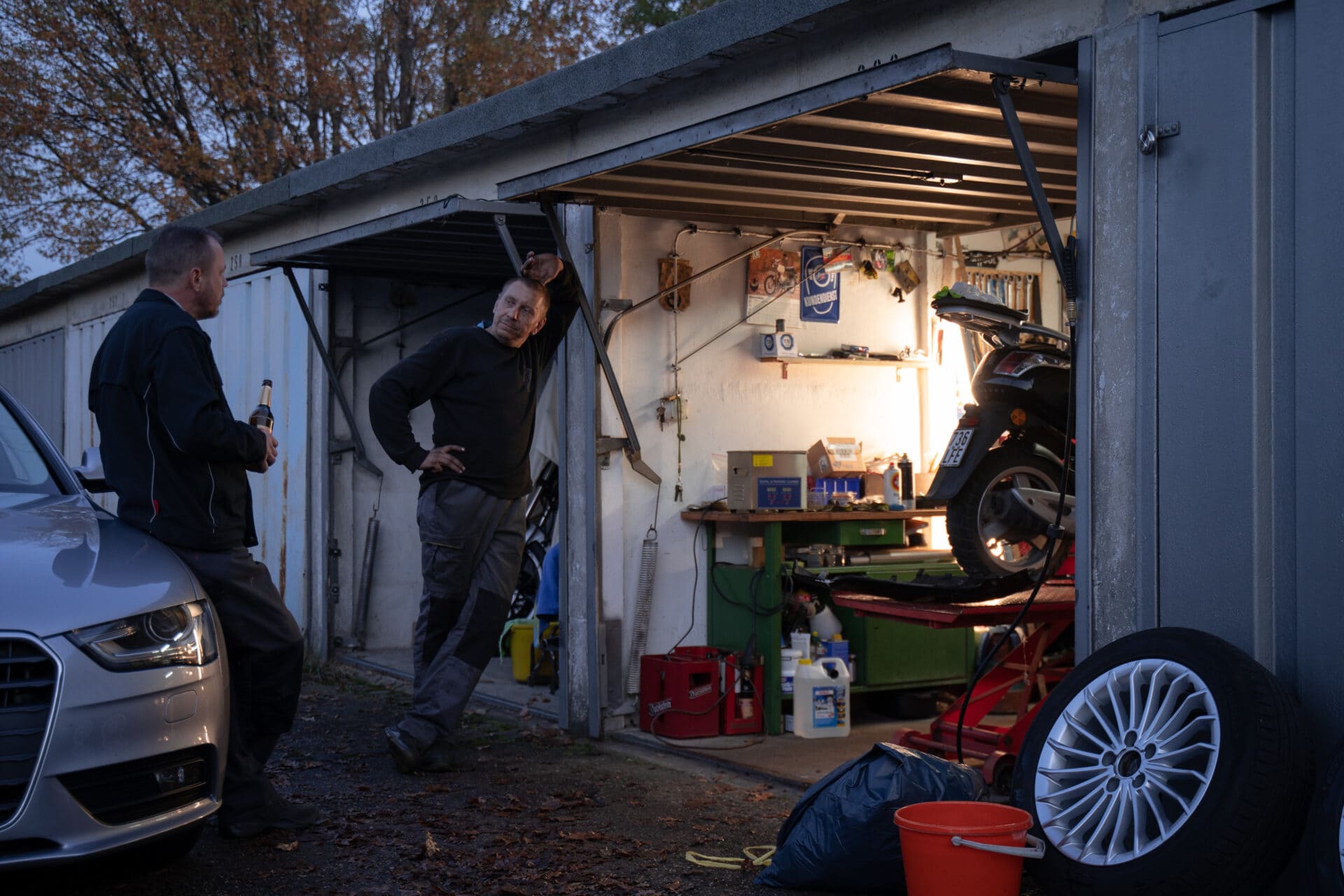
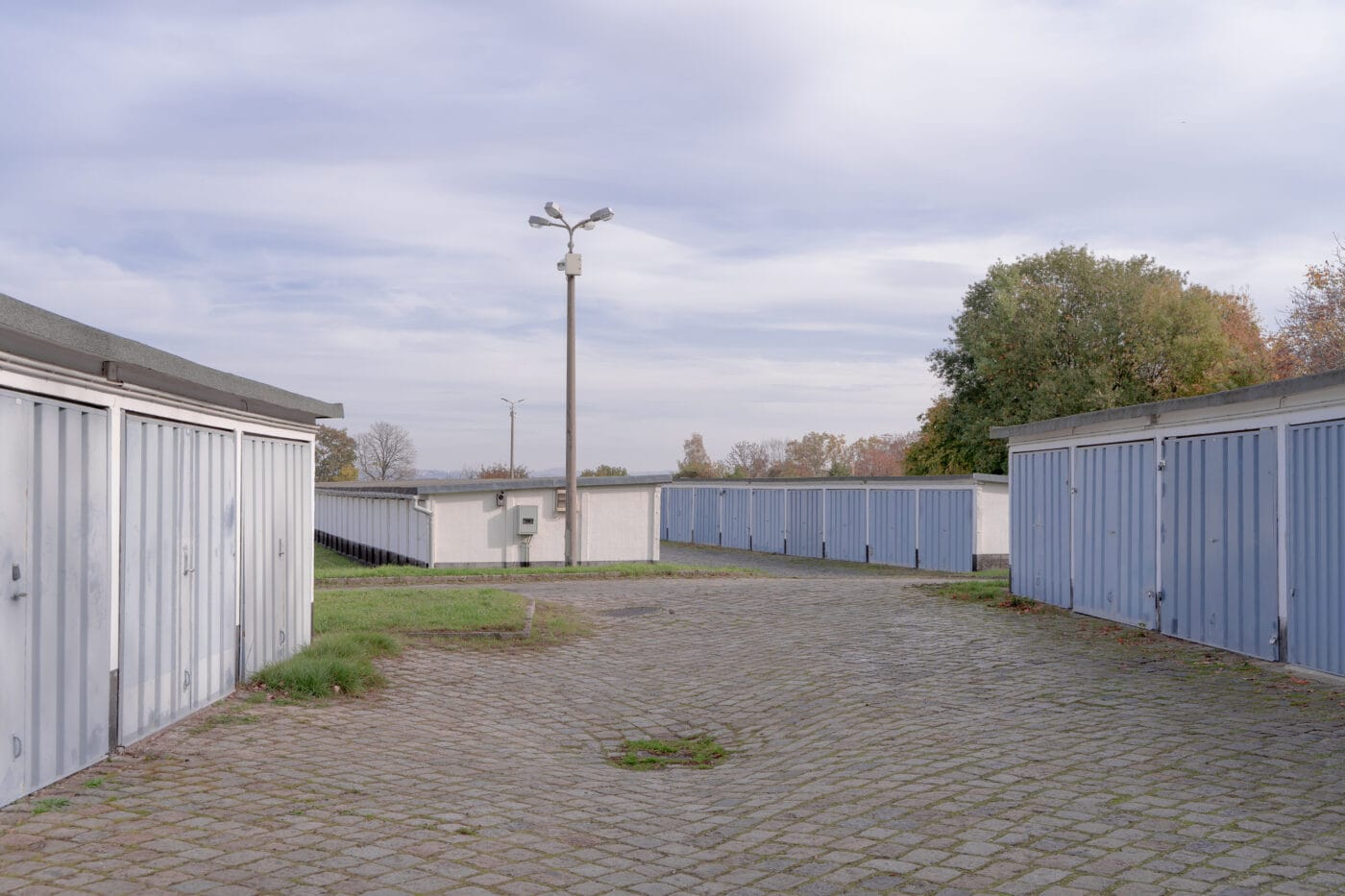
Once you start noticing them, you suddenly see them everywhere. They are in every larger town in eastern Germany, mostly on the outskirts. One grey concrete garage follows the next – hundreds of them, built to identical standards. The exact name for these GDR-era structures is ‘Typ I Dresden’. There is also a ‘Typ II Dresden’, which is slightly longer.
Almost all the garages have a pale blue metal door, often with an extra large lock welded on. That is how their owners try to foil the thefts they fear. The garages were all built in the 1970s in the GDR, and were often put up by their users themselves. So says the architect Jens Casper, co-author of the book ‘Das Garagenmanifest’, in an interview with Deutschlandfunk: ‘The housing association or the local council helped with getting materials and with financing. But the muscle power – the actual work – was very often done by people themselves.’
Having built the garages themselves, people also went there to look after their vehicles. Because there were fewer cars in the GDR, the network of repair shops was much smaller too. And even today many garages are still used by the same people who built them 50 years ago. According to Casper, this means people identify particularly strongly with their garages: ‘It is said that the new blocks of flats built at the same time often had no loft or cellar where you could let off steam. So activities that would normally take place in the home moved into the garages.’ It may sound surprising, but anyone who was ‘socialised in the East’ can tell stories from the garage courts: ‘To this day, people party there, drink beer and swap news.’
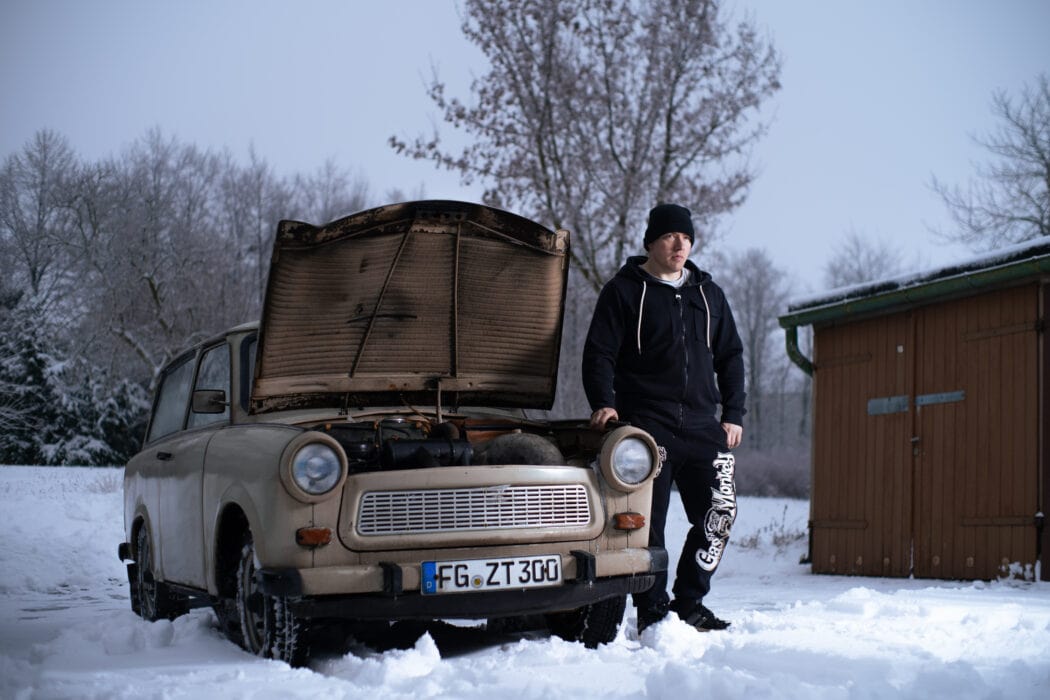
Uwe Möllentiert poses next to his Trabant. He owns several garages in Freiberg.
At the same time, though, the garage courts have become a source of conflict. They are rarely privately owned; they often belong to the local authority. And while the garages are a place of community for some – perhaps a space for nostalgia, too – they take up land that could be used for other things. That is the case in the Stern housing estate in Potsdam, where housing is urgently needed, or in the city of Jena. According to the broadcaster MDR, Jena decided, for example, that 200 old GDR garages should be demolished. In their place, so-called ‘climate oases’ are to be created – much to the annoyance of the garages’ current users.
But there is another way of dealing with the garages, as the city of Chemnitz shows. Chosen as a European Capital of Culture for 2025, it launched five flagship projects in preparation, one of them dedicated to the garage courts. Under the title ‘#3000Garagen’ the aim was to ‘make visible the personal and collective stories’ around the garages. As part of this, a concert was organised in one of the garage courts, for example. More than a hundred students from Munich University of Applied Sciences also came to research and map the GDR garages. A programme of events with numerous film screenings, gardening and art projects was planned.
For the architect Jens Casper, the garages are the site of a history that has yet to be written: ‘We see a shortcoming in the fact that our society is becoming ever more diverse and this diversification of society is not reflected in the landscape of listed monuments.’ He therefore argues for a different understanding of what counts as a monument: ‘You can’t see the garages merely as parking spaces for cars – they are much more than that and are good for much more. If they are described only as places to park cars, they are actually under-described.’
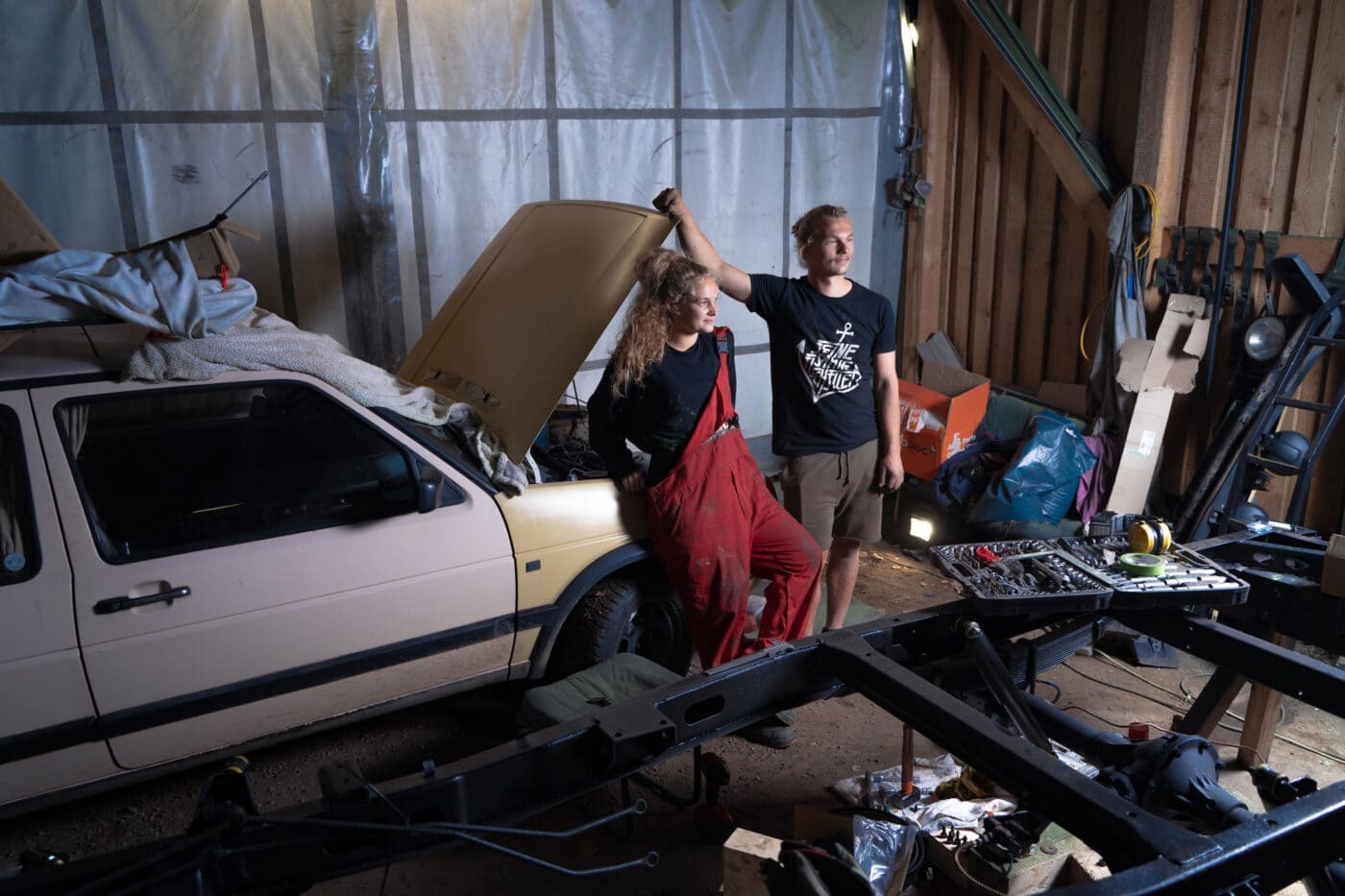
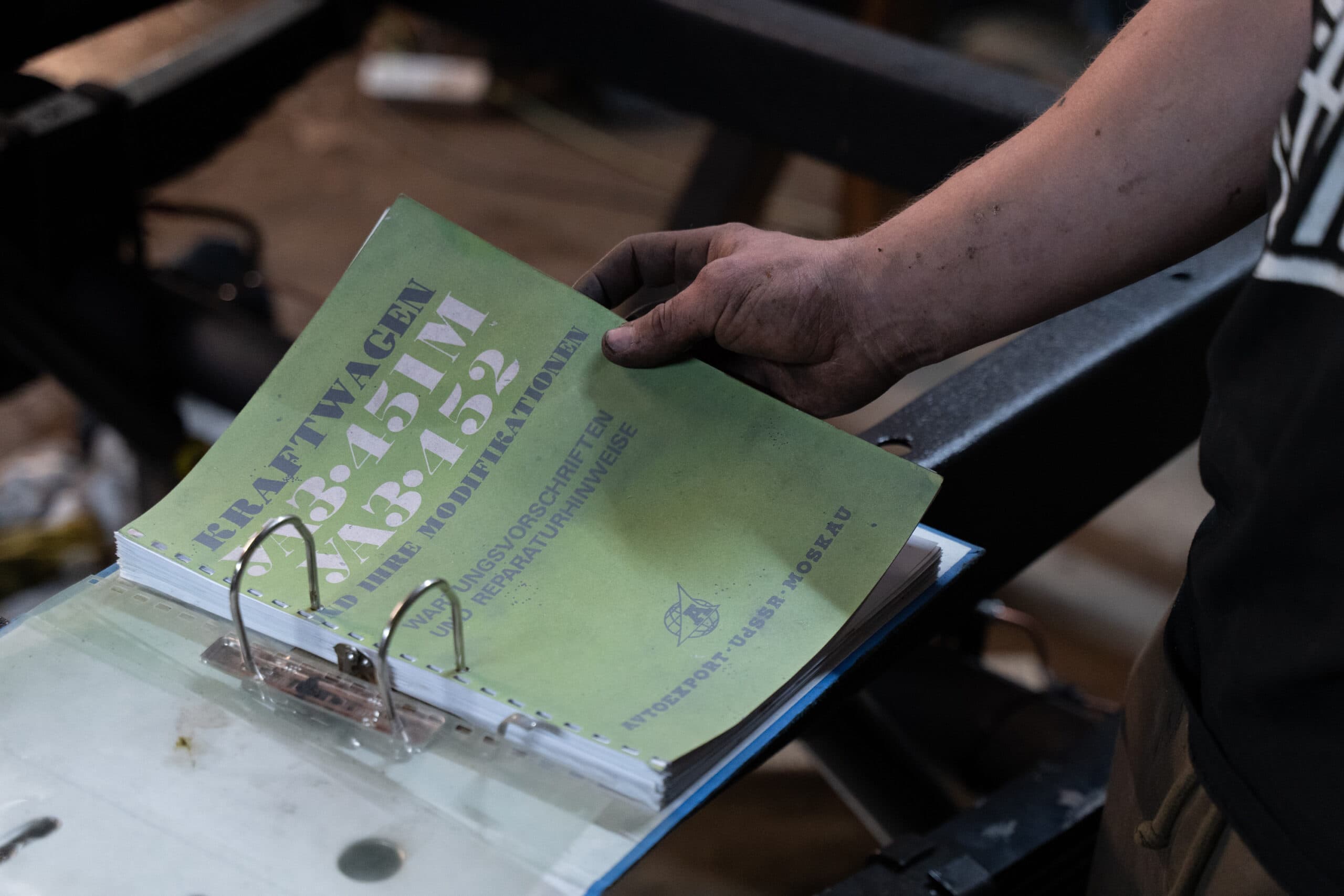
Moritz Lantzsch and his girlfriend pose next to a Golf II. Together they are restoring an old UAZ – at the moment not much more than a chassis. The abbreviation stands for Ulyanovsky Avtomobilny Zavod, a car factory founded during the Second World War that still builds vehicles today.
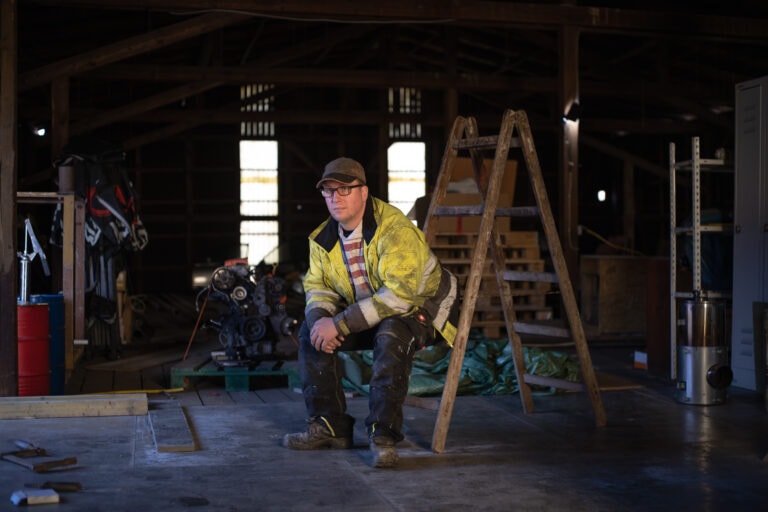
Stephan Thede in the loft of the barn garage he shares with several friends. They use the space to set up a small workshop.
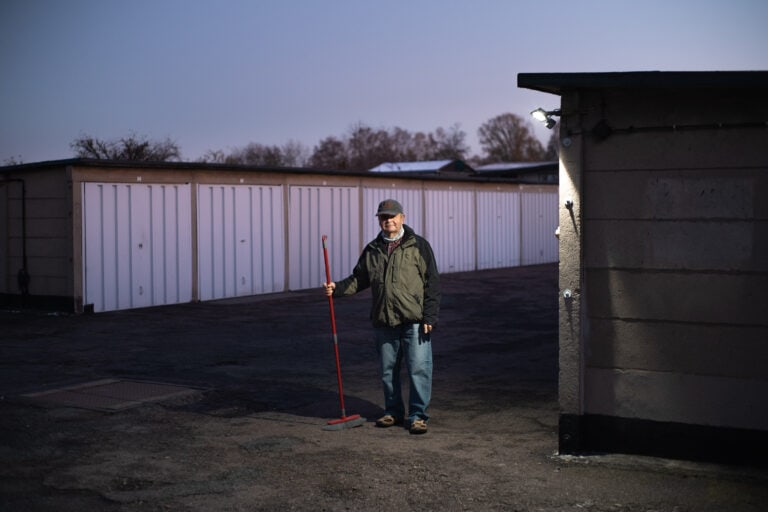
Mr Brösel is a member of a garage community in Dresden. His duties include cleaning the site.
 Fabrikstraße, Nossen
The repair manual for Moritz Lantzsch’s UAZ dates back to Soviet times.
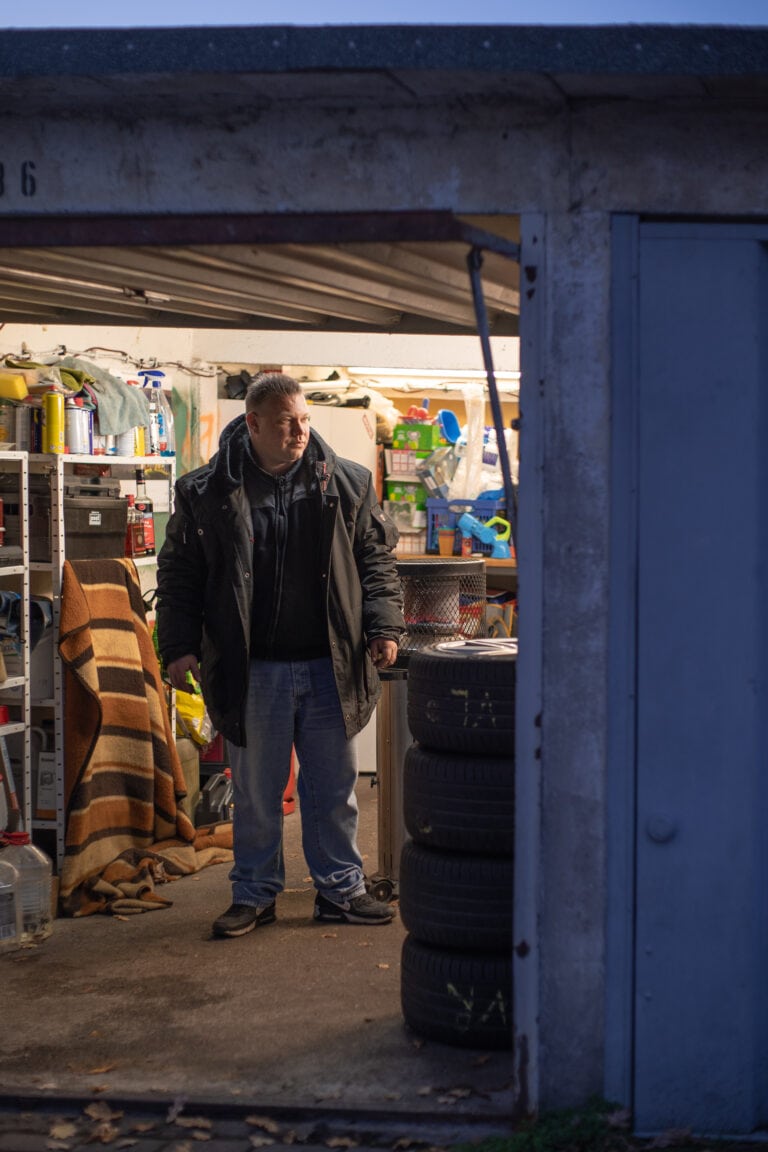
A garage owner surrounded by car accessories and stacks of tyres. Families and friends often get together here too, and then the children play in the garages and the lanes in front of them.
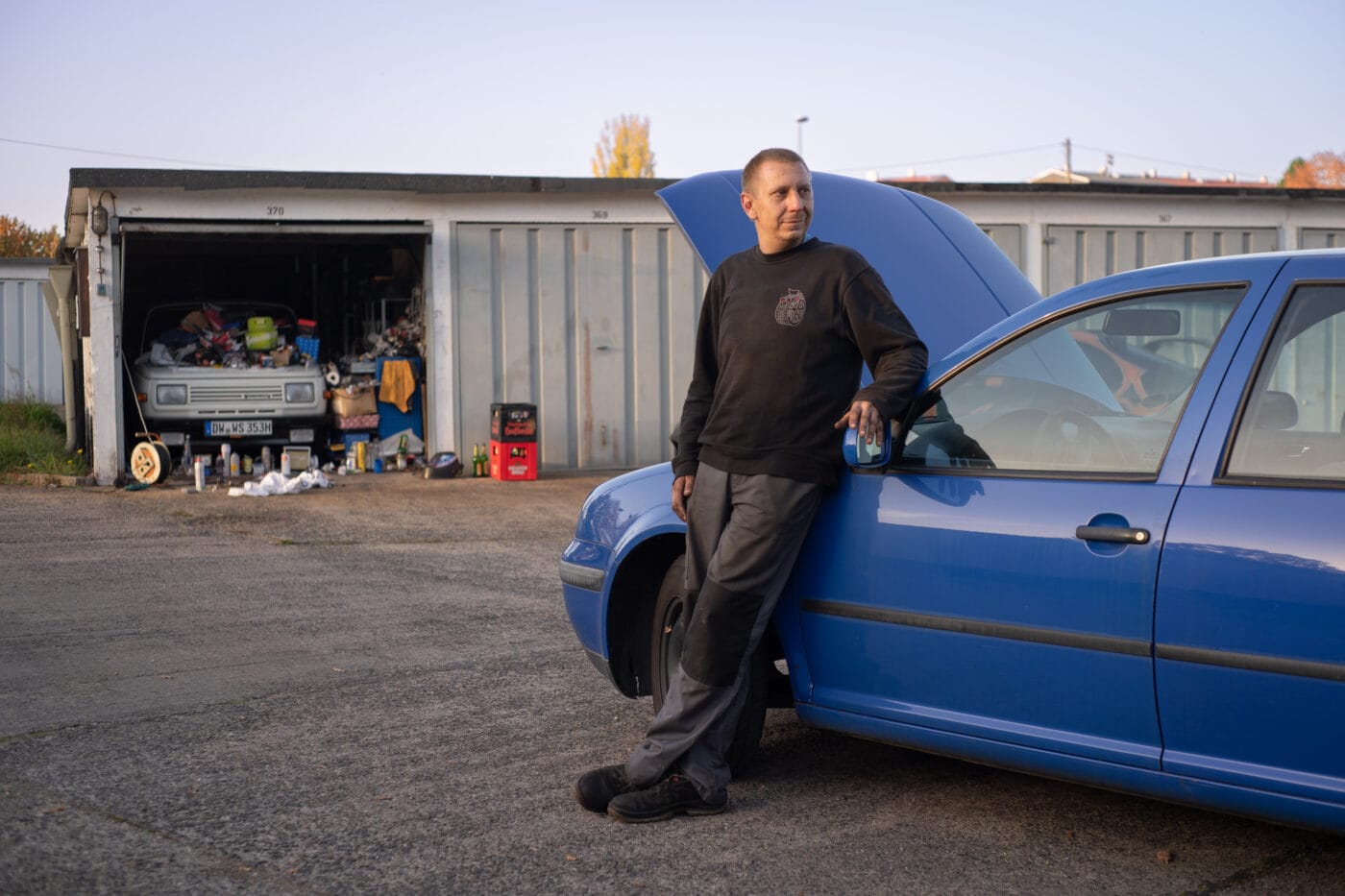
Tobi leans against his car. He parks here regularly in the garage court. The Wartburg in the garage behind him is his too; he bought it after the 2002 flood and restored it. He owns several garages in this and two other courts.
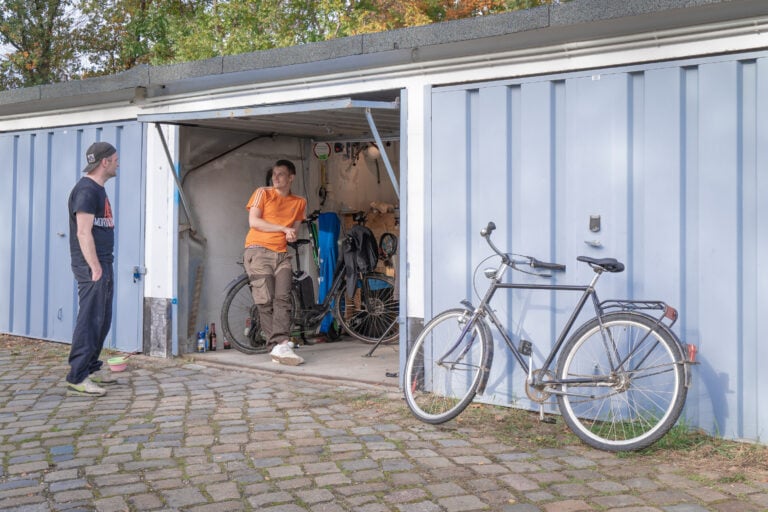
Tom (left) chats with a friend at the garage door. They mainly use the space to tinker with their bikes.
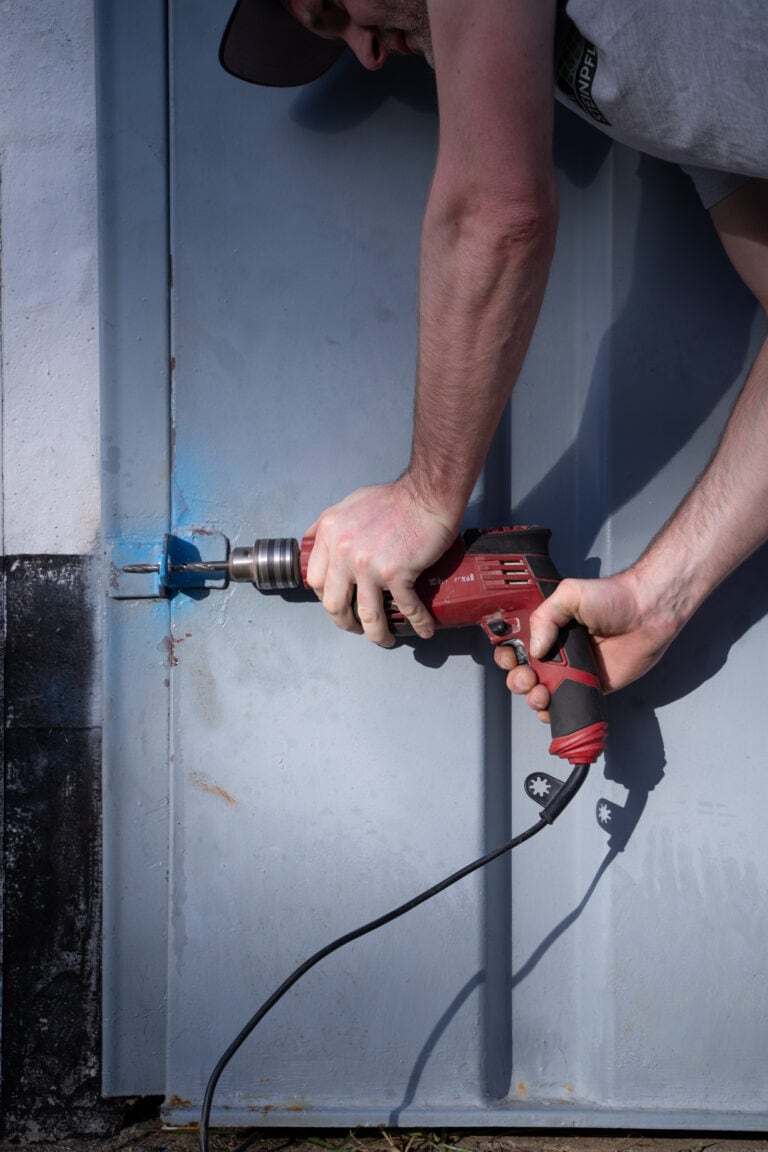
Tom is trying to use a drill to bore out the eyelets on his garage in Dresden so that he can fit a lock that keeps jamming.
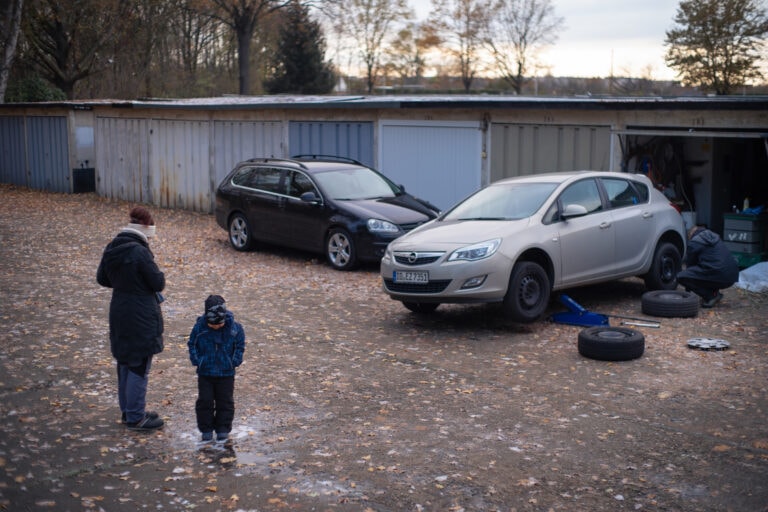
Mother and child wait while their neighbour fits winter tyres to their car.
‘People know each other, they’re in the same club, have a beer together now and then or help each other with repairs.’