‘Where have you taken me?’
Dementia doesn’t only make people forget – it can also make them feel more intensely. Sometimes what is left, above all, is anger at a world they no longer understand. Three people tell us what that means. By Frieda Gabke, Anna Daliah Behnke



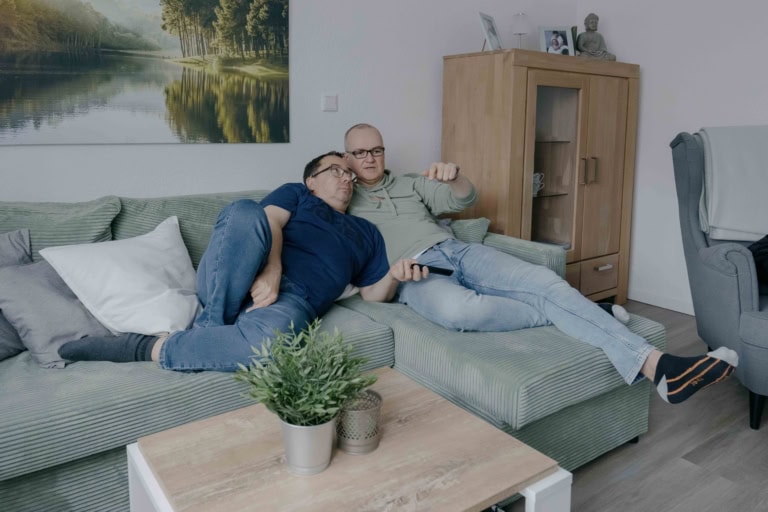
The phone is lying on the living-room table and the same Albanian folk song is playing yet again. Leonida Gashi has stopped counting how many times she has heard it this afternoon. Her grandfather sits in front of it, hands resting in his lap, eyes fixed on the screen. She asks whether he has eaten. He nods. The food on the table is untouched. Afternoons like this were typical of the two years Leonida’s grandfather spent living with her family, three generations under one roof. Looking back, they seem quiet – but appearances are deceptive. Anger was never far away.
After his wife died, Leonida’s grandfather became more and more confused. First he forgot keys and passwords, then bank transfers and names. He no longer knew whether he had paid his home helps. Some of them took advantage of this. Others complained that he was disrespectful: he resisted their help and became angry when they set limits.
When the family finally brought him from Kosovo to Germany in 2020, his dementia was already well advanced. He didn’t understand where he was, or why. ‘Where have you taken me?’ he asked again and again. Leonida began to look after him. ‘Somebody had to stay with him. I became his minder,’ she says. She was 15 at the time.
Over time, her grandfather became more and more emotional and unpredictable. If tablets were missing or things weren’t where he expected them to be, he would get angry and bang his fist on the table. Conversations could turn in an instant. Sometimes he tried to take a double dose of sleeping pills, and he lied to his family to play them off against each other. ‘When we realised he was being sneaky, he got really cross,’ says Leonida. The illness changed not only her grandfather but the whole family, which had to learn to live with his anger.
 Leonida Gashi
A different person
Insults, threats and physical aggression can all come with dementia. Most often, the people on the receiving end are relatives and carers – the very people who look after those with the condition and want to help.
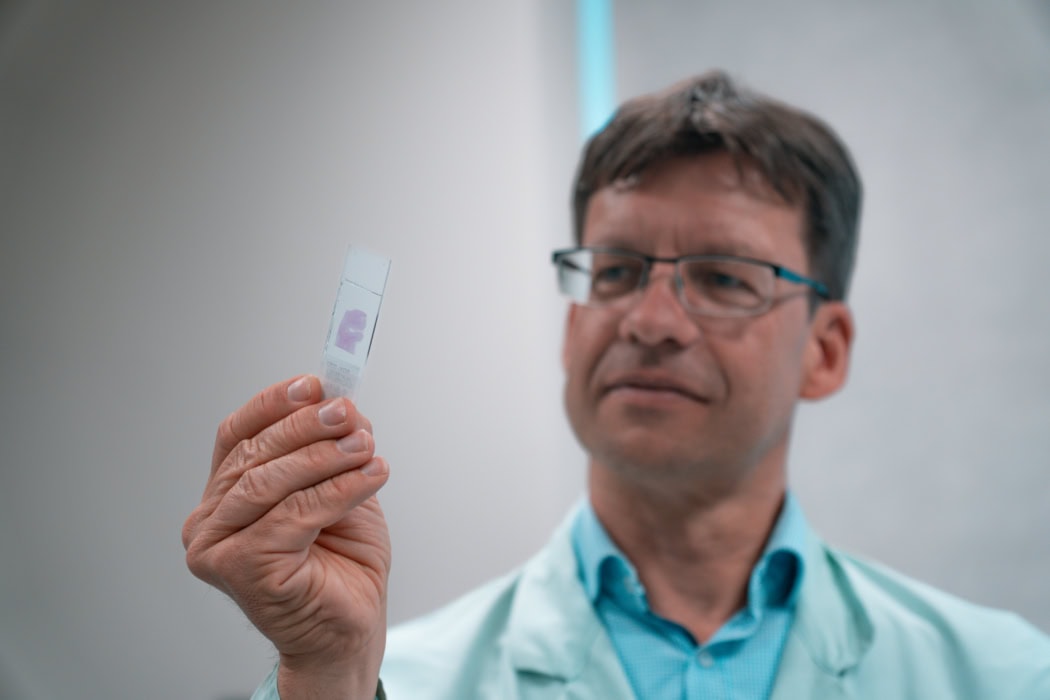
The biochemist Dr Norman Koglin, who researches imaging techniques for the early diagnosis of Alzheimer’s, says this is not a question of character. ‘There are areas of the brain that drive emotions and others that hold them in check,’ he says. ‘When these control mechanisms stop working, people can become aggressive or impulsive.’
A brain affected by dementia processes stimuli differently, he explains. Often it can only take in one thing at a time. A television in the background or several people talking at once can be enough to overwhelm someone. ‘The brain can compensate for a long time,’ says Koglin. ‘But at some point the areas that make up for the damage stop working too.’ The anger that relatives experience, then, is the result of parts of the brain falling silent.
A look inside the brain
According to a prevalence study from 2010, 52 per cent of people living in care homes in Germany had dementia. Because the population is ageing, the German Alzheimer’s Society expects between 2.3 and 2.7 million people to be living with the condition by 2050. The risk of dementia rises sharply with age. The fact that two thirds of those affected are women is mainly down to their higher life expectancy.
Companies and research institutes around the world are working to make pathological changes in the brain visible long before the first symptoms become noticeable in everyday life. At Lantheus Germany, researchers develop radioactive tracers which, once injected, spread through the body and accumulate wherever amyloid plaques have formed in the brain. These protein deposits are regarded as an early sign of Alzheimer’s disease. Conventional methods such as CT or MRI cannot detect them at an early stage – PET scans can.

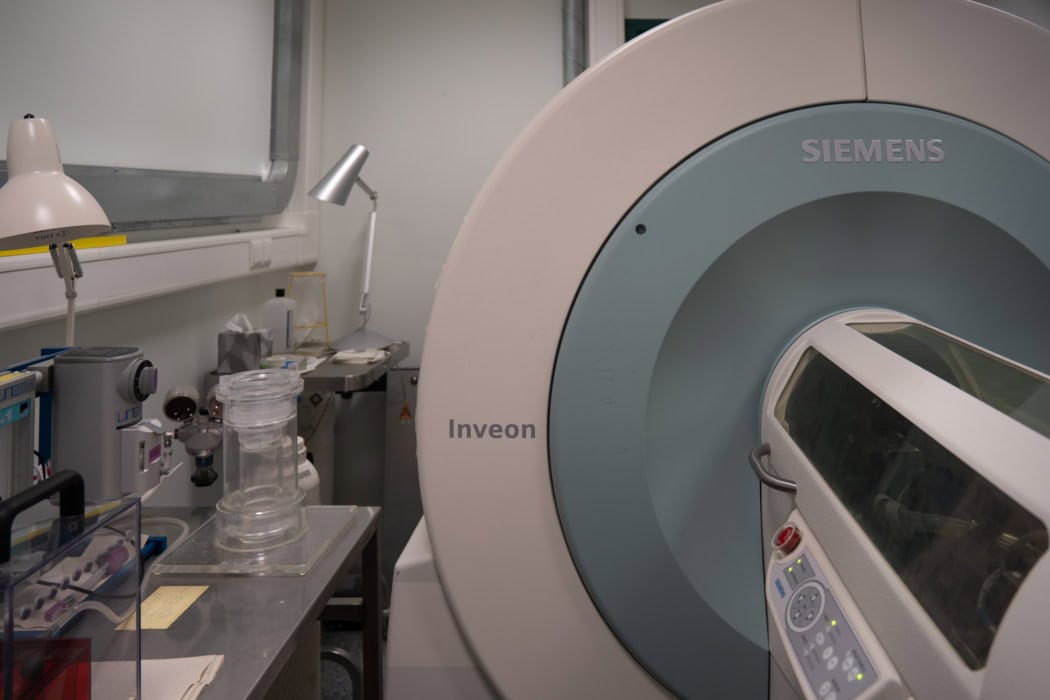
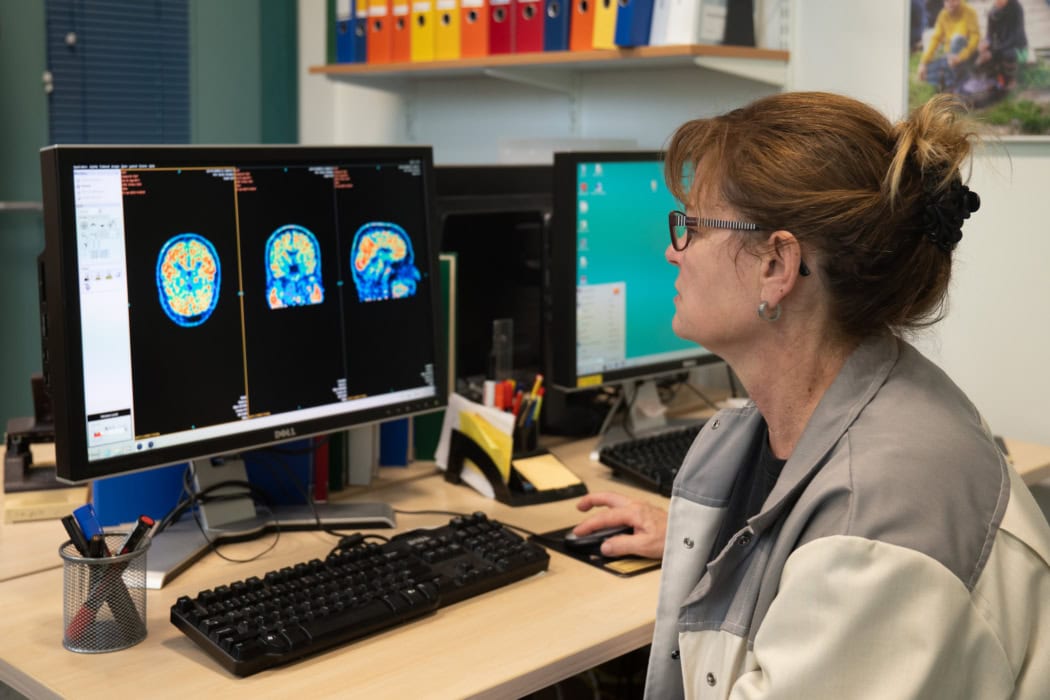

‘And that’s exactly where the hope lies,’ says Koglin. ‘In spotting something early enough to still be able to intervene.’ There is still no cure for dementia. In recent years, however, antibodies have been approved that can break down the deposits – provided they are used early enough. At an advanced stage, when nerve cells have already died, the benefit is small. Early detection is therefore a precondition for effective treatment.
The scan is approved in Germany but is not yet covered by statutory health insurance. Depending on the circumstances, it costs several thousand euros.
In another world
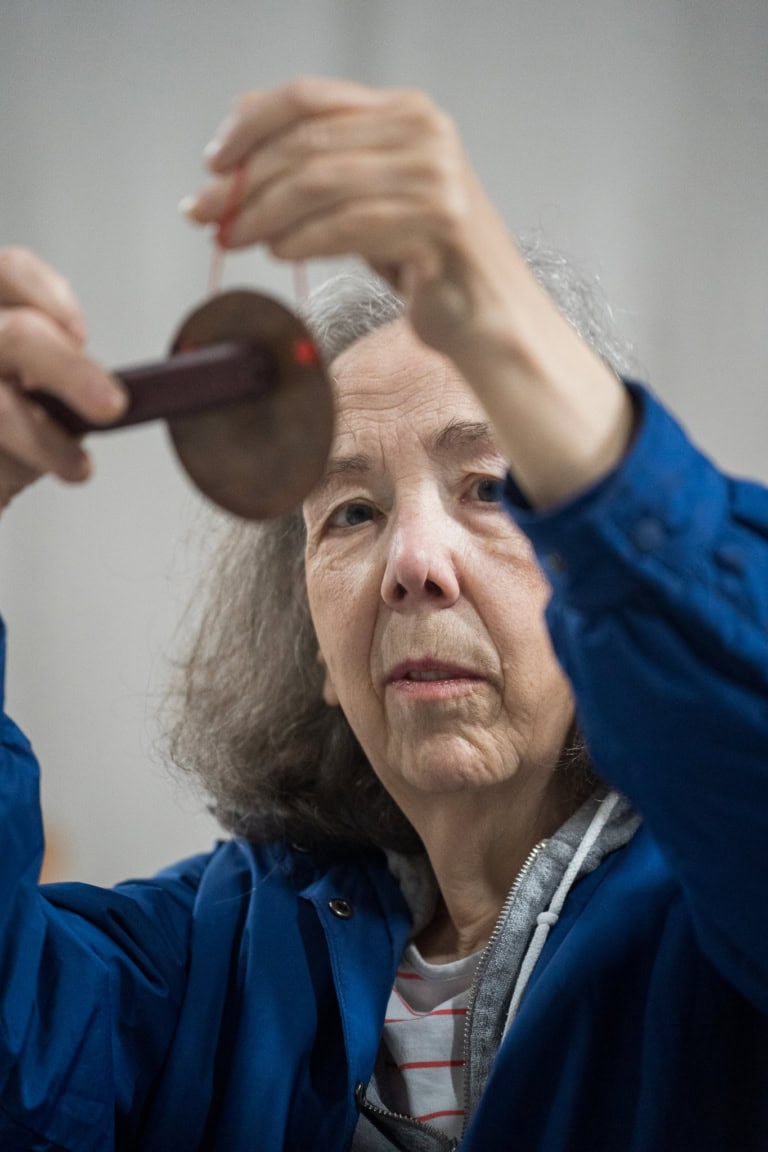
The dancer Ulrike Wallis has spent years working with care-home residents with dementia in Hannover. ‘These people haven’t gone anywhere,’ she says. ‘The only question is: which world are they living in?’ Her approach is to use movement, sound and facial expression to find out which channels can still reach them.
One afternoon in St Michael’s Church, soft daylight falls on lilac walls. The sound of gongs fills the room as Wallis quietly sings along. Evangelina, who has had dementia for several years, sits on a wooden chair with her eyes closed. Her hands move slowly. Wallis mirrors her movements, waits, responds to every small gesture. As they make music together, Evangelina grows still; for a moment she seems completely herself – as if the world of music could reach something that words stopped reaching long ago.

Outside these moments, though, the lives of people with dementia are often governed by fixed routines. When a carer later tries to help Evangelina get changed, her mood suddenly shifts. She pulls her arms away, her voice rises, her movements become more agitated. ‘I can’t stand that man,’ she says. ‘I despise him.’ It is in the most ordinary situations – washing, dressing, taking medication – that the anger of people with dementia flares up most often. In all of these moments, their sense of control and of where they are is at stake.
They say there’s something wrong with my head. But I don’t believe them.
 Evangelina B.
Wallis has often come across reactions like this in her work. Once, she recalls, she simply walked into a client’s room, greeted her warmly and sat down on her bed. ‘That was clearly overstepping the mark,’ she says now. ‘She didn’t know me, and I sat down on her bed.’ The woman lashed out at her. At the time, Wallis didn’t understand why. Now she knows that good intentions are no excuse for barging uninvited into someone else’s world. ‘What it takes is empathy – putting yourself in the other person’s shoes, even when their reality sometimes seems absurd to us.’
She has learnt to work with these realities rather than correct them. If a client suddenly sees little green men walking across the path, she goes along with it. ‘Thanks to my experience in theatre, I can respond straight away,’ says Wallis. She doesn’t have to say it’s nonsense. She can simply play along. ‘And just like that, I’ve made contact with her.’

When anger isn’t intentional.
Five tips for relatives and carers
- Don’t take it personally:
Whether the attacks are verbal or physical, aggressive reactions are usually not consciously aimed at anyone. They are the result of a brain that can no longer interpret and process stimuli in a socially acceptable way. Keeping an emotional distance from the situation is necessary and helpful. - Arguing gets you nowhere:
Debating with someone who has dementia is pointless and often makes conflicts worse. Rather than correcting what they say, it is often more helpful to respond to their feelings and calm the situation down. - Stay calm:
People with dementia are often sensitive to mood, body language and volume. Calm movements, a friendly expression and a quiet voice can help to reduce stress. - Look for the cause:
There is often a specific trigger behind aggressive reactions – pain, fear, feeling overwhelmed or sensory overload, for example. So it can help to look for possible reasons for the behaviour rather than simply reacting to the situation itself. - ‘Good enough’ beats ‘perfect’:
Perfection is all but impossible when you are caring for someone with dementia. Relatives and carers need breaks, support and realistic expectations of themselves.
These tips are based on recommendations from the German Alzheimer’s Society and from Professor Dietrich Grönemeyer, a well-known doctor who holds the chair of radiology and microtherapy at Witten/Herdecke University.
What remains in the end
Wallis describes her way of working with people with dementia as ‘empathetically putting yourself in their shoes’. Leonida has no name for it. She simply listened to her grandfather. Even so, she considers dementia one of the most terrible illnesses there is – not only because of the forgetting, but because of the slow yet complete transformation of a person. Her grandfather died at home of a heart attack. ‘Alongside the grief there was also relief,’ says Leonida. ‘For me, my grandad hadn’t been my grandad for a long time. He was just someone who needed care.’ That is why, she says, his death was also a release.
My sister often got really angry when Grandad didn’t recognise her. I always told her: don’t make it about what you’re losing. For him it’s much worse.
 Leonida Gashi
Despite these draining experiences, Leonida, now a student, remains open to people with dementia. The fear of the illness remains, though. The thought of one day no longer recognising her children or her partner is one of Leonida’s worst nightmares. And yet she has taken something away from the years with her grandfather: how much patience it takes not to reduce people to their moments of anger.
Editor’s note Some names and situations have been changed to protect the privacy of those involved. The Alzheimer’s helpline of the German Alzheimer’s Society (Alzheimer-Telefon der Deutschen Alzheimer Gesellschaft) offers nationwide advice for relatives, people with dementia and anyone interested on 030 – 259 37 95 14.