Narcolepsy: when sleep becomes an illness
Sudden attacks, hallucinations, leaden tiredness: student Livia Sommer looks for answers in a sleep lab.
By Antonia Röhrer (text), Anton Vester (photos)


It feels like chewing gum. Like chewing gum stuck to the inside of her skull. Livia Sommer* is trying to fight off an approaching sleep attack. The gum stretches longer and longer; she tries to stick it back with her thoughts and so stay awake. It doesn’t work. At some point there’s a ‘pop’ and the gum comes away from the bone. A feeling as if worlds were blurring. She is aware of what’s happening around her, and at the same time she is dreaming. Sommer falls asleep – in the middle of the university library in Hannover’s city centre. Yet again.
 Hannover, June 2024
Student Livia Sommer (name changed) in the TIB university library – she has often suddenly fallen asleep here while studying.
The feeling that feels like chewing gum is nothing new to her: sleep now governs Sommer’s everyday life. She falls asleep several times a day, wherever she happens to be – in lectures, at work, in the car. Around 40,000 people in Germany who have narcolepsy suffer similar sleep attacks. Now the neurological disorder is a possibility for the student too. That’s why today Sommer is heading to one of the three neurological sleep labs in Lower Saxony: the one at Lindenbrunn Hospital in Coppenbrügge. In one of the clinic’s two beds, doctors will test tonight whether Sommer, as suspected, has the ‘sleeping sickness’.
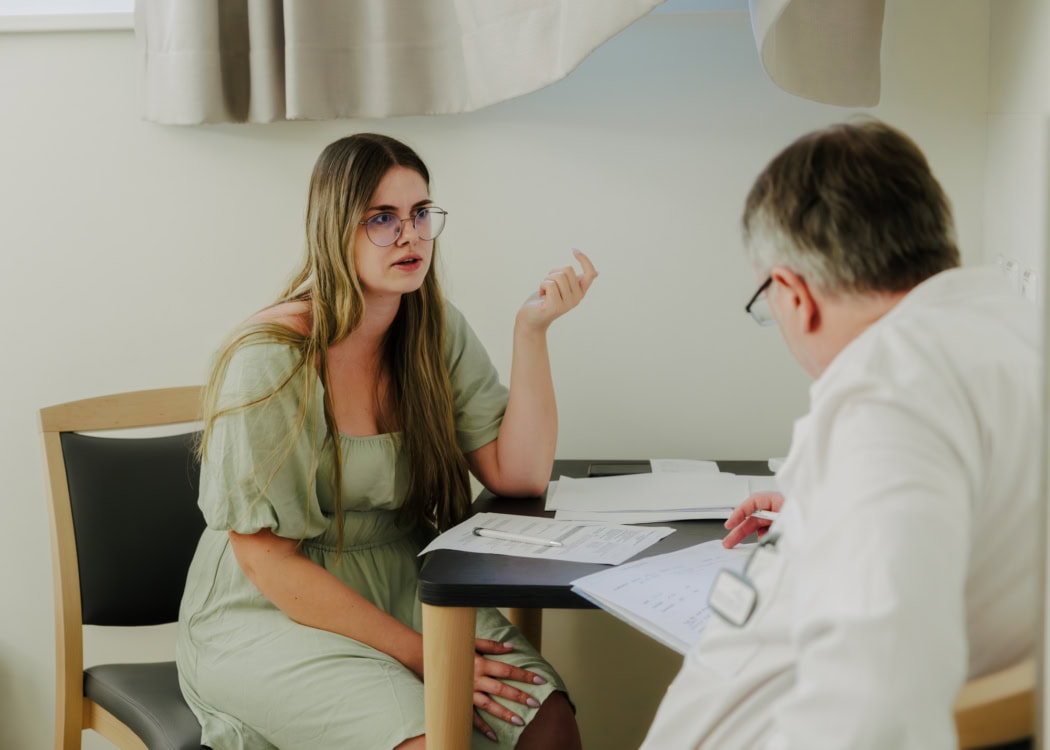 Coppenbrügge, Lindenbrunn Hospital sleep lab
On the first day of her hospital stay, head of department Dr Evers conducts the admission interview and explains the tests ahead.
At the moment I’m in a solid, middling-to-bad phase. When I got the appointment here last year, I thought: I hope I don’t die before then.
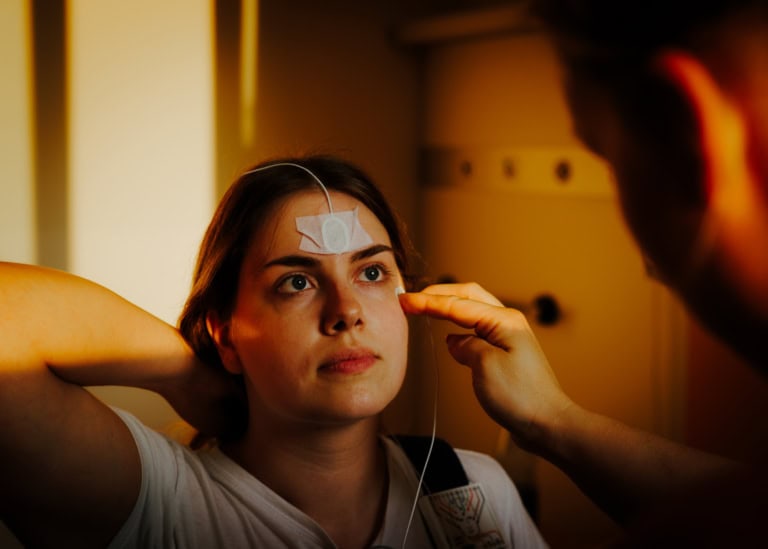
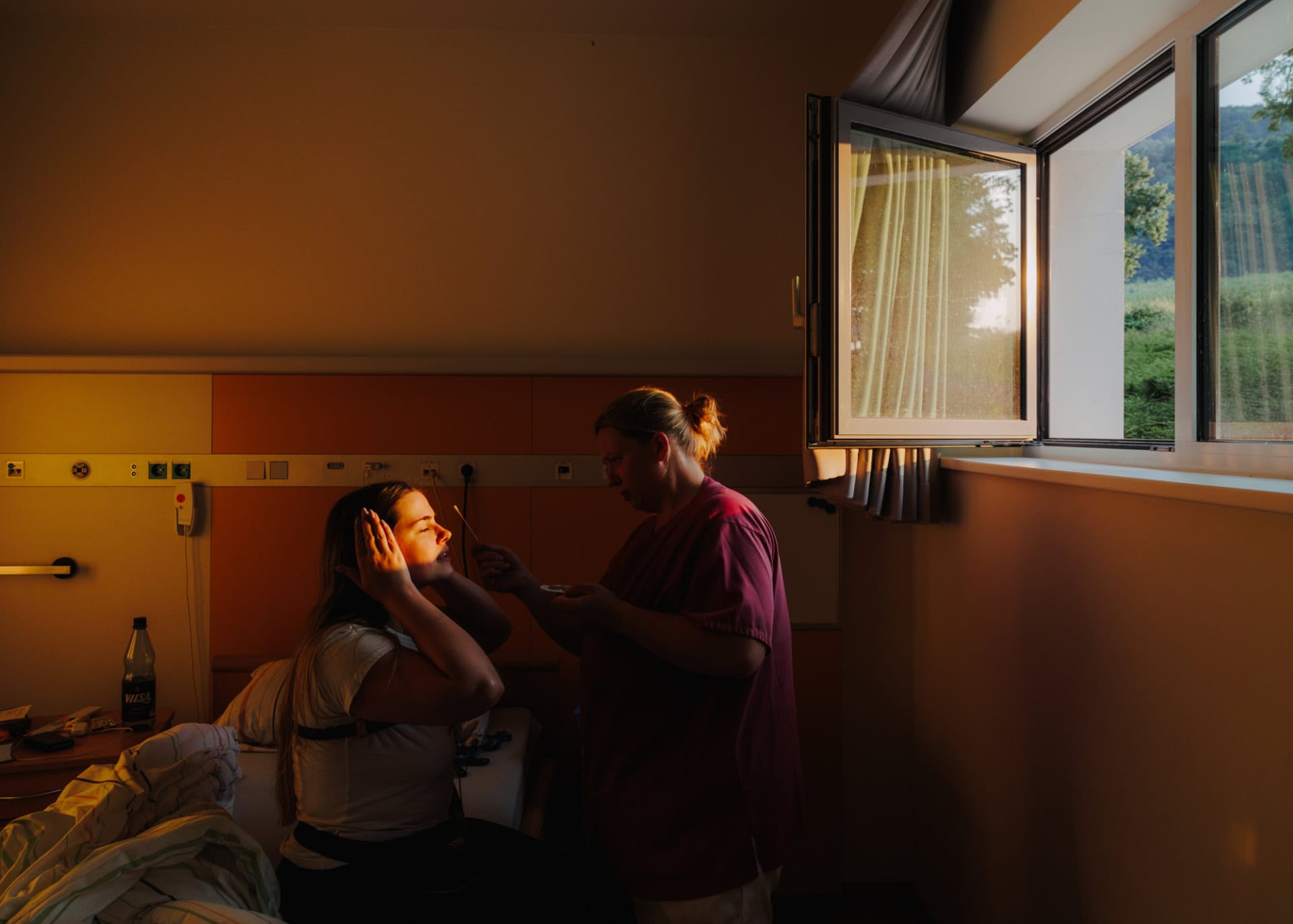
Nurse Marie Drebing attaches the first two electrodes around the eyes – they measure Livia’s eye movements while she sleeps.
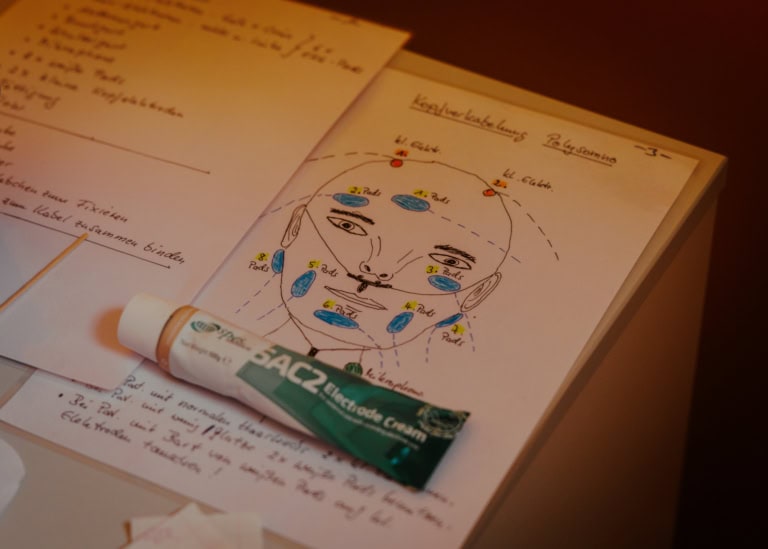
As a reminder of how to wire up the head, nurse Marie Drebing uses a sketch.
Sommer is being wired up. The 24-year-old sits on the edge of her bed in the sleep lab in a T-shirt and pyjama bottoms. It’s 8 p.m., and everything is ready for the polysomnography, the examination that will decide part of Sommer’s future. ‘Degreasing, roughening, optimal conductivity’ it says on the cream that nurse Marie Drebing is applying to her face. Next come the white adhesive electrodes: one on the chin, two behind the ears, two either side of the mouth, one on the forehead and two above and below the eyes. Belts are fastened tightly around the patient’s body – as tightly as is comfortable – because the sensors in them will measure her breathing overnight. Next step: plaster in her hair. The nurse takes a green and an orange cup electrode and presses them on. They measure the student’s brain activity while she sleeps. Drebing runs a cable around Sommer’s head to just below her nose: a small device there measures whether she breathes through her mouth or her nose. A microphone next to her larynx, electrodes on her legs, and done. Not much of her face is visible any more: her nose peeks out between the cables and her glasses.
Microsleep: too tired to drive
‘At the moment I’m in a solid, middling-to-bad phase. When I got the appointment here last year, I thought: “I hope I don’t die before then,”’ says the student. For almost three years she has been unable to control when she falls asleep during the day. She has sleep attacks almost every day: she nods off whenever her body decides to, helplessly at the mercy of her own sleep. The attacks usually last between five and 20 minutes, and on bad days they happen several times. ‘The thing is, there’s absolutely nothing I can do to stop myself falling asleep,’ she says. Sommer has tried a lot: caffeine, walking around, keeping busy. But all these strategies only delay falling asleep. That’s when it can get really dangerous. ‘Sometimes I had to stop while driving because otherwise I’d have ended up in a ditch from tiredness. Now and then I had microsleeps too,’ says Sommer. That’s why she now prefers to keep her foot off the accelerator. Driving without medication could even have legal consequences. If the student were diagnosed with narcolepsy, that could change – because the symptoms of the neurological disorder can be treated with tablets. ‘I hope I get the diagnosis. Then at least I’d have an answer and, with the medication, could take part in life a bit better again,’ says Sommer.
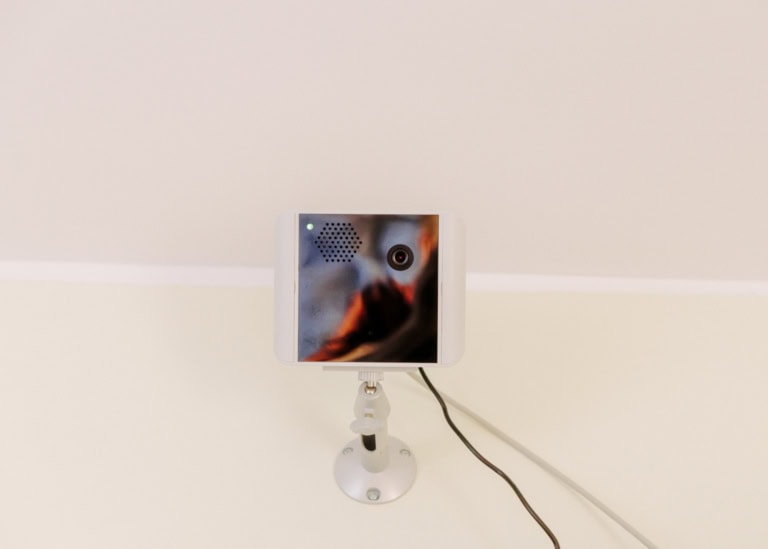
The patient’s room is recorded by a live camera throughout the polysomnography. The images provide information of their own that can later be revealing alongside the measurements.
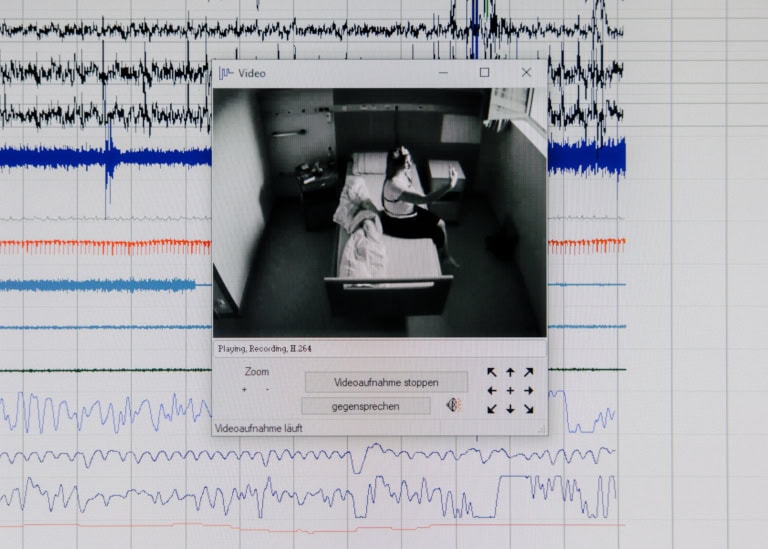
The measurement begins in the sleep lab: Marie Drebing checks the electrodes. Brainwaves, breathing, and eye and leg movements are among the things measured. The monitoring image shows the patient looking at herself on her phone for the first time.
Nurse Drebing presses a black button on the box on Sommer’s stomach to which all the cables are connected. Recording begins. Sommer is now under full observation; the camera above the bed also records every single movement she makes. ‘The measurement will get going within ten minutes,’ says the nurse. The camera transmits its footage to the computer in the next room. The measurement is just starting there: coloured lines trace across the screen from left to right. Heart rate, breathing and Sommer’s brainwaves. In the middle of the screen: the patient in black and white, looking at herself in her smartphone’s front camera. Drebing clicks through the system to check that the electrodes are picking up all the signals. ‘Everything’s green and every line is visible. That means it’s all recording. I’m happy,’ she says. Now it’s airplane mode on, and time for bed.
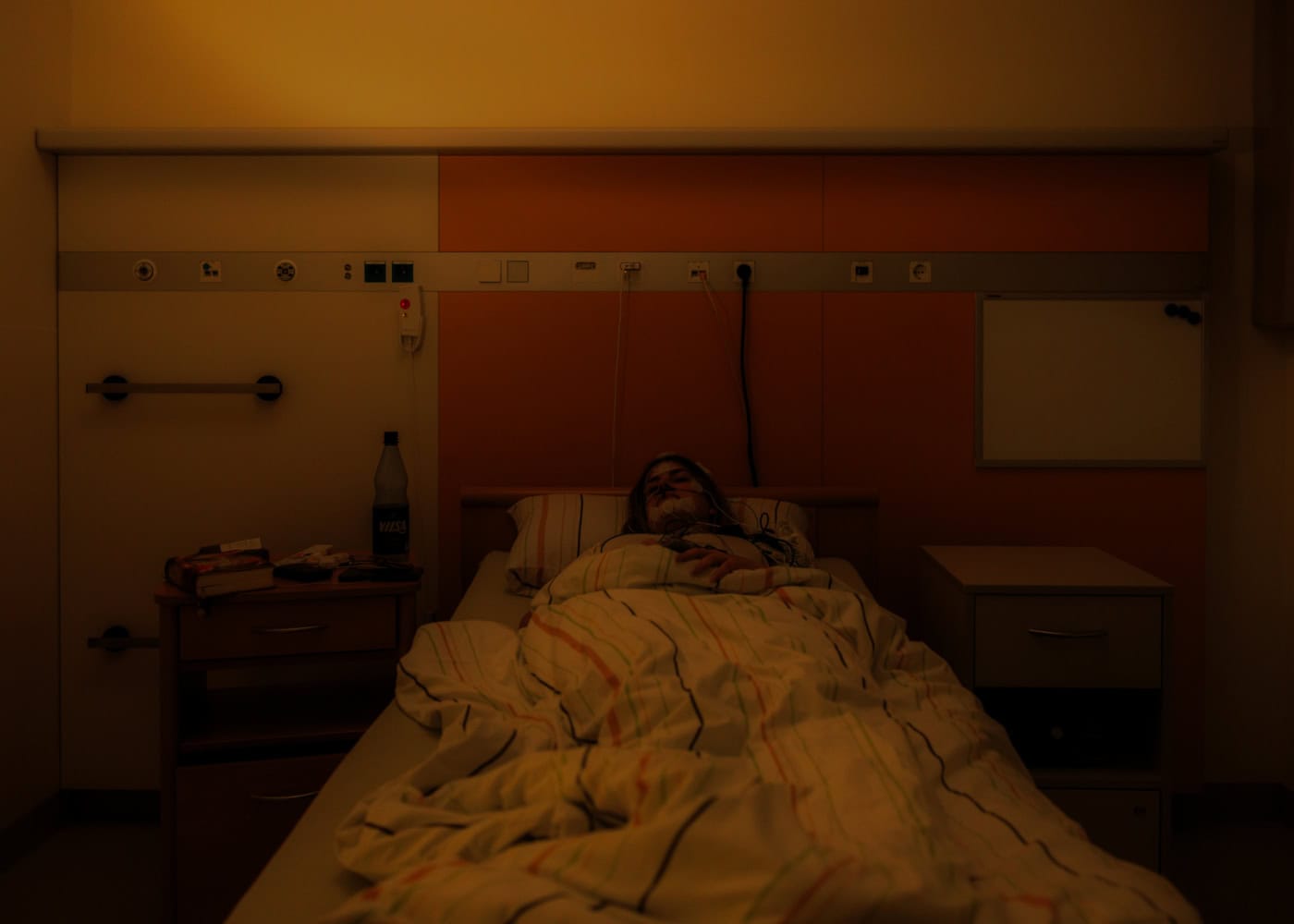
As the recorded data shows, Livia fell asleep at 10.22 p.m. on the first evening.
When I fall asleep, I’m still aware of what’s going on around me, but at the same time I’m somehow already dreaming. The two mix in a very strange way.
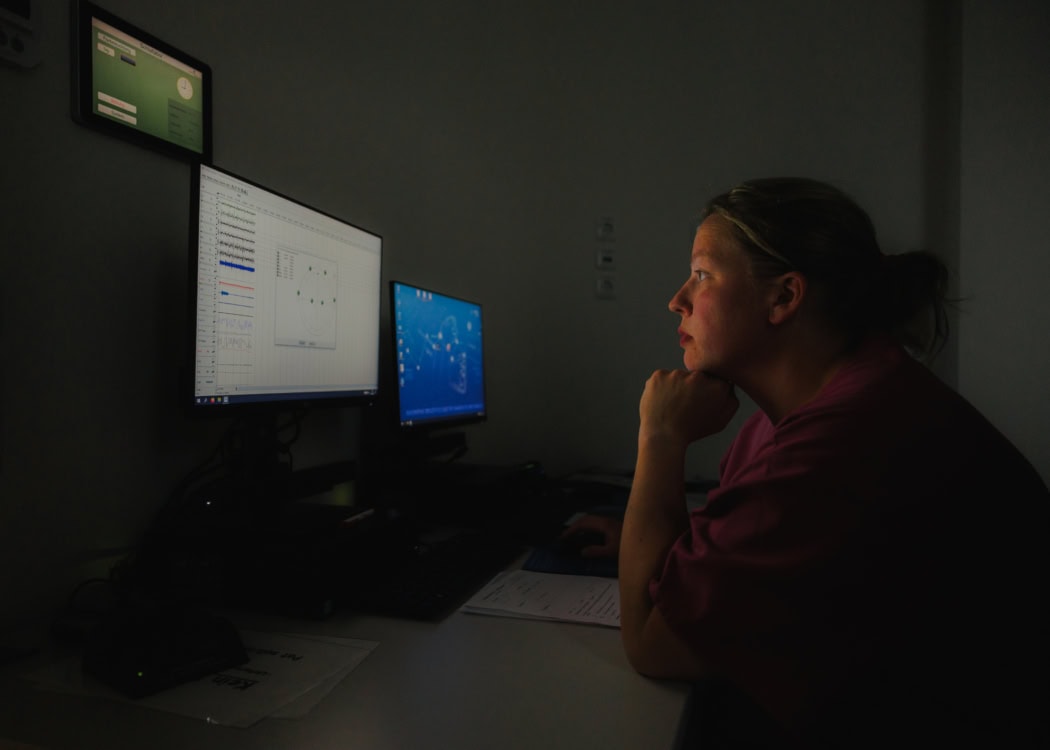
Nurse Marie Drebing checks whether the electrodes are picking up signals. The first impression is confirmed: all the electrodes are transmitting data.
Hypnagogic hallucinations: Sommer sees things that don’t exist
‘When I fall asleep, I’m still aware of what’s going on around me, but at the same time I’m somehow already dreaming. The two mix in a very strange way. I perceive things that aren’t actually happening, or I see things for real that are actually happening in my dream,’ says Sommer. These are called hypnagogic hallucinations – typical of narcolepsy. Also typical: the sleep attacks. However, Sommer sleeps well through the night, which is usually not the case for people with narcolepsy. ‘I didn’t know that sleeping through the night could be a problem,’ she says. Another missing symptom is cataplexy – a sudden loss of muscle tone in which people collapse when they feel strong emotions.
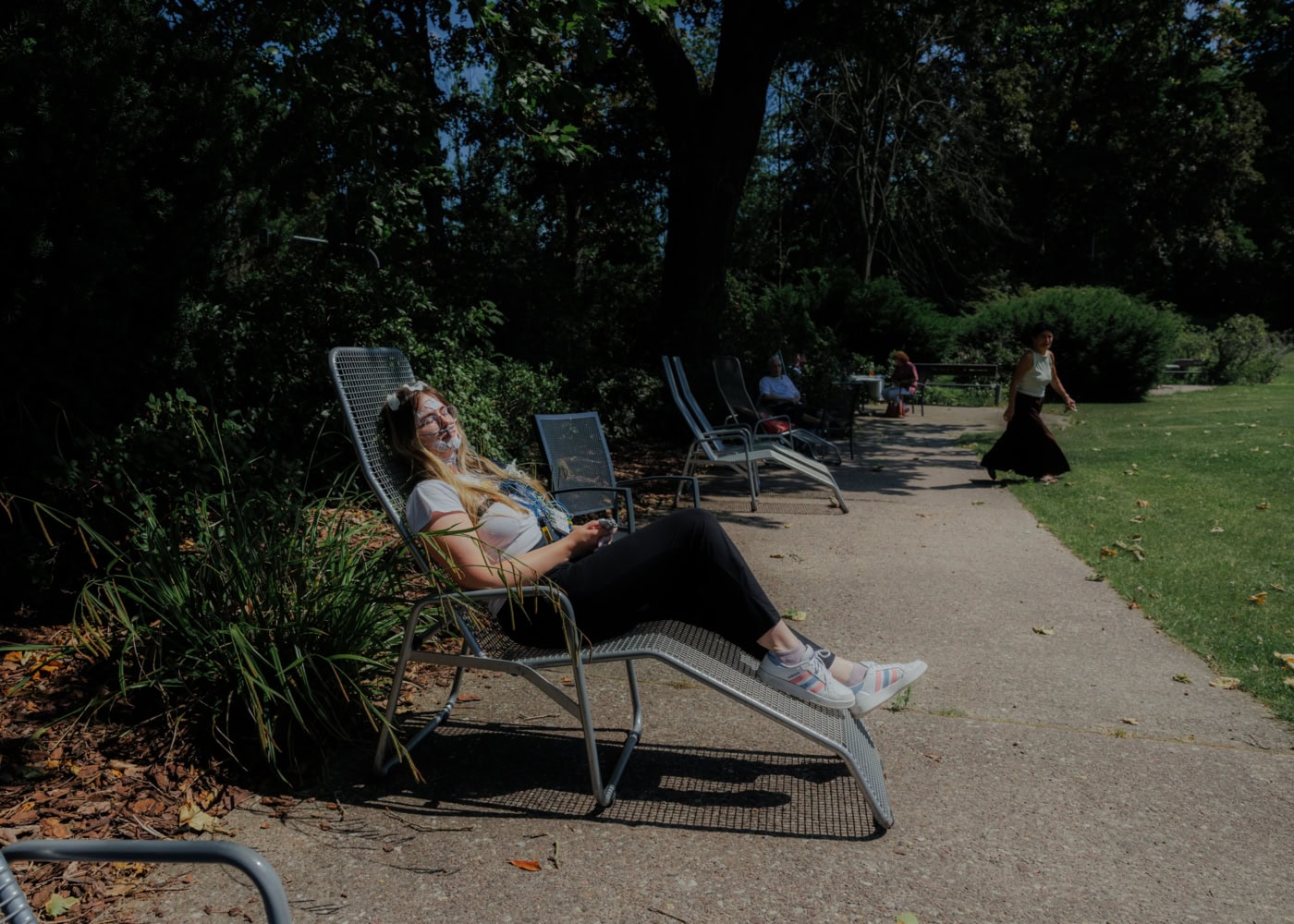
On the second day another test is carried out: Livia has to try to sleep five times, for 30 minutes each, with 90-minute breaks in between. In the picture she is taking a break in the clinic garden.
The next morning, 11.22 a.m. Sommer has completed the polysomnography. Today it’s a multiple sleep latency test: five times, she has to lie down to sleep for 30 minutes each. She has already done the first round, and now Dr Kirsten Wolfgramm, senior consultant in neurology, is analysing the results from the night. ‘The recordings were good, but you don’t have an early REM phase, as would be the case with narcolepsy,’ the doctor says. Rapid eye movements behind closed lids: that’s what characterises a REM phase. On screen, Dr Wolfgramm goes through the night’s recording step by step – the REM phases only come later. Many of the symptoms fit narcolepsy – but many don’t. ‘Could you stay another night after today’s tests?’ Dr Wolfgramm asks. Sommer can.
*Name changed