Heimwegtelefon: how the walk-home phone line works
A voice in your ear that stays with you until the door clicks shut behind you – how volunteers help people get home safely.
By Pia Lotta Gruse


Photo (posed): Annabel Karmelk, Isabel Reda
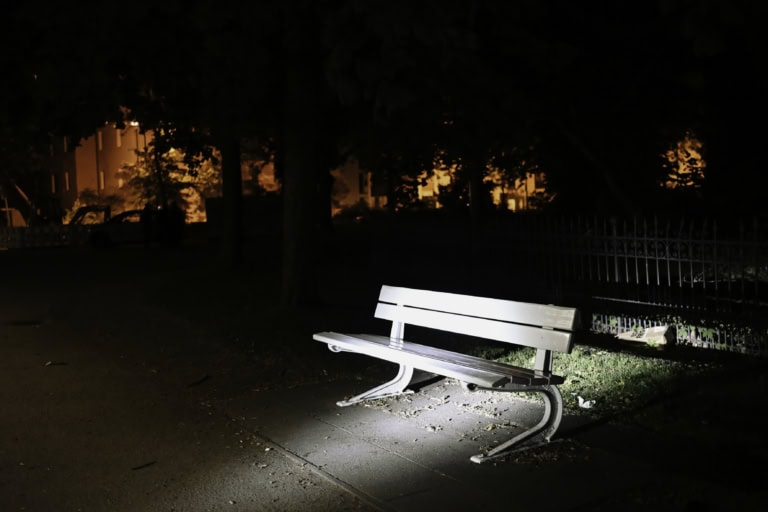
Live location shared with friends, keys gripped tightly, music playing quietly in the background – for many people, the walk home after a long night out is often marked by a sense of insecurity. Dark streets, deserted parks and not knowing who you might run into can quickly trigger fear. These worries are especially strong at night, when everything seems quiet and empty. But there is help: Heimwegtelefon e.V. offers valuable support to anyone who feels unsafe on their way home.
But does the Heimwegtelefon actually make the walk home feel better? I put it to the test: I had often walked home in the evening from Limmerstraße in Hannover, because there was no suitable bus and this route was the quickest. Every time, I had an uneasy feeling and was very relieved to get home unharmed.
When I dialled the Heimwegtelefon number, I felt a slight flutter of nerves.
 Pia Lotta Gruse
When I dialled the Heimwegtelefon number, I felt a slight flutter of nerves. After dialling, there was a short wait, during which the concept was explained to me again. The voice on the other end was friendly and reassuring. Finally, I was put through to a volunteer, who introduced herself. I gave my full name, my current location and my destination; giving my age was optional.
While she entered my details, I explained that I would be walking through the park, which often feels deserted at night. She asked me to give her regular updates on where I was. ‘Let me know when you cross the bridge,’ she said encouragingly.
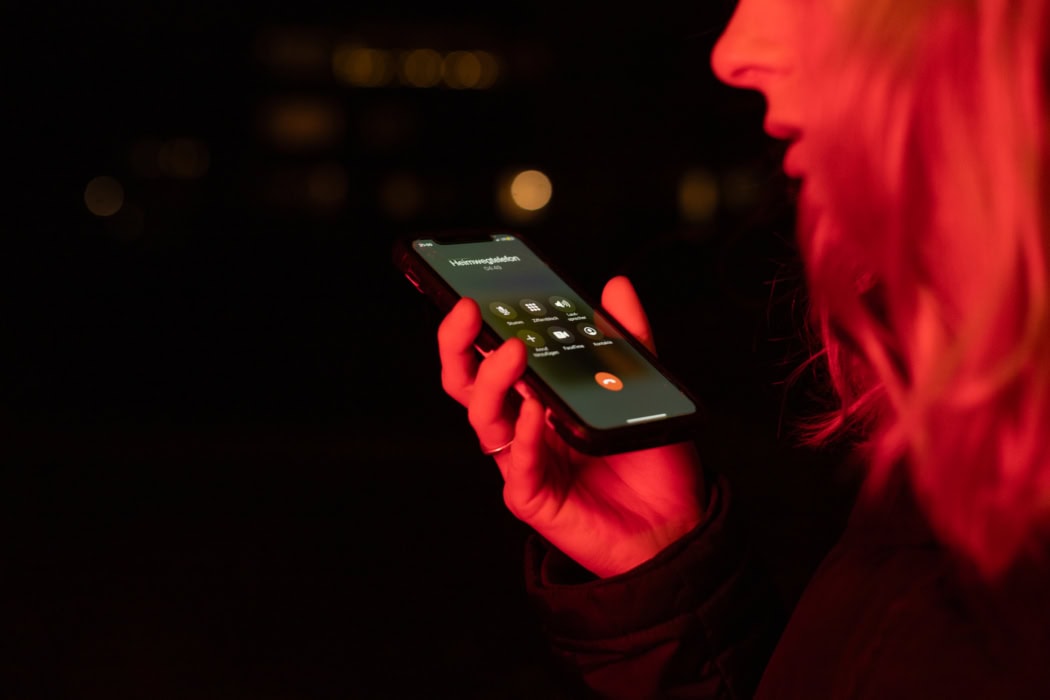 Photo (posed): Annabel Karmelk, Isabel Reda
Over the next few minutes, we fell into a relaxed conversation. I told her about my life in Hannover, and the more we chatted, the more my negative thoughts faded. It no longer felt as if I were talking to a stranger – we were in the middle of a familiar exchange. The dark corners of the park, usually so oppressive, faded into the background, and even the few passers-by I met seemed less threatening. I felt safer, because there was someone following my route closely, someone who could help in an emergency.
The fears people express during the calls are very varied and personal. Often they relate to unpleasant looks, comments, unwanted contact and verbal or physical threats from individuals or groups.
BKA study: clear differences in feeling unsafe at night
A study by the BKA, Germany’s Federal Criminal Police Office, on ‘Security and Crime in Germany’ for 2020 shows that many people share the feeling of being unsafe at night. According to the results, around 39 per cent of women feel unsafe in residential areas at night when they are alone, compared with 17 per cent of men. On public transport, the sense of safety drops further: 67 per cent of women and 40 per cent of men feel unsafe travelling alone at night.
As well as accompanying people by phone, the service also focuses on building callers’ confidence so that they can get around independently without relying on help from others. It’s important to stress that the Heimwegtelefon is open to everyone. Men use the service as well as women. Even so, it is used more by people perceived as female: in 2023, of the roughly 4,000 callers, around 81 per cent were women, 16 per cent men and 3 per cent non-binary.
The volunteers who keep the service running reliably have to complete several months of training. The team has around 60 active members and is a colourful mix of people, from 18-year-olds to pensioners. Despite their different backgrounds, there is a strong sense of community, and all the volunteers find their work deeply fulfilling.
Anyone who wants to volunteer for the Heimwegtelefon has to meet a few requirements: they must be at least 18 and have a stable internet connection, a phone and a headset. Strong social skills, openness to new topics of conversation, the ability to stay up late and the ability to keep calm in tricky situations are also essential.
Who helps at night – and what helps against fear?
The Heimwegtelefon’s nationwide hotline is available 365 days a year and offers a quick, straightforward and accessible way to get home safely. Volunteers take the calls, follow the caller’s route closely and stay on the line until they have arrived safely.
The Heimwegtelefon has existed for more than ten years. It was founded by two women who had found that they felt safer in the evening when they were on the phone with friends or family. But those people aren’t always available – which led to the founding of the Heimwegtelefon. The German hotline has been running since the end of December 2013. Originally limited to Berlin and only available at weekends, the service has been steadily expanded over the years.