The Abortion Plot
Noemi Ehrat shows abortion as an everyday practice. Her long-term project asks not why but how: matter-of-fact, calm and beyond the political headlines.


Abortion is a political issue. When a government moves to the right, access is often restricted or abolished altogether. Many people are currently looking at the USA, where the current administration is massively restricting reproductive rights. But changes are under way in European countries too. While countries such as Italy and Poland are tightening their laws, others, such as Sweden and the Netherlands, take a more liberal approach.
Inspired by Clair Wills’s essay ‘How to Plot an Abortion’, Noemi Ehrat’s long-term project traces who is behind these decisions, who is affected by the consequences, who manages to organise politically and how these networks are connected across borders. Rather than asking ‘why’, this work asks ‘how’: what does it take to organise an abortion, and what does that look like?
The award-winning work also sets out to show what abortion often looks like: from routine doctor’s appointments to intimate moments at home. Its detached, journalistic visual language is meant to make visible that abortion can be understood as common practice rather than a legal question – in all its banality.
Noemi Ehrat
Noemi Ehrat was born in Uster, Switzerland, in 1996. She works as a freelance journalist, photographer and producer for publications including Tamedia, ZEIT Online, Filmbulletin, Akut Mag and Radical Art Review, and has been studying Visual Journalism and Documentary Photography at Hochschule Hannover since autumn 2022. Her work often focuses on people fighting against adverse circumstances – whether in housing, reproductive health or state violence.
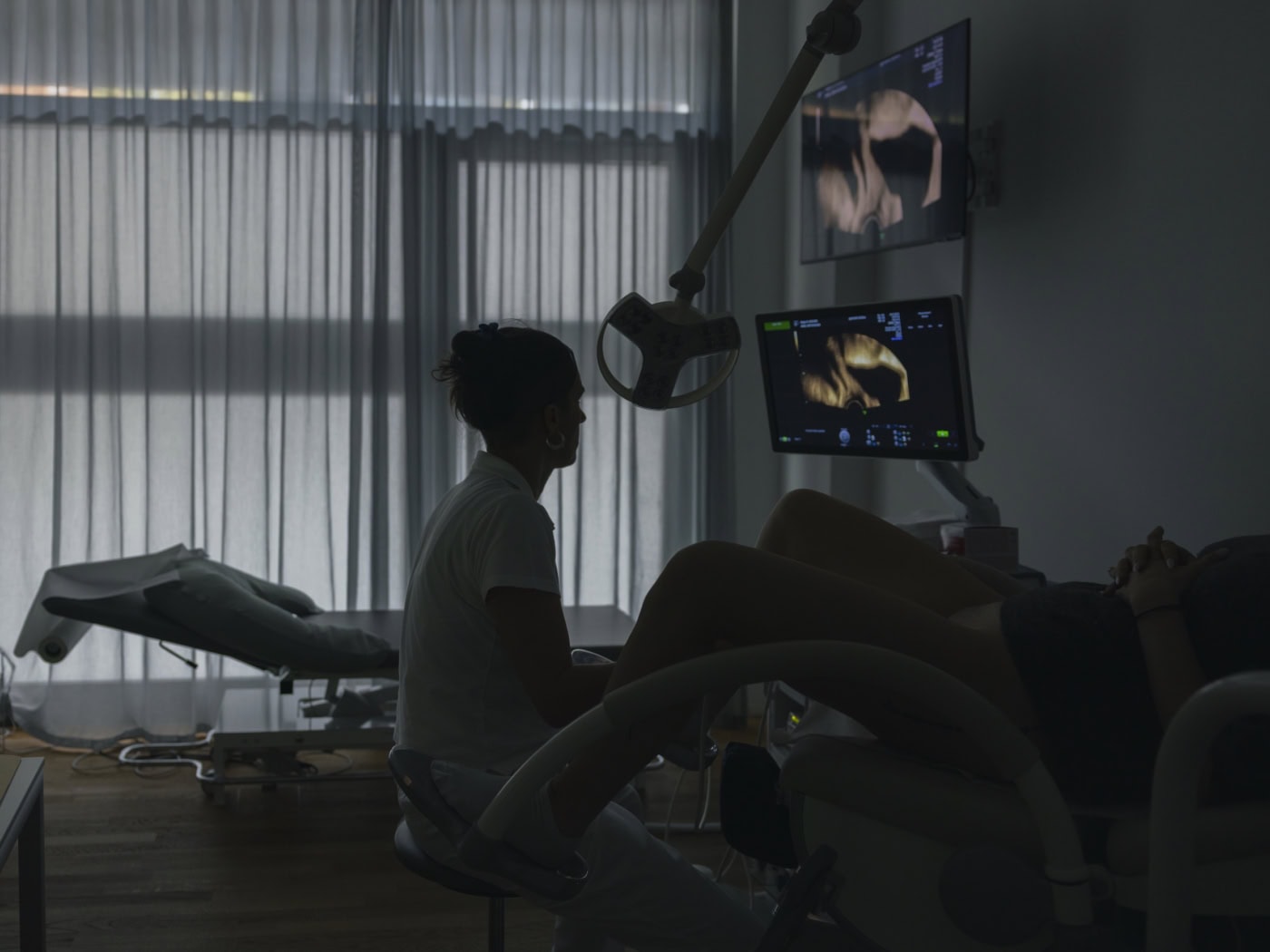 Switzerland, November 2024.
Before a medical abortion, a gynaecologist uses ultrasound to determine the position of the embryo and the stage of pregnancy. This makes it possible to rule out an ectopic pregnancy. Most abortions are carried out in the first eight weeks of pregnancy, when only a faint outline of the yolk sac can be seen.
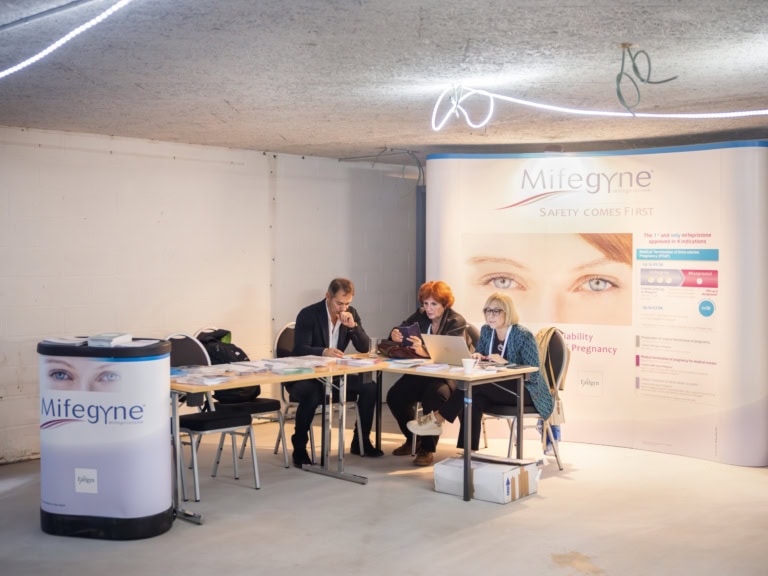 Brussels, Belgium, September 2024.
Participants at the 15th FIAPAC conference for medical professionals working in contraception and abortion. The conference takes place every two years and is intended for sharing expertise and new research findings.
 Amsterdam, Netherlands, October 2024.
Dr Rebecca Gomperts is the founder of the organisations ‘Women on Waves’, ‘Women on Web’ and ‘Aid Access’. These NGOs support people in countries with restricted access to reproductive healthcare, for example in obtaining abortion pills.
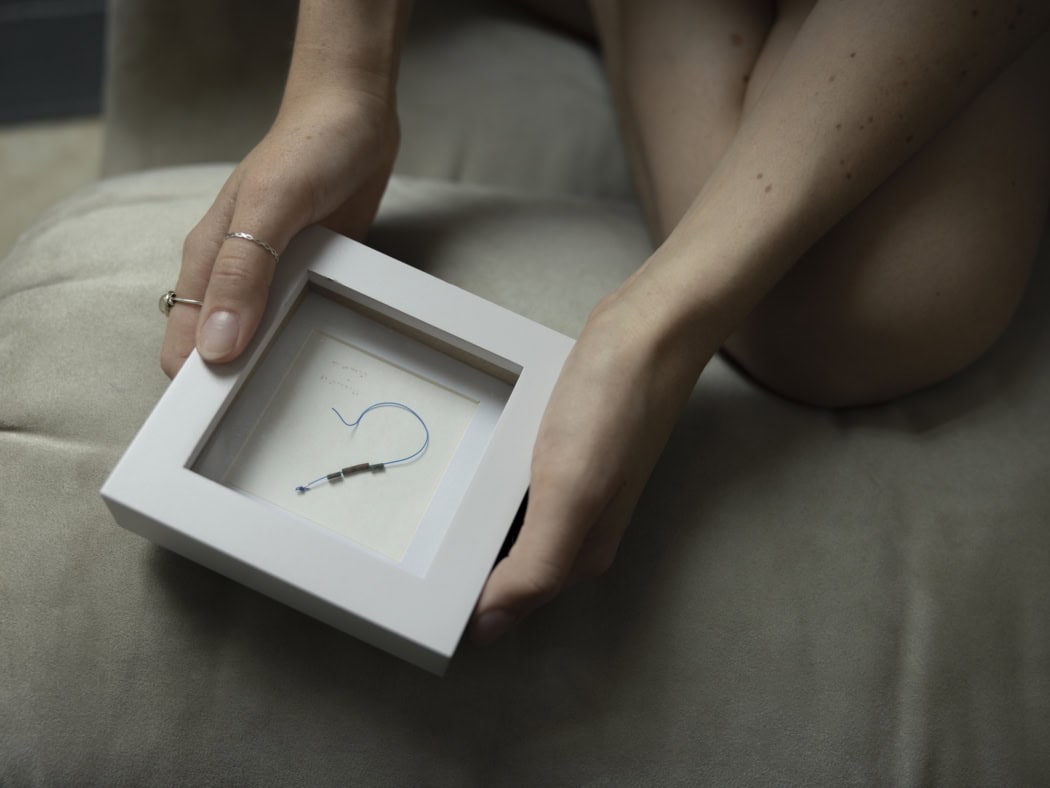 Jena, Germany, July 2025.
S. has framed their copper IUD. S. had it fitted after an unwanted pregnancy and an abortion at the age of 19: ‘It finally let me breathe again and gave me the feeling of having at least a little more control.’
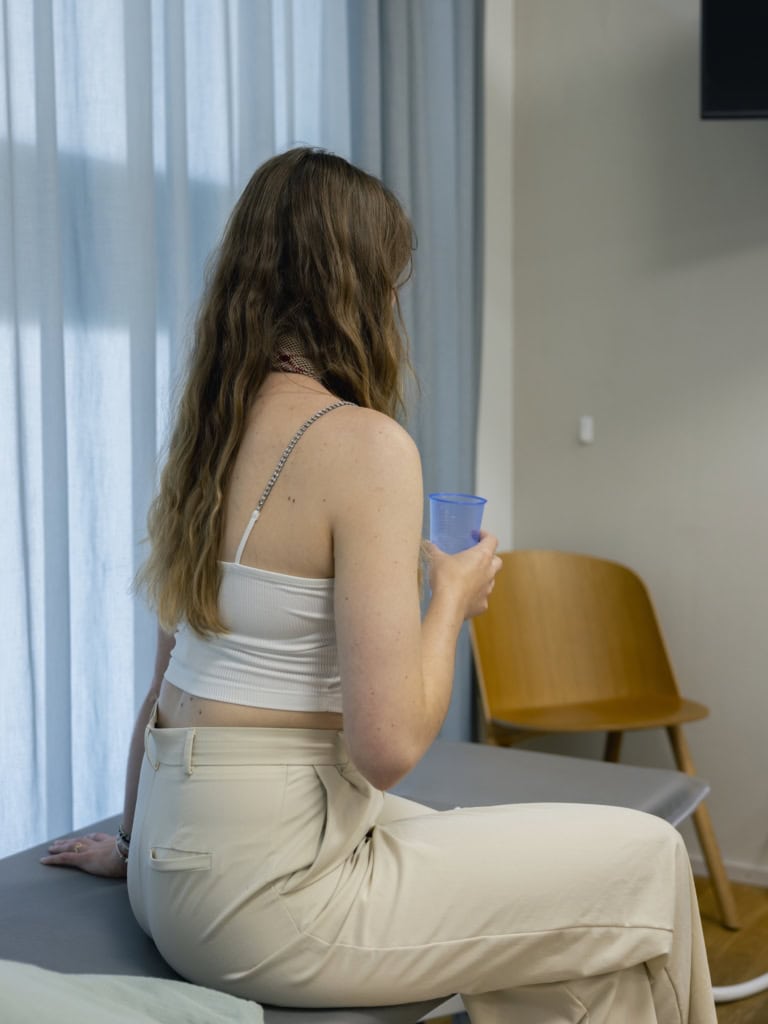 Switzerland, April 2025.
A patient takes mifepristone at a medical practice. This first medication ends the pregnancy. The second, Cytotec, is taken at home and causes muscle contractions to expel the pregnancy tissue.
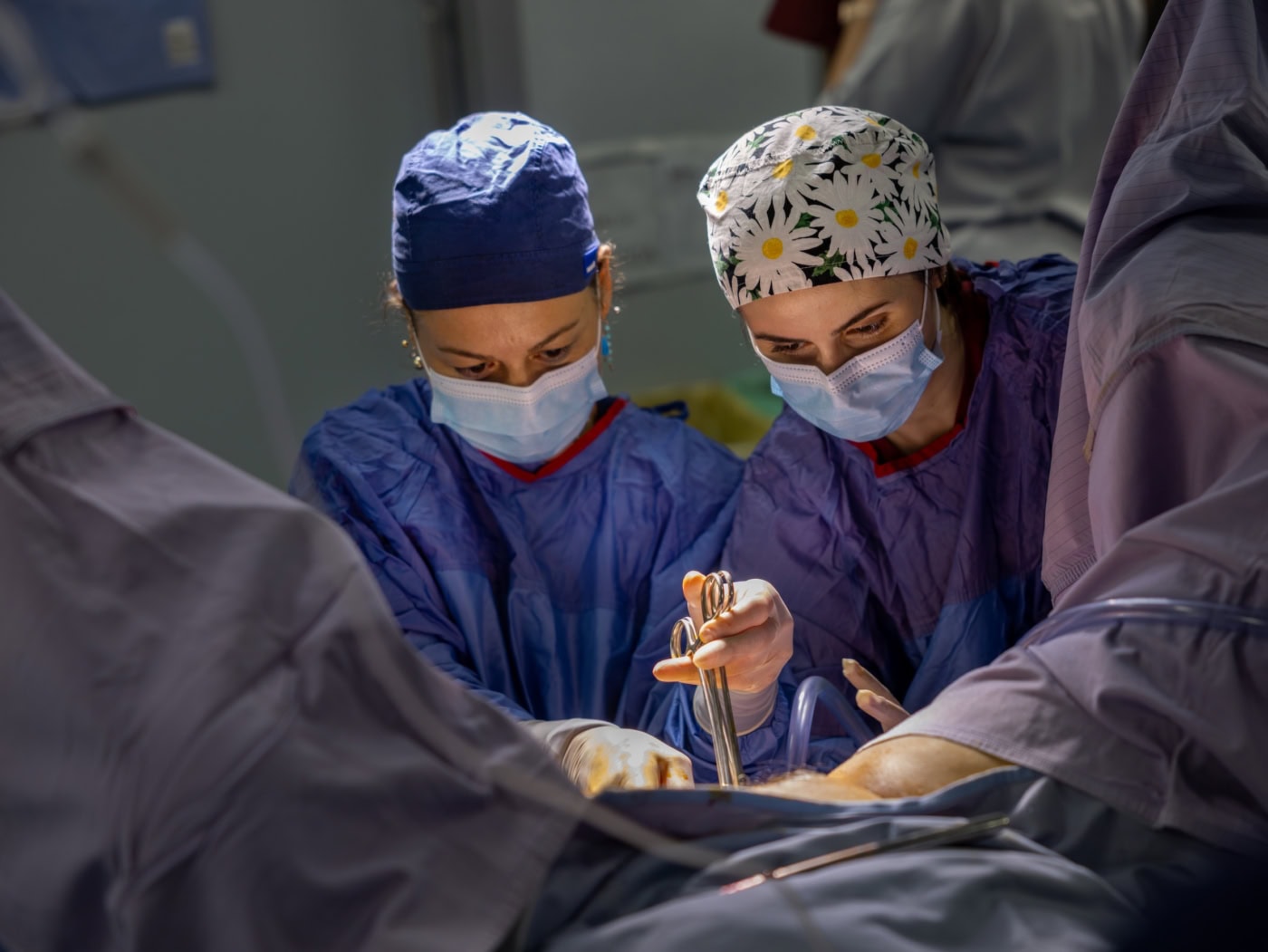 Lecce, Italy, June 2025.
A team of doctors and medical staff performs a surgical abortion. The vacuum aspiration method used is gentler and less risky than curettage. In Italy, however, around 63 per cent of doctors refuse to perform abortions for ethical or religious reasons.
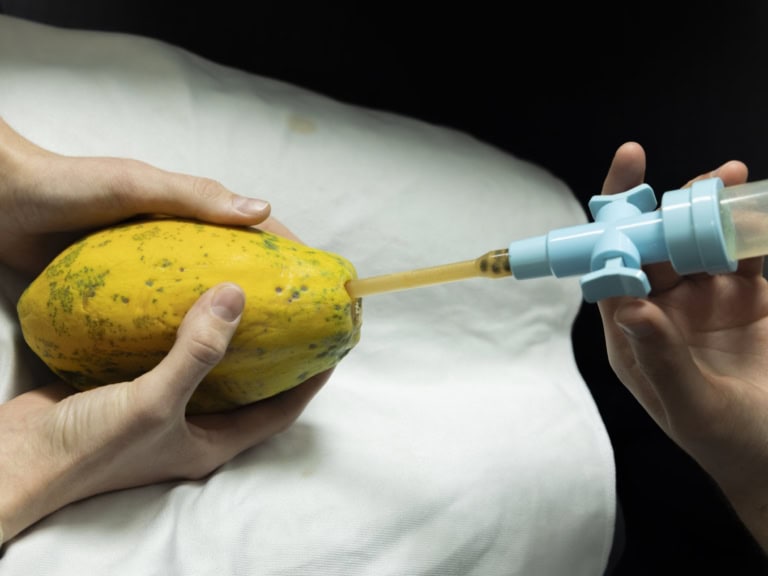 Brandenburg, Germany, November 2023.
Medical students practise vacuum aspiration using a papaya. Because the fruit resembles a uterus in shape and consistency, the procedure can be practised relatively easily and cheaply.
 Berlin, Germany, May 2025.
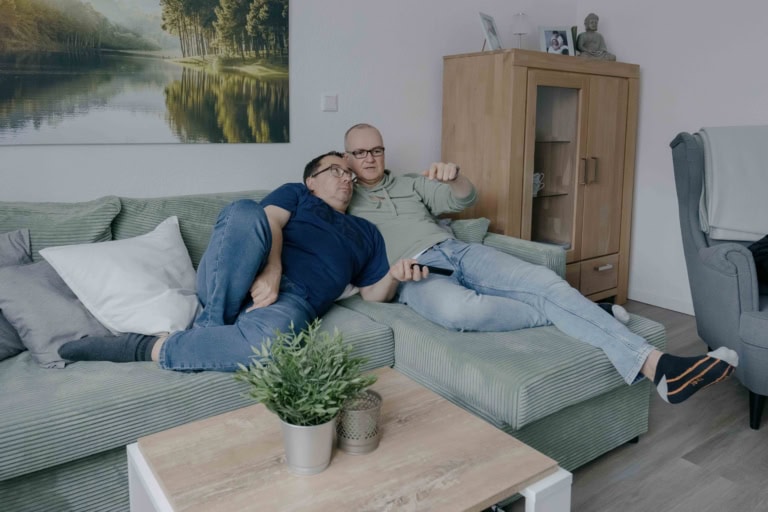
I. and her partner C. in his shared flat. They say the abortion brought them closer together. But it was also good and important for them that other people around them played an important role.
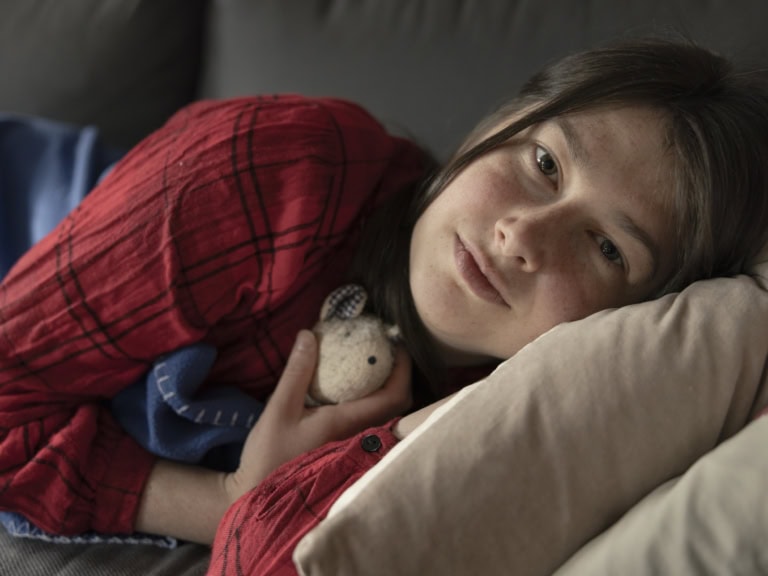 Germany, July 2025.
Z. on the sofa in her parents’ house. In 2016, at the age of 16, she became pregnant unexpectedly and decided to have an abortion so she could finish school. Her mother supported her crucially throughout.
 Zürich, Switzerland, September 2024.
‘Runway for Riot’ by the feminist collective ‘Zürich Selbstbestimmt’ in front of the annual ‘March for Life’, a Christian anti-abortion demonstration. The garments worn on the catwalk were auctioned off and the proceeds donated to an abortion NGO.
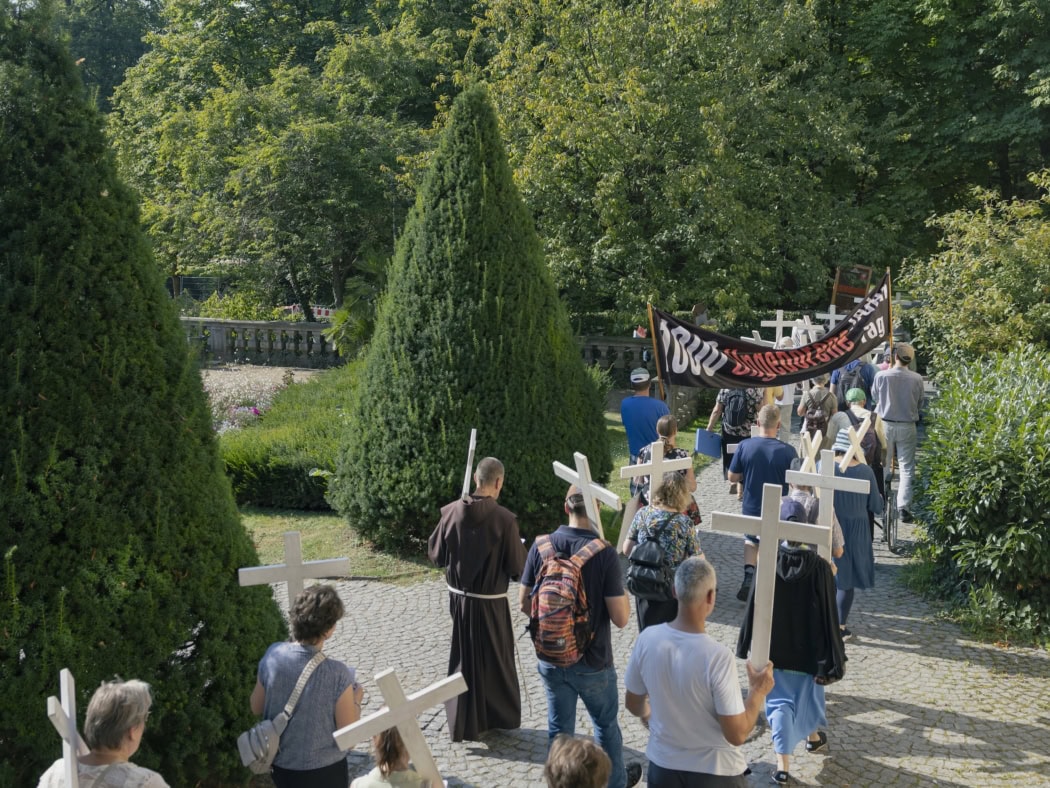 Fulda, Germany, August 2024.
Participants in the prayer march ‘1000 Crosses for Life’. The event is organised by the Christian, interdenominational network EuroProLife, which criticises the falling birth rate, claiming it is ‘below the minimum necessary for the self-preservation of a people’.
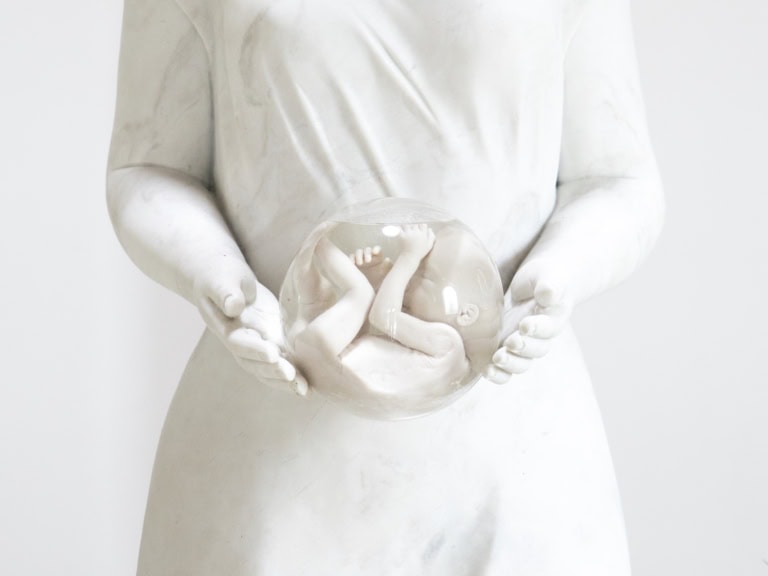 Pösing, Germany, August 2024.
‘So she hands her child over to the doctor who kills it, to the executioner, to death’: a statue in the Franz Graf Chapel. The ‘Holy Innocents’ chapel was consecrated in 2008, blessed by a vicar general and a parish priest. It was built by the farmer Franz Graf on his own land. Graf and his chapel have been criticised, among other things, for the Holocaust comparisons displayed there.
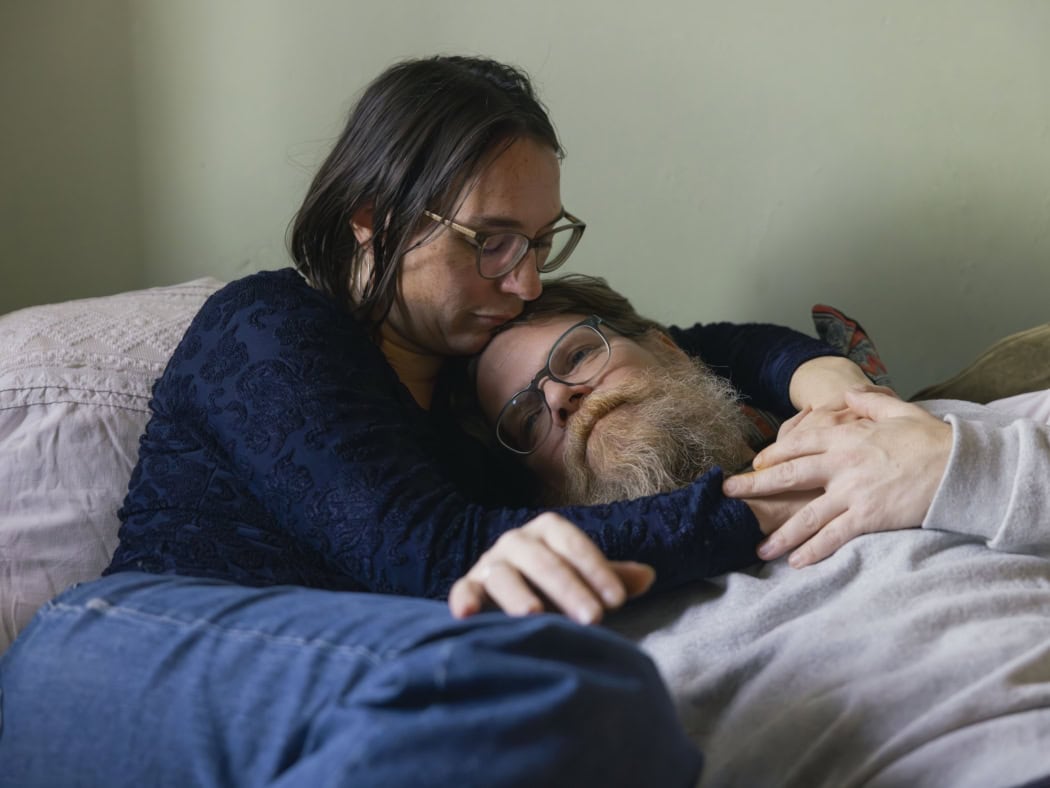 Leipzig, Germany, November 2025.
‘We both decide, we do this together’: for Lea and Simon, that was clear from the start when Lea became pregnant unexpectedly. They experienced the abortion itself, which she was able to have via telemedicine in 2022, as positive. But everything around it, including the legally required counselling, politicised them both.
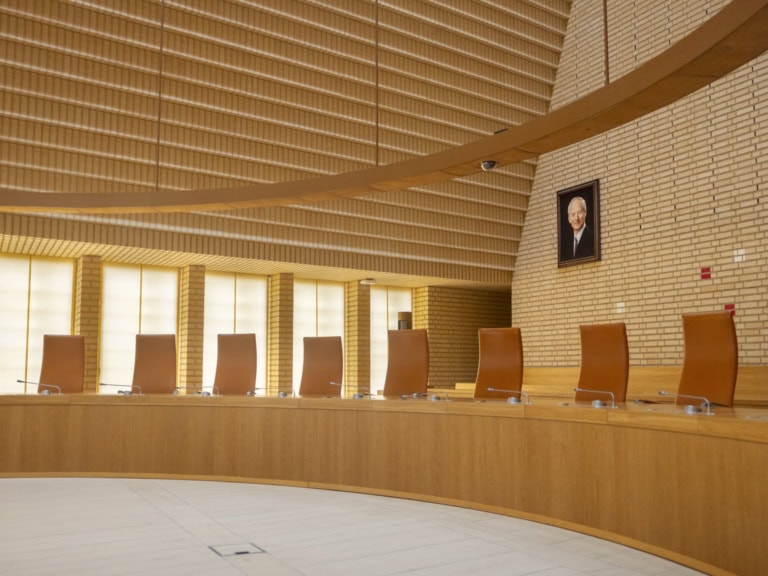 Vaduz, Liechtenstein, January 2025.
The plenary chamber of Liechtenstein’s parliament. The country has one of the most restrictive abortion laws in Europe. At the last vote on the issue, in 2011, Prince Alois threatened a veto.
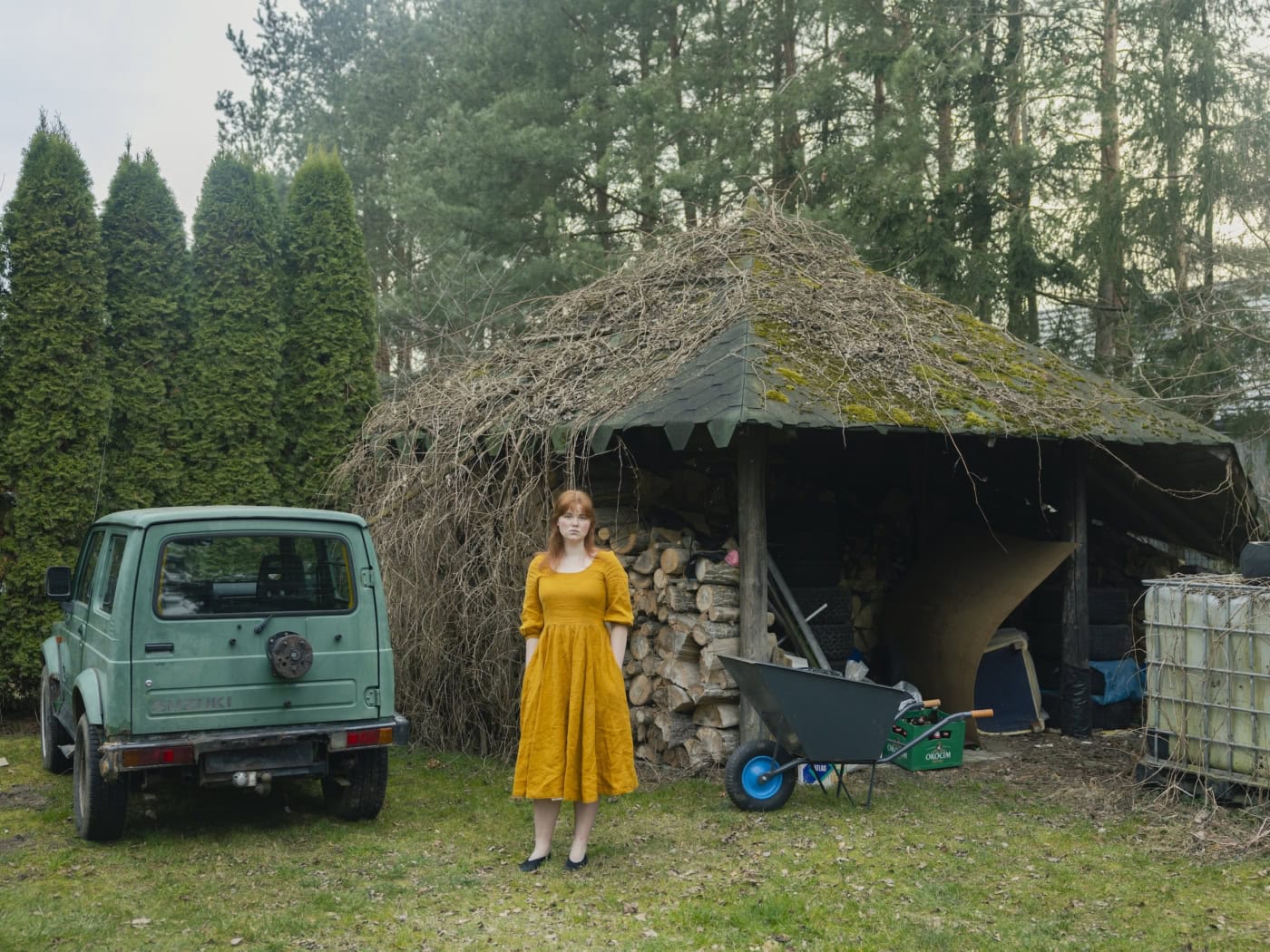 Poland, March 2025.
A. lives with her parents in the Polish countryside, where she moved after studying law in Great Britain. The nationwide feminist protests of 2020/2021 politicised her, and since then she has worked with various organisations that give people access to abortion pills.
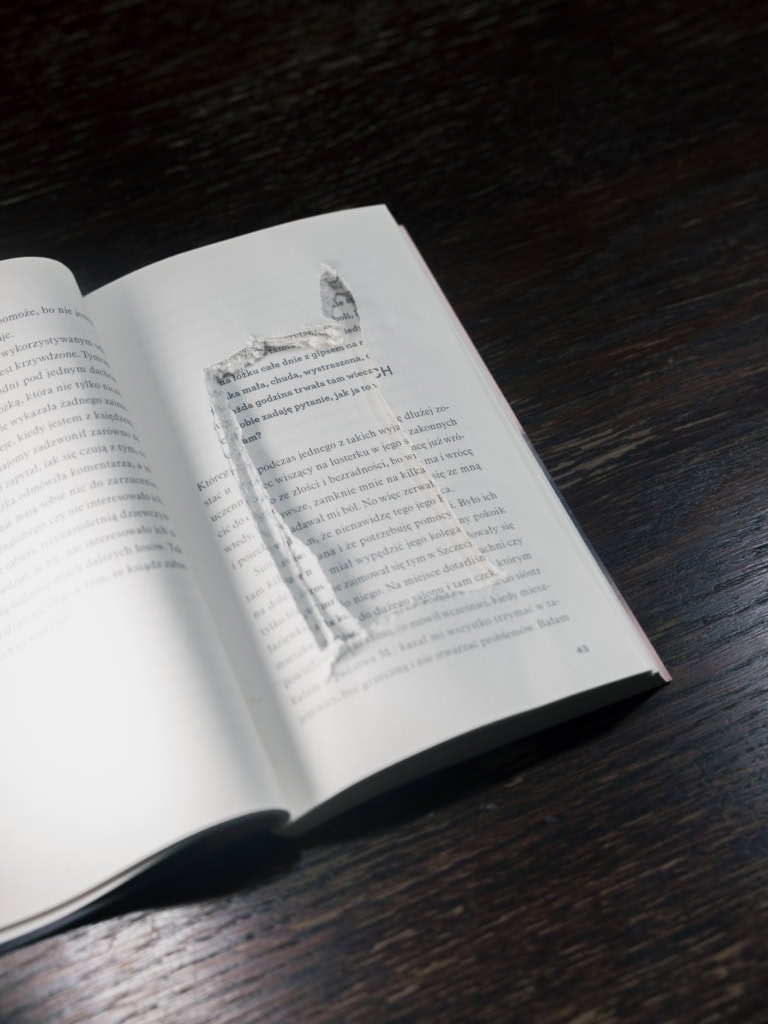 Poland, March 2025.
A cut-out hiding place for abortion pills in a book. The internet and the option of medical abortion have radically changed the practice and made it more accessible. After the COVID-19 pandemic, the WHO changed its guidelines and recognised self-managed medical abortion in early pregnancy as a safe practice.
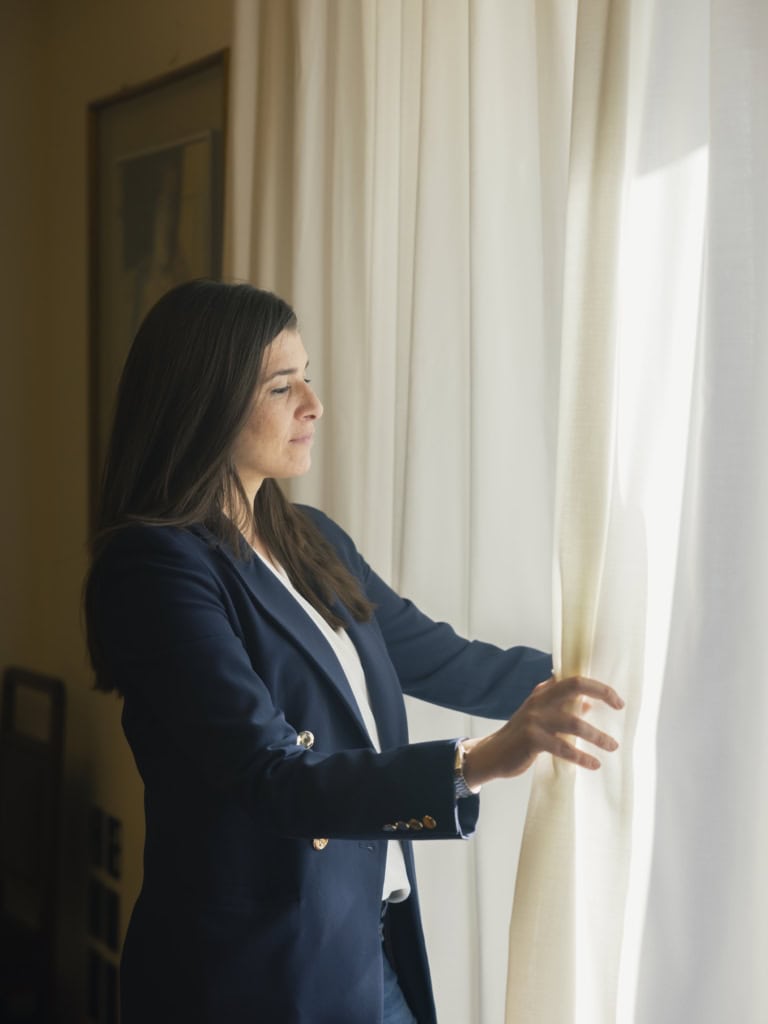 Rome, Italy, April 2025.
Member of parliament Gilda Sportiello (Movimento 5 Stelle) in her office in the Italian parliament. She was the first person to speak publicly in parliament about her own abortion. Since then she has campaigned for abortion to be destigmatised and decriminalised.