Unexploded bombs beneath the city: the dangerous job of bomb disposal
Painstaking precision with deadly risk: a look at a profession in which every move has to be exactly right.
By Henryc Fels (photos), Sophie Boyer, Etienne Dötsch (text)


On Hamburg’s Aschberg there is a smell of freshly dug earth, damp mortar and machine oil. Where for decades families swam in the pool in summer, wellies now sink ankle-deep in mud. Only the whirr of the excavator’s hydraulics breaks the morning silence. For hours two men have been staring intently at the material trickling from the digger bucket. Any find could be a dangerous discovery – and make immediate bomb disposal necessary. At any moment a decaying stick incendiary could turn up, hidden among the soil and rubble – a British incendiary bomb that burns at 2,400 degrees Celsius when ignited and is hard to tell apart from scrap metal. The Allies dropped them on Hamburg in their tens of thousands.
The danger from these remnants of war is still ever-present today. Eighty years after the end of the Second World War, unexploded bombs remain a serious threat. Every year there are one or two spontaneous detonations of ordnance in Germany. An estimated 100,000 tonnes of undiscovered bombs and ammunition still lie underground. The danger is particularly great in Germany’s large cities, where the ground is heavily contaminated with ordnance.
Before converting or building, property owners must therefore ask the authorities whether they need to have the site surveyed. But rivers and beaches are often affected too. The sea washes ordnance up on to the beach. These shells and bombs are often so corroded that they wash up in pieces, frequently releasing phosphorus, which is easily mistaken for amber and causes severe skin burns.
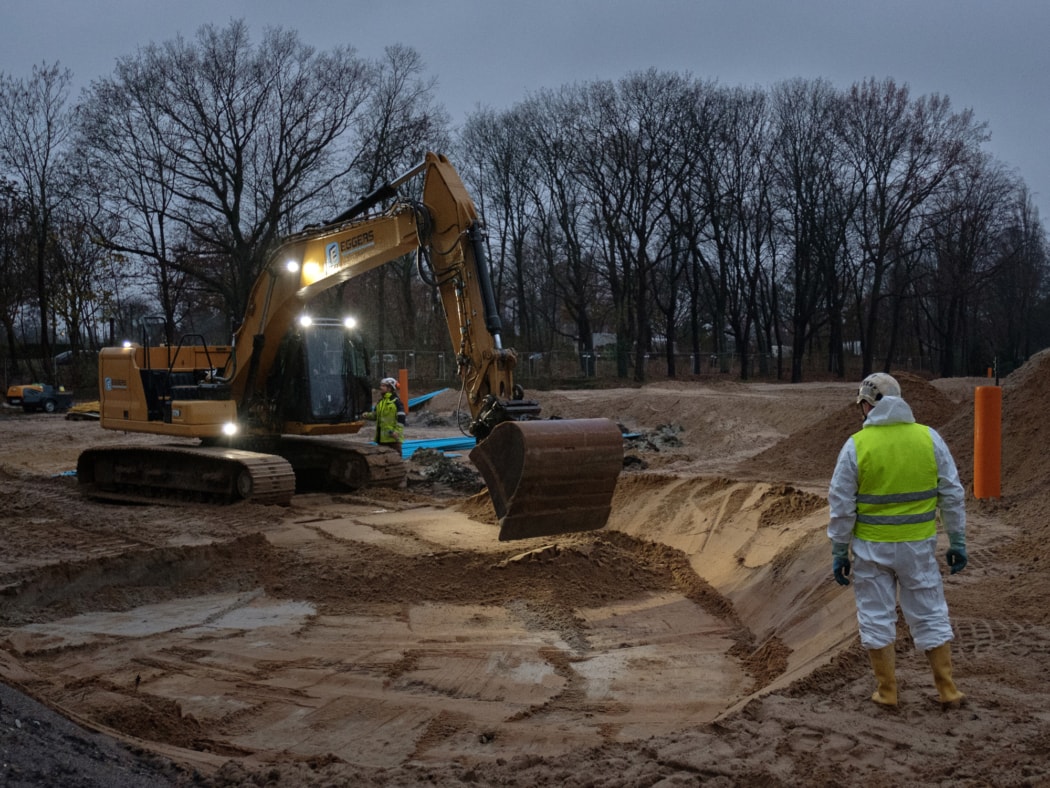 Hamburg, 13 December 2023
Volume clearance at the clearance site of the former Aschberg outdoor pool in Hamburg-Hamm: in this surface inspection method, an excavator carefully removes layers of soil several centimetres thick and tips them out on an open area under the supervision of the explosives expert and a clearance assistant. Remnants of ammunition can then be spotted visually.
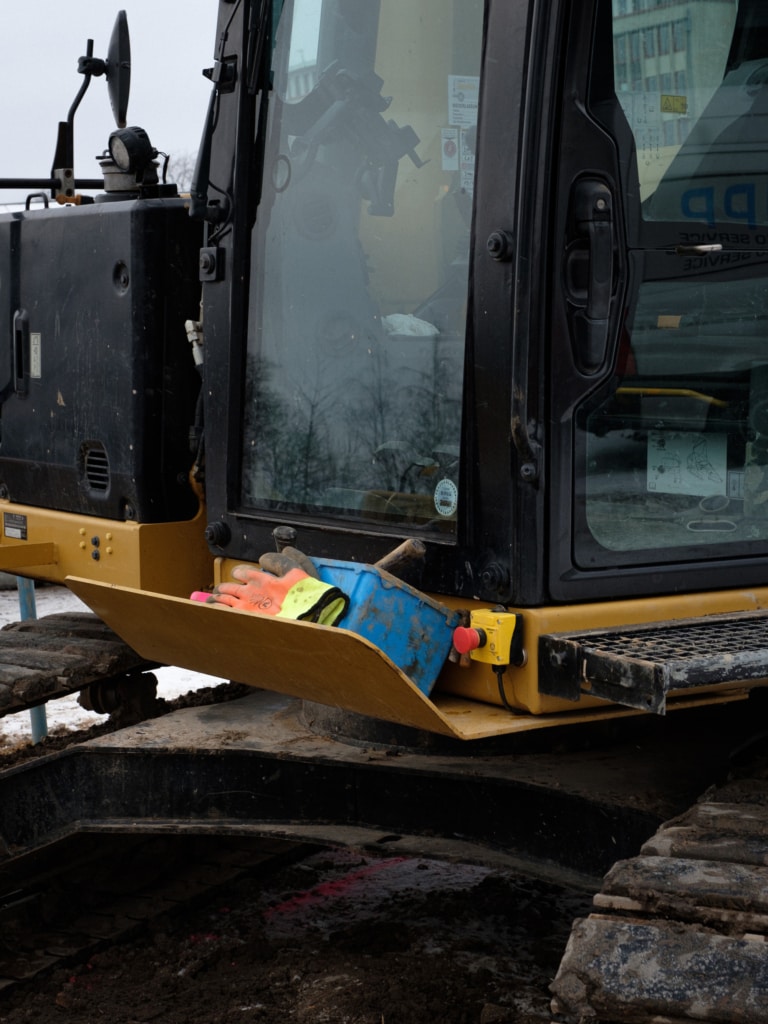 Kiel, 17 January 2024
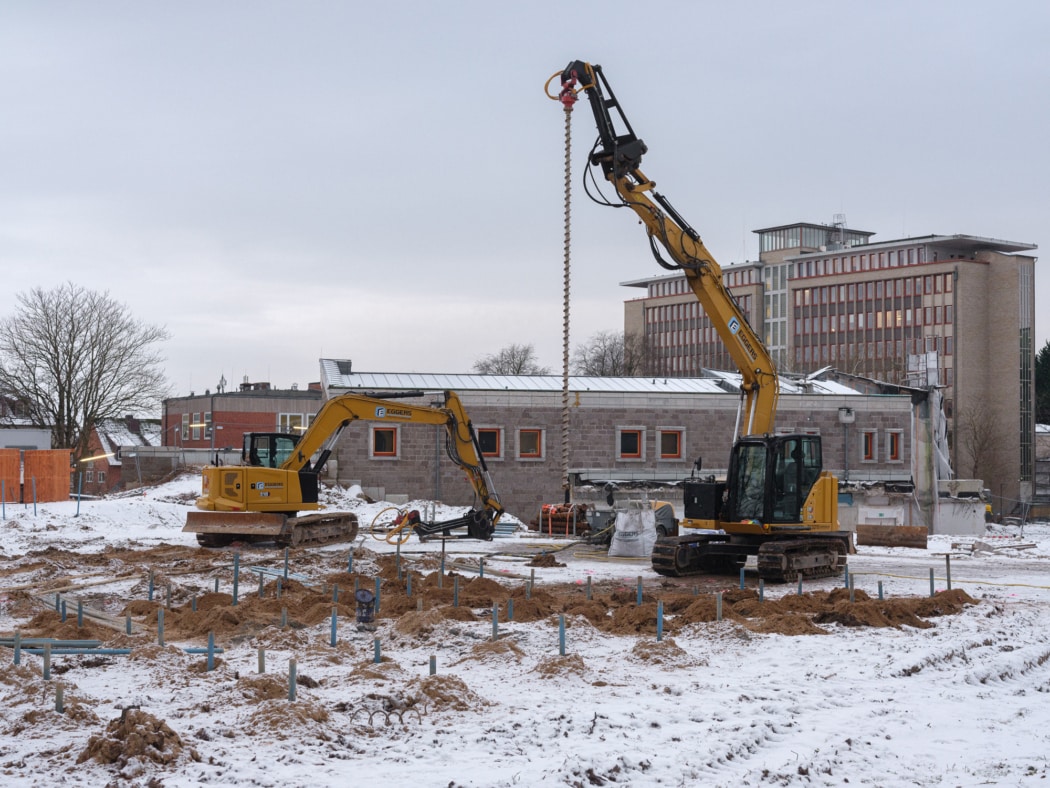
Ordnance recovery excavator with safety equipment on the grounds of the University Hospital Schleswig-Holstein. The excavator’s windscreen is reinforced with armoured glass to protect the operator from smaller explosions and fragments. Armour plating under the cab provides additional protection.
 Hamburg, 16 January 2024
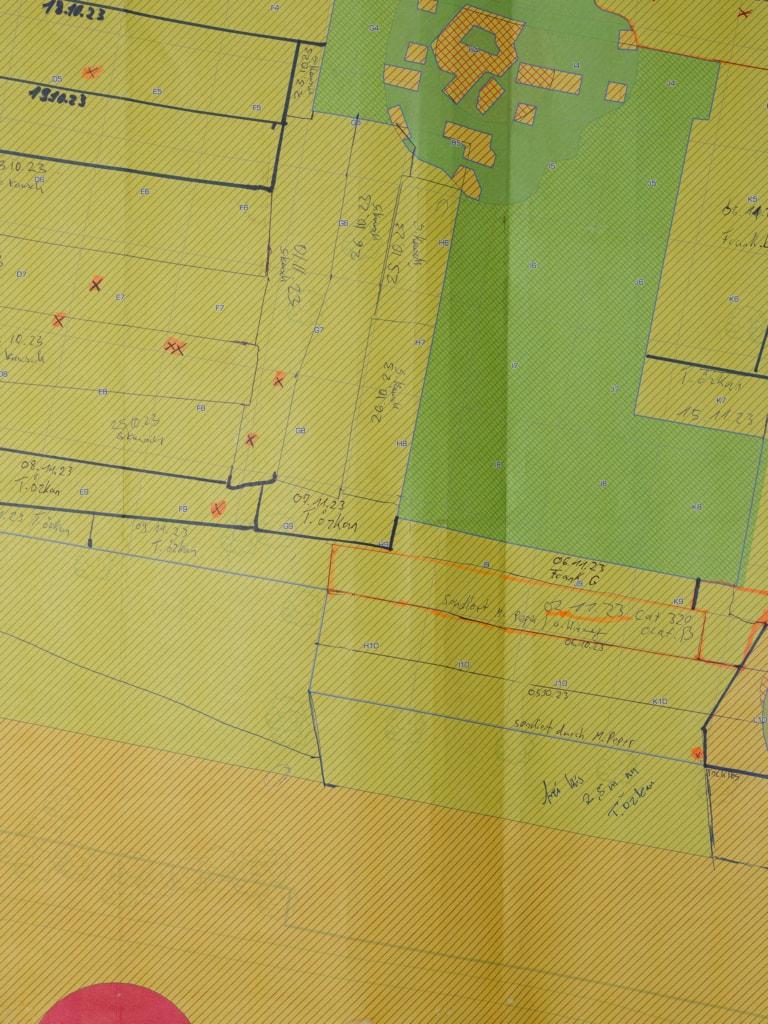
Site map of the clearance site at the former Aschberg outdoor pool in Hamburg-Hamm. The area marked in green is free of ordnance. The solid red area at the bottom edge of the map marks a suspected unexploded bomb. Incendiary bombs were found at the red crosses.
 Hamburg, 16 January 2024
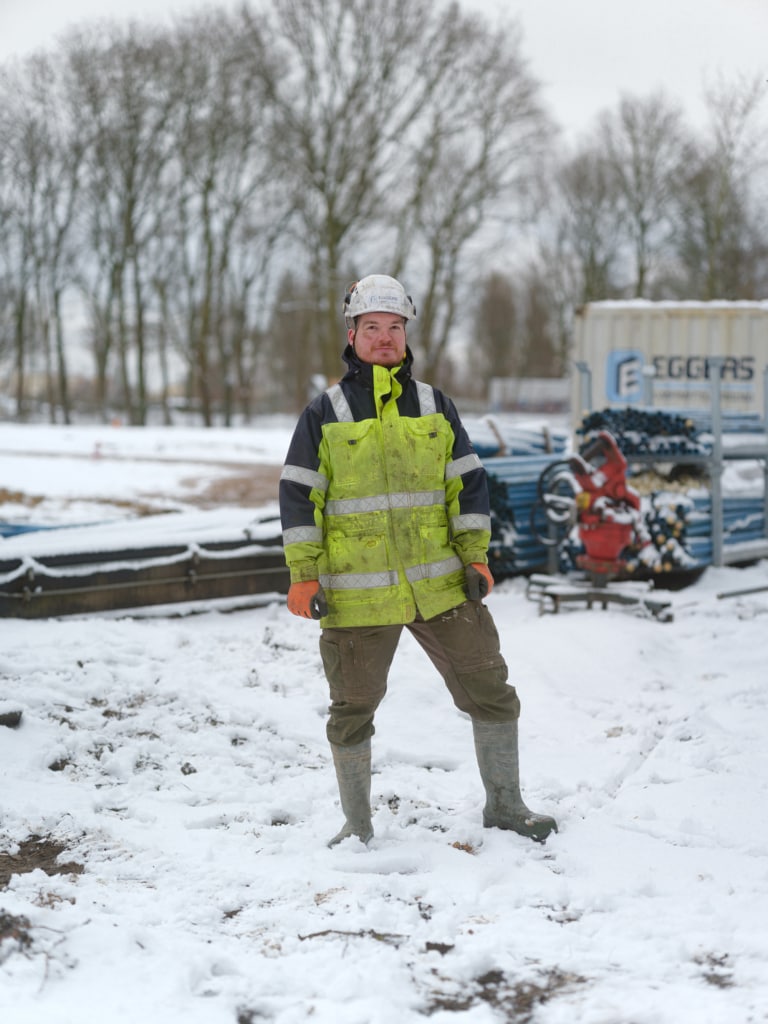
Explosives expert and clearance site manager Steffen Kausch at the former Aschberg outdoor pool in Hamburg-Hamm. Ammunition specialists are known as ‘Feuerwerker’; their job is to locate and remove ordnance.
 Kiel, 17 January 2024
Clearance site on the grounds of the University Hospital Schleswig-Holstein.
 Kiel, 15 January 2024
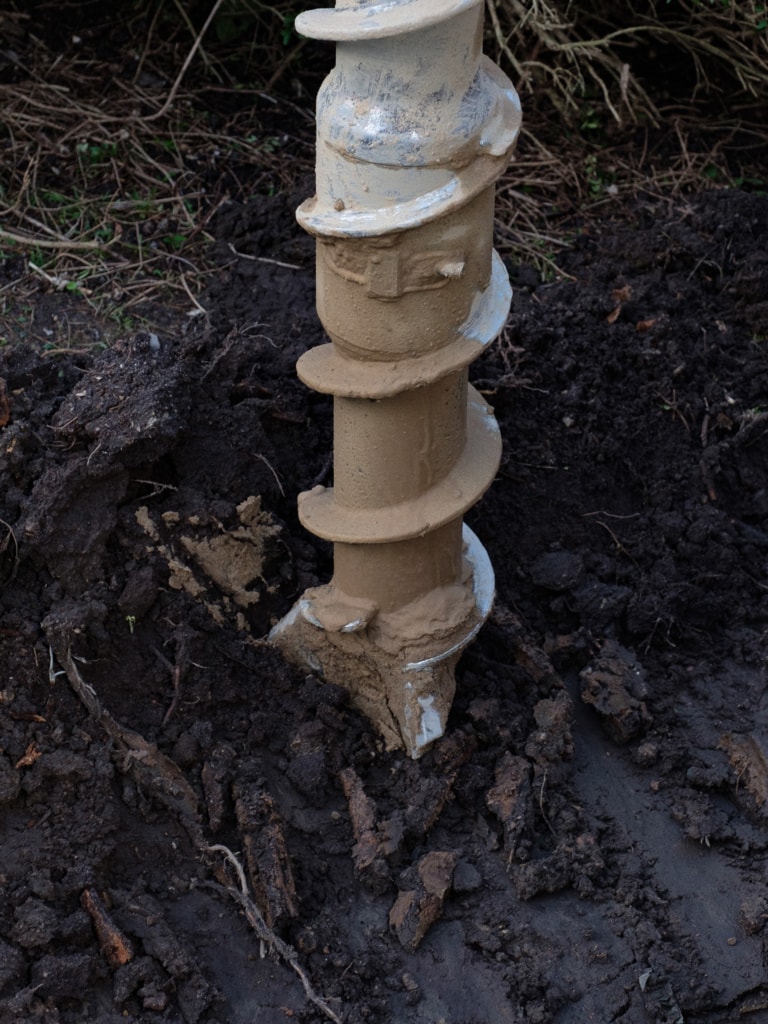
Drill head at the clearance site on Dammstraße in Kiel.
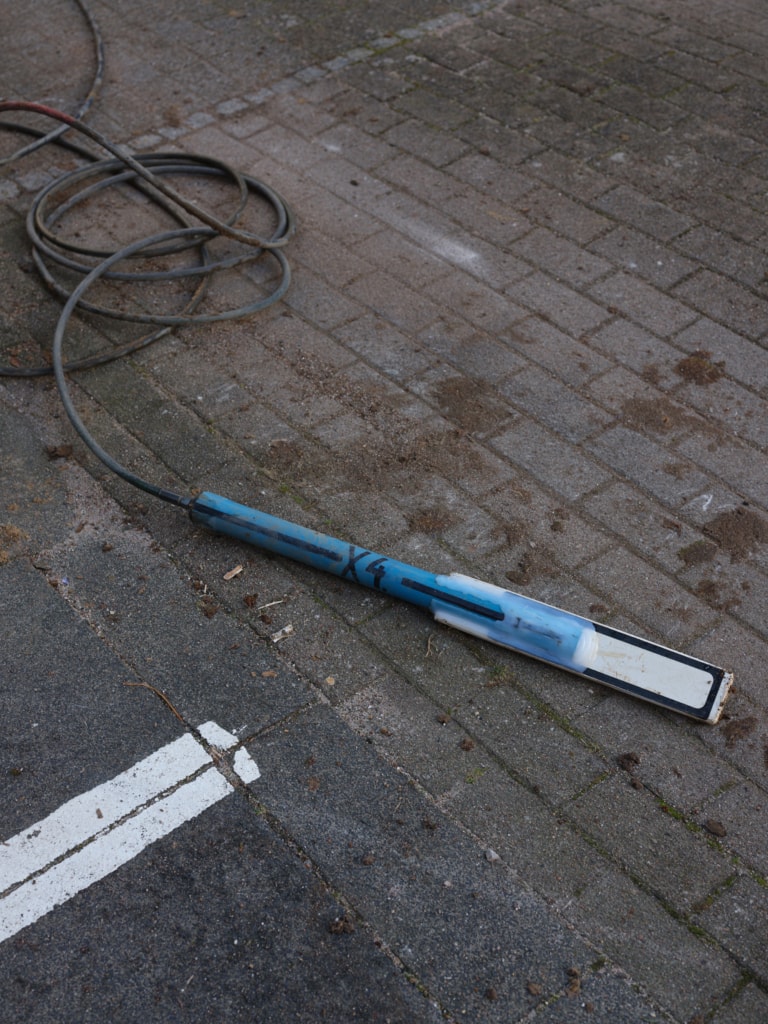 Kiel, 15 January 2024
4R-EM probe at the clearance site on Dammstraße in Kiel. This special probe makes it possible to locate anomalies in three dimensions.
 Kiel, 15 January 2024
Geophysicist Dr Matthias Strahser at the clearance site on Dammstraße in Kiel.
How dangerous is bomb disposal really?
Specialised survey methods help to find and recover bomb remnants. In Hamburg, the fire brigade’s unit for hazard investigation and suspected ordnance uses old maps and aerial photographs to find bomb craters and locate danger spots. Where there is a suspicion close to the surface, an excavator removes the soil layer by layer, and experts carefully examine the contents of the bucket to ensure safe bomb disposal.
One machine operator tells of an incident in which ammunition ignited in the digger bucket and flew just past the cab. Incidents like this show how dangerous bomb disposal work can be. That is why the excavators have a reinforced floor plate and a bulletproof windscreen.
Some ordnance is not removed because it lies too deep. Bombs more than ten metres down are often left where they are if an open space, such as a sports pitch, is created above them. Nor is ordnance cleared if an existing house would have to be demolished.
Old ordnance can be lethal. The condition of the fuse is especially critical, as the explosive on its own is usually harmless. Bomb disposal therefore requires the utmost care and expertise. The risks of ordnance clearance became tragically clear in Göttingen in 2011, when three explosives experts died while defusing an aerial bomb with a delayed-action fuse. Ammunition remnants are normally burned or detonated in a controlled way. This is the job of the ordnance disposal service, not of pyrotechnicians.