The return of the Fury
In patriarchal societies, women are expected to be understanding about everything. When they get angry, they are called ‘Furies’. But how bad is it, really, to be a ‘Fury’? By Paula Tauber (text), Noe Hasler (illustration)


Content warning: sexual violence and depression

‘How do you feel about this injustice?’ my therapist asks, looking at me expectantly. I fiddle nervously with my hair tie. At least thirty seconds have passed. I really ought to answer soon, I think. ‘Sadness,’ I blurt out. That is usually the first emotion that fills me when something unfair happens to me. I quickly add: ‘And understanding. I can explain to myself rationally why it happened, even if it doesn’t feel good.’ ‘And are you angry as well?’ my therapist asks.
Anger? Why would I feel something like that? Anger isn’t productive. Anger is destructive. Anger is an expression of helplessness and a lack of control. That isn’t me. That’s not who I want to be. How can I be angry with people when I understand why they did what they did? I don’t want to feel something like that.
Thinking about it, I can’t even remember the last time I was really angry with someone close to me. Maybe when my first boyfriend broke up with me out of the blue. I was angry with him then. That was four years ago. But I could understand him too – I know him, after all. He had always found it hard to communicate. On top of that, we were in a long-distance relationship, which made everything even more complicated. And he did try. He didn’t want to hurt me.
So there was anger – for the brief moment before I rationalised and excused his behaviour. And now my therapist is sitting in front of me, asking me why I’m not angry. How am I supposed to know? Isn’t it her job to explain that to me?
No one had ever shown me that anger was a feeling worth having. My parents were rarely angry. When they did argue, they did so politely at the kitchen table. Nobody shouted, nobody insulted anyone, nobody cried. Above all, no big emotions.
At the age of four, I learnt what depression is. My mum has it. Because of her depression, I started looking after her early on. I suppose I thought it was my duty. Because my survival was secure as long as she was doing well. At least my family talked openly about my mother’s illness. I quickly learnt that depression is an illness like any other and therefore a perfectly normal part of my everyday life. At the same time, the boundaries slowly began to blur. When a child grows up with a sick parent, there is sometimes little room for being a child, little room for impulsiveness and testing limits. Instead, I learnt to be attentive and undemanding. In my family, there was no place for anger.
Be good, be kind, be considerate.
‘You lot should take a leaf out of Paula’s book when it comes to responsibility,’ a teacher tells the rest of my class one day. I am sixteen. Adults often think I’m older than I am and praise me for my mature, considerate behaviour. It embarrasses me. I don’t want to be a swot. So, off to the club! My first night out in Frankfurt is exciting. The dance floor is packed, bodies bump into each other. I feel free.
Newsletter
Every two weeks, one outstanding piece from our magazine – and the people behind it. In German and English, free to your inbox.
Suddenly I feel a man’s erection against me. He grabs my hips and presses his groin against me. Again and again, to the beat of the music. I freeze, feel trapped and embarrassed. And I feel ashamed. Ashamed not because a strange man is touching me, but because I feel flattered. Flattered that someone finds me attractive enough to dance up against me. Although I know that something is going badly wrong here, I can’t make sense of what is actually happening: a clear violation of my boundaries. Because I lack the anger. The anger that might have allowed me to act. The anger that would have made me push the man away. The anger that would have stood in his way. The anger that would have drawn a line. The anger that would have made me understand that I don’t have to put up with this situation.
Doing things for the feminist in me is somehow easier than doing things for the child in me.
 Paula Tauber
But how am I supposed to build a healthy relationship with an emotion that people socialised as women have been denied for centuries? In the past, when women got angry, they were said to be suffering from hysteria. Labelling women as ill made it easier to keep them in their place. The link goes back to the ancient Greeks: the word hysteria derives from the Greek word for womb, ‘hystera’.
Related to this story

The search for my anger is not only a search for myself but also a two-fingered salute to the patriarchal structures that have oppressed women for centuries. Perhaps, seen in that light, it will be easier to connect with this wretched emotion. So I play a little trick on myself, shifting the focus away from me and on to society as a whole. Doing things for the feminist in me is somehow easier than doing things for the child in me.
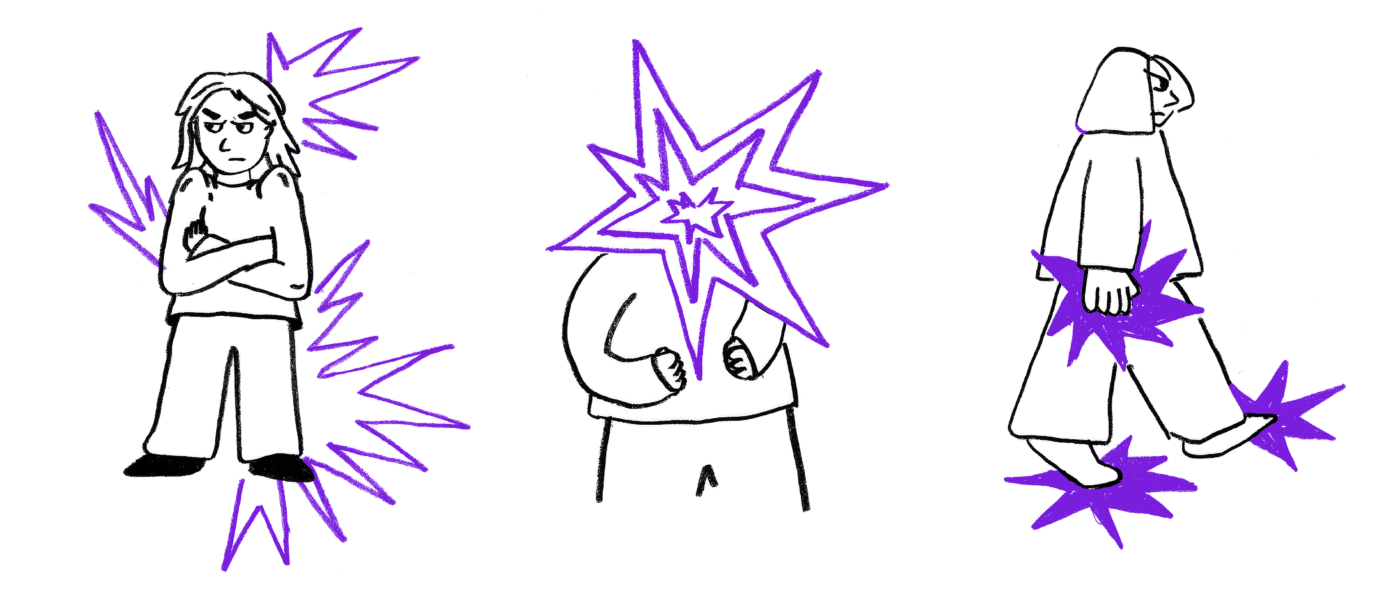
It works! Feminist Paula really has no problem being angry. Oh, how angry I can be – at the system, at men who overstep the mark, at right-wing extremists and climate deniers. In recent years I have become a past master at collective anger. Shouting at demonstrations, speaking up against oppression and discrimination when I see them in everyday life. I’m really good at that.
Perhaps because it is easy to feel anger that can be rationalised. If I tell other people that I am angry about all the right-wing extremists in our country, hardly anyone will question it. So this anger counts as legitimate. It can be explained objectively and is in line with what many people think. When I think about collective anger, I also feel how energising and galvanising it can be. Without anger, the streets on International Women’s Day would probably be only half as full. Without anger, the 2026 parliamentary elections in Hungary would probably have turned out differently.
But how do I find my way to my own, personal anger? The kind not everyone will understand straight away? I need it back. And urgently! Because anger often works like an alarm system. It is a reaction to threat and injustice, and in many situations it can save us from greater harm.
Better safe than angry
Anger can protect us. But it can also be dangerous. This becomes particularly clear when you look at the figures on the gender care gap from a 2022 study by Germany’s Federal Statistical Office. On average, women do 30 hours of unpaid care work a week. That is nine hours more than men, who do an average of 21 hours. These figures become especially telling when you look more closely at women in relationships with men. Both the gender care gap and the gender pay gap (https://www.destatis.de/DE/Themen/Arbeit/Verdienste/Verdienste-GenderPayGap/_inhalt.html ) create an imbalance in relationships that leaves women dependent on their male partners. So although the figures give plenty of reason for anger, women in relationships often play the understanding, calm part – because their financial security may depend on the relationship lasting.
Only numbness, no anger
About four years ago I was diagnosed with depression and generalised anxiety disorder myself. You’d think that would be a good reason to be angry for once. Unfortunately for me, mental illness had been part of my everyday life for so long that instead of anger I simply felt nothing at all. Of course there was a lot of self-loathing, but my depression never showed itself through self-harm or suicidal thoughts. Never through aggression or destructive thoughts. Instead, I went numb. Everything was too exhausting. Even feeling something was too much. I shut down. Everything became irrelevant and unimportant.
To cope somehow, I fell back on the perfect solution from my childhood: when nothing else worked, I looked after the people around me. That way my survival was secure and my own emotions could take a holiday. I was the understanding friend, the listening ear, the one with the good advice.
Until my carefully built house of cards collapsed. Until indifference and panic attacks won and forced me to go into a clinic. Suddenly I had all the time in the world to confront myself. Damn. My depression had won this round.
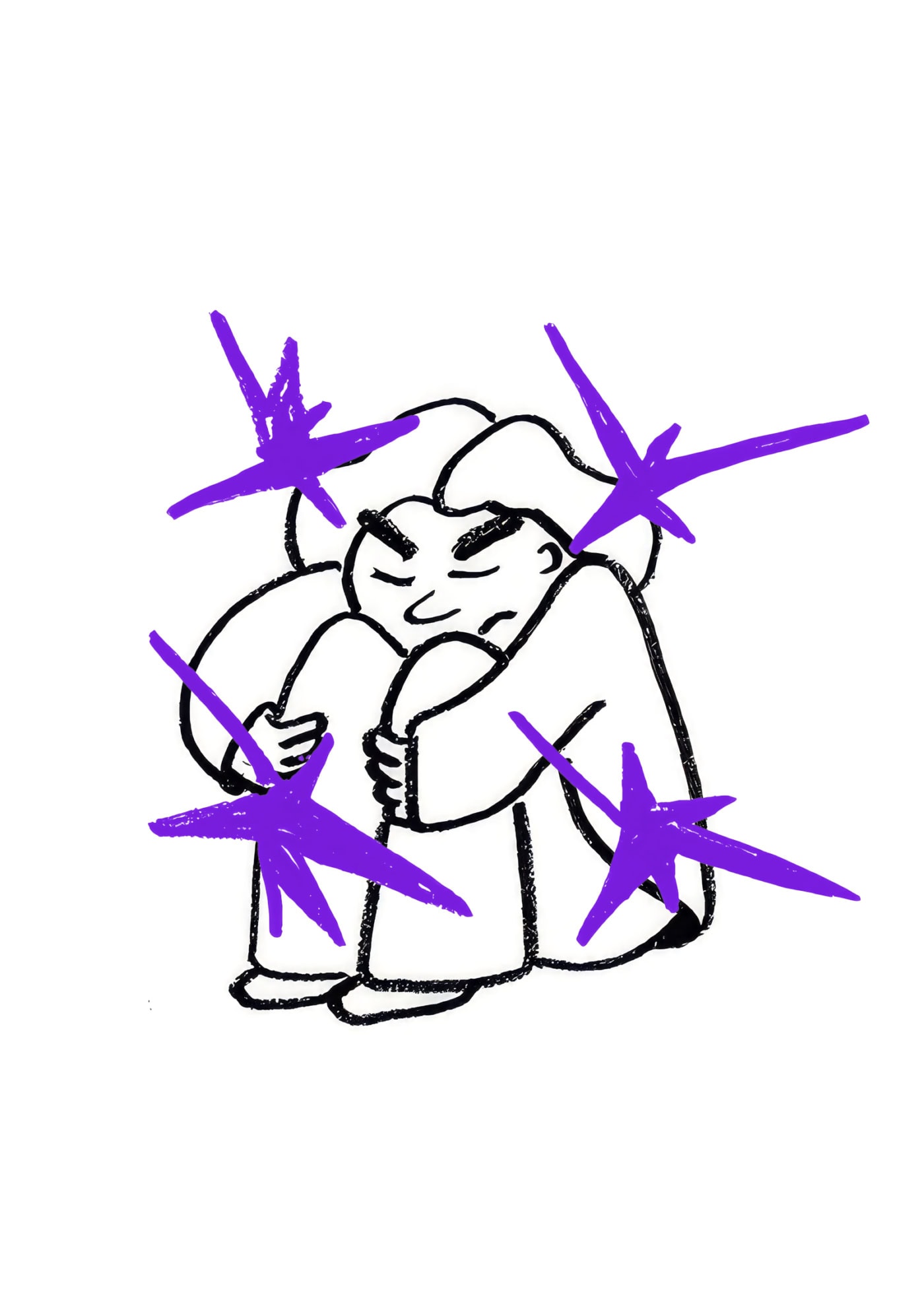
Summer 2024. I am sitting in a clinic somewhere in Bavaria and am supposed to write down my feelings and thoughts. I look at the blank sheet in front of me and then at the sheep in the meadow opposite. They are standing together in a group. Except for one sheep. It stands apart, looking towards the group. The scene reminds me of my group therapy session this morning. There, I was the sheep standing alone. I close my eyes and try to find the feeling I had this morning. And there it is. Small and only very faint. But I feel it: there is anger.
That was almost two years ago now. A lot has happened since then. During my time in the clinic I was angry at least four more times, and my anger didn’t go away once I’d left. There is the anger at being treated unfairly. The anger at getting less than I give. The anger at the man who stands too close to me even though the whole platform is empty. The anger when people don’t keep their word and stand me up. And so much more.
But one thing matters most: the anger I feel is not destructive. It is empowering. Anger helps me recognise my own worth and set boundaries. It doesn’t numb me; it heals my inner child. At last there is room for all my emotions. I have stopped sorting emotions into good and bad, and I am no longer afraid to feel.
It is the end of 2025. My therapist will soon be going on parental leave. In our last session she asks me whether I feel ready for the break from therapy. ‘Yes,’ I say without hesitating. Because at last I no longer need anyone to give me permission to be angry. I can allow myself to take up space and make my anger heard. Because I know my worth. Because the Fury in me heals me instead of destroying me.
Created in the Visual Journalism and Documentary Photography programme at Hochschule Hannover. About the programme · Portfolio review