‘It was really lovely here!’ Thoughts on the temporality of photography – and what Roland Barthes might have said about Nina Hagen’s pop hit ‘Du hast den Farbfilm vergessen’ (You forgot the colour film).
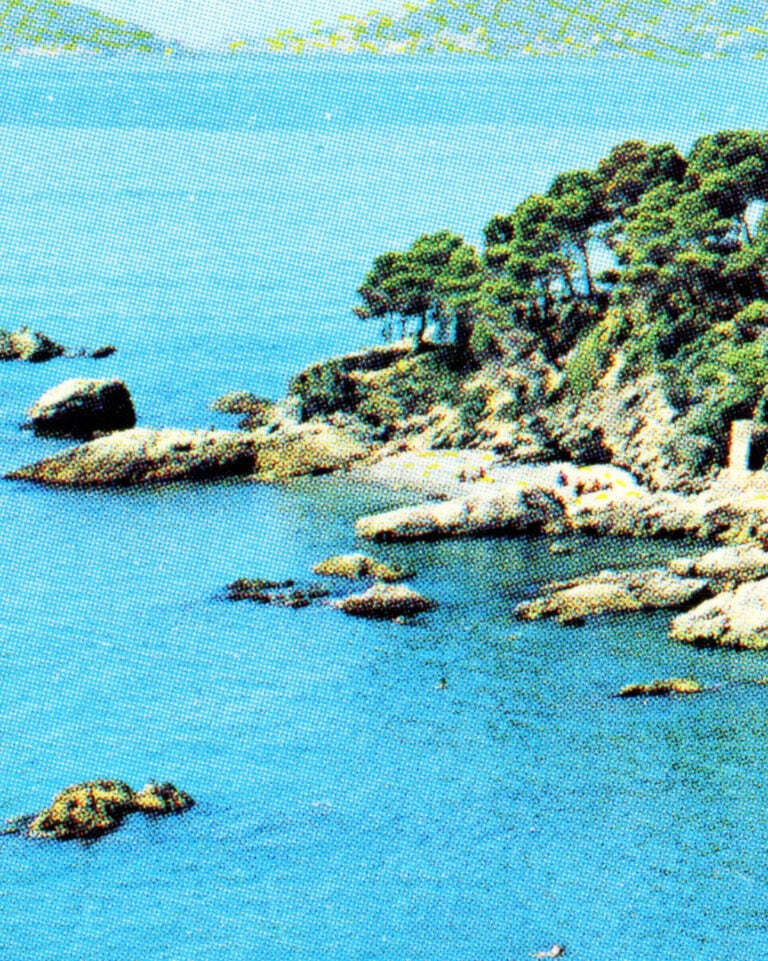

Nina Hagen’s song ‘Du hast den Farbfilm vergessen’ laments the use of black-and-white film to capture colourful holiday memories. In the song, Nina reproaches her boyfriend Michael for not taking any colour film on their holiday together on the island of Hiddensee. That, she says, is why all the photos are now in black and white – and therefore useless.
In the song’s first verse, Nina complains to her boyfriend Michael that he forgot the colour film on their holiday – so now nobody will believe how beautiful it was, and all the blue, white and green will be lost.
Why take photos on holiday?
In our society we draw a clear line between working time and free time. A common way of spending free time is going on holiday. For a limited period, people leave their familiar surroundings to gain new experiences in a more or less unfamiliar place. And in this pursuit of experiences, the camera must never be missing. Especially today, when almost everyone has at least a mobile phone camera and can share the pictures immediately, it seems strange to travel purely for pleasure without taking photos. Photography becomes an important social rite, as the writer Susan Sontag emphasises.
In the song, Nina accuses Michael that now nobody will believe how beautiful it was. The photos were supposed to serve as irrefutable proof that the trip took place, that Nina went through the programme and enjoyed it. The philosopher Roland Barthes, for his part, observed that the advent of photography brought the private into the public sphere. Since the first Kodak camera was introduced more than 100 years ago, it has been possible for a broad section of the population to document their private lives photographically and present them to others.
‘Photographs document acts of consumption carried out beyond the reach of family, friends and neighbours,’ says Susan Sontag. Everything is transient – the holiday, the happy moments, life itself. Photography can capture a fleeting moment and hold it in an image. This ability motivates us to photograph beautiful moments so that we can remember them in future and return to them again and again.
And yet, according to Barthes, photography actually creates a counter-memory: we tend to remember the photo more than the actual experience. Photography preserves the moment, but at the same time it seems to neutralise it.
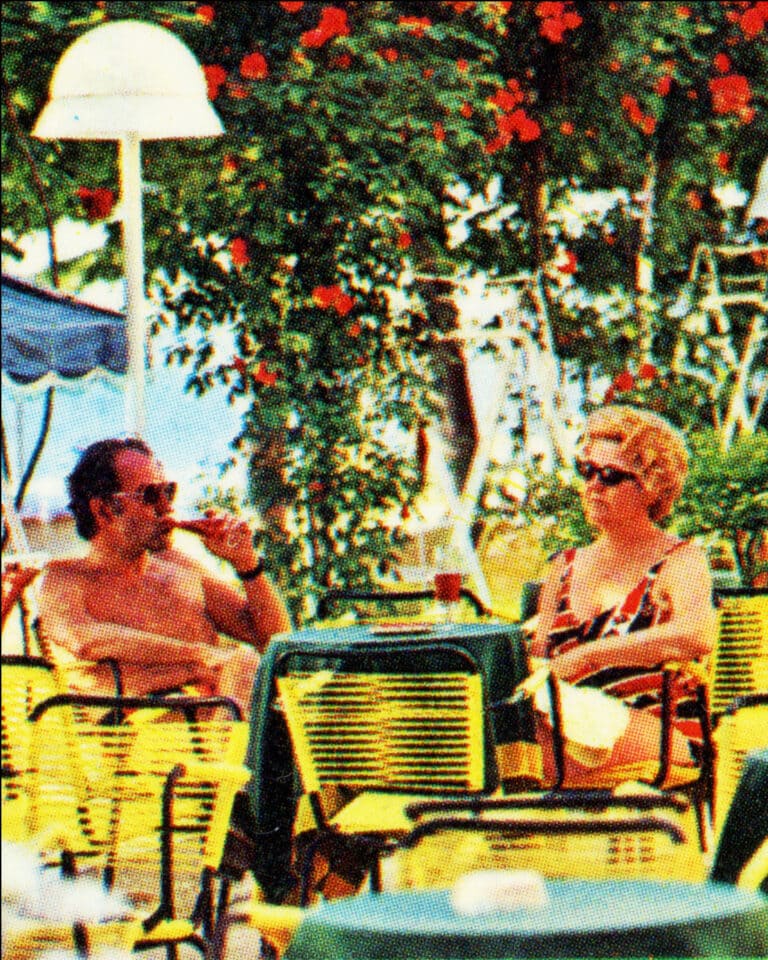

In the chorus, Nina laments in tears that the landscape, she herself and everything else are now only in black and white – and threatens to leave Micha if he ever does it again.
Self-presentation
According to Roland Barthes, a photograph always points to something specific – to the people who are to be presented. The photograph acts as the second nature of its referent, a constant chant of exclamations along the lines of ‘Look here, look at me in my bikini – and here’s a landscape too!’ The individual photos are bound to this clear mode of expression.
In these photographs the landscape recedes into the background. For Nina, what matters most is presenting herself. Just as with today’s Instagram tourism, the place visited and photographed becomes a mere backdrop for the individual’s self-staging in front of the camera.
Authenticity is almost impossible in these photographs. Nina is aware of being photographed – indeed, she wants to be photographed and therefore strikes a certain pose. She thus creates a version of herself that represents not so much her true nature as a staged mask.
Barthes also observed the effect of a camera pointed at him: ‘Unfortunately, photography condemns me always to put an expression on display.’ Photography manifests itself as the appearance of oneself in the form of another. In front of the camera, Nina is at once the person she thinks she is, the person she would like to be, the person the photographer Micha sees in her, and the person whose image he uses to show off his photographic skills.
Studium and punctum
Micha forgot the colour film and recorded the holiday only in black and white. Nina complains that all the blue, white and green will later no longer be true.
For her, beauty was defined by the range of colours, which the photos cannot now offer – instead, shades of grey appear.
Nevertheless, these pictures can still serve as documents of their time. Barthes, who preferred black-and-white photographs and regarded colour as an artificial addition, a kind of make-up, distinguished between studium and punctum when looking at photos. The studium conveys the cultural and social meanings of the picture; viewers can use their prior knowledge to decipher what it shows. Micha’s black-and-white pictures thus prove beyond doubt that Nina was in this place, that this is the Baltic Sea and that this is the fashion of 1974.
A punctum, by contrast, is anchored only in specific pictures – it is the detail that fascinates and moves the individual viewer. The punctum is highly subjective, and for Nina it should have been the colours.

Temporality as punctum
‘What the photograph reproduces to infinity has occurred only once: it mechanically repeats what could never be repeated existentially,’ Barthes writes. The holiday is over; the moments on the beach at Hiddensee will never return. Nina and Micha could go there again, but it would never be the same. Everything is transient – youth, the holiday on Hiddensee, the GDR. Nina stays at home and looks through the photos for her album. She decides which fleeting moments she wants to keep. She at least grants the pictures the function of the studium – as documents of the 1974 holiday on Hiddensee, if not necessarily as images of outstanding beauty.
In the final verse, Nina is back at home with Micha, choosing photos for the album.
For Barthes, even time itself could serve as a punctum – as the thing that captivates him. When he looked at a photograph of Napoleon’s brother and marvelled that those eyes had seen the Emperor, or when he got goosebumps from a portrait of the condemned man Lewis Payne, who was still alive when the portrait was taken but already doomed to die – and was now long in his grave – Barthes had a penetrating experience of the temporality of photography.
Nina, too, will probably look at the old pictures one day and realise that ‘this has been’. Except for the shades of grey, of course. The colours will then exist only in her memory – and will therefore be truer than they would have been on any colour film.
About the photos in this article
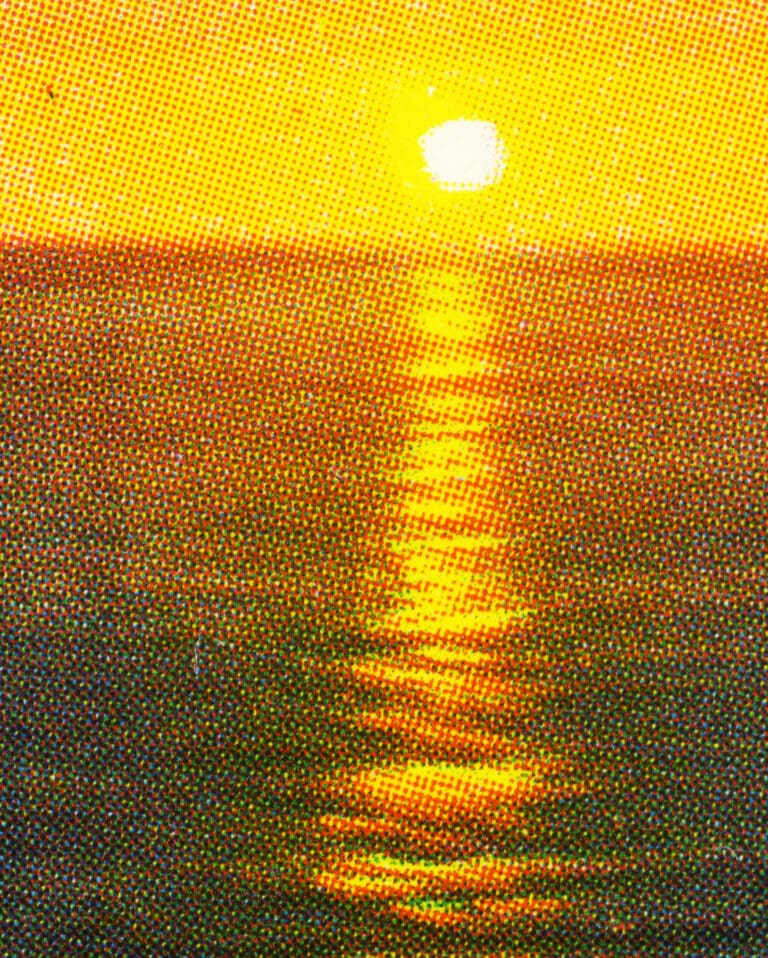
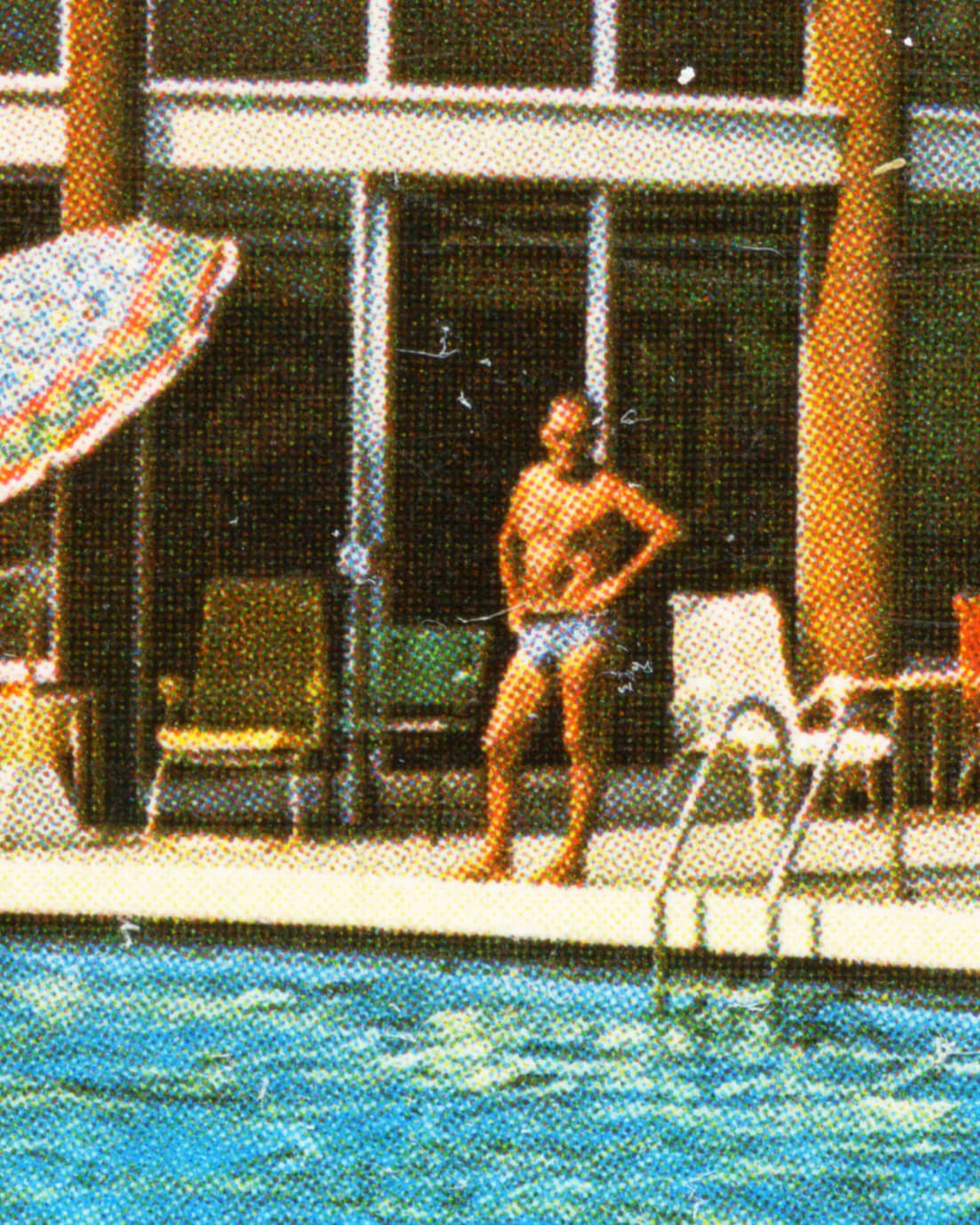
In his photographic work, Nico Baesecke merges the dream destinations of German tourists into one fictional place: the Hotel Belvedere. By greatly enlarging stamp-sized details from postcards, he invites viewers to explore the smallest details of the archive material. Suddenly sunburns, hotel guests who seem unaware of being watched, and small notes or marks made by the postcard writers become visible. Postcards from Rimini, Lake Garda and the Adriatic – colourful photo collages from the 1970s and 1980s – were sent to Germany by the thousand with greetings from ‘Bella Italia’. Almost always on show: the holidaymakers’ hotel complexes, with blue skies, swimming pools, bright orange parasols and plastic sunloungers.
Sources
Hagen, Nina & Automobil: Du hast den Farbfilm vergessen, lyrics by Kurt Demmler, music by Michael Heubach, 1974.
Barthes, Roland: Die helle Kammer. Bemerkungen zur Photographie, Frankfurt am Main 2009; original: La chambre claire. Note sur la photographie, Paris 1980 (English: Camera Lucida).
Sontag, Susan: Über Fotografie, Munich/Vienna 1978; original: On Photography, New York 1977.