Reality TV: life in front of the cameras
Millions watch as strangers fall in love, fight and fail. But how much reality is there really in it?
By Isabel Reda (photos, interviews), Fabian Niebauer (text)


A group of young adults in a shared-flat kitchen. It’s Thursday evening, and outside it’s a mild early-summer day. Inside, pretzel sticks are arranged in glasses and cold bottles from the fridge are mixed into drinks with ice cubes. There’s a fizz as they’re poured. Lots of coming and going between kitchen and living room. The TV is already on, but with the sound off. The tangle of conversations is backdrop enough. Nobody is interested in the adverts. The real spectacle doesn’t start for a few minutes.
Until then: small talk. News from their courses, exams, the new part-time job, the professor’s latest faux pas. The adverts pick up speed again as the big names of the consumer world show off what they’ve spent their PR budgets on. Heidi Klum promotes the next series of Germany’s Next Topmodel – and then, at last, it begins.
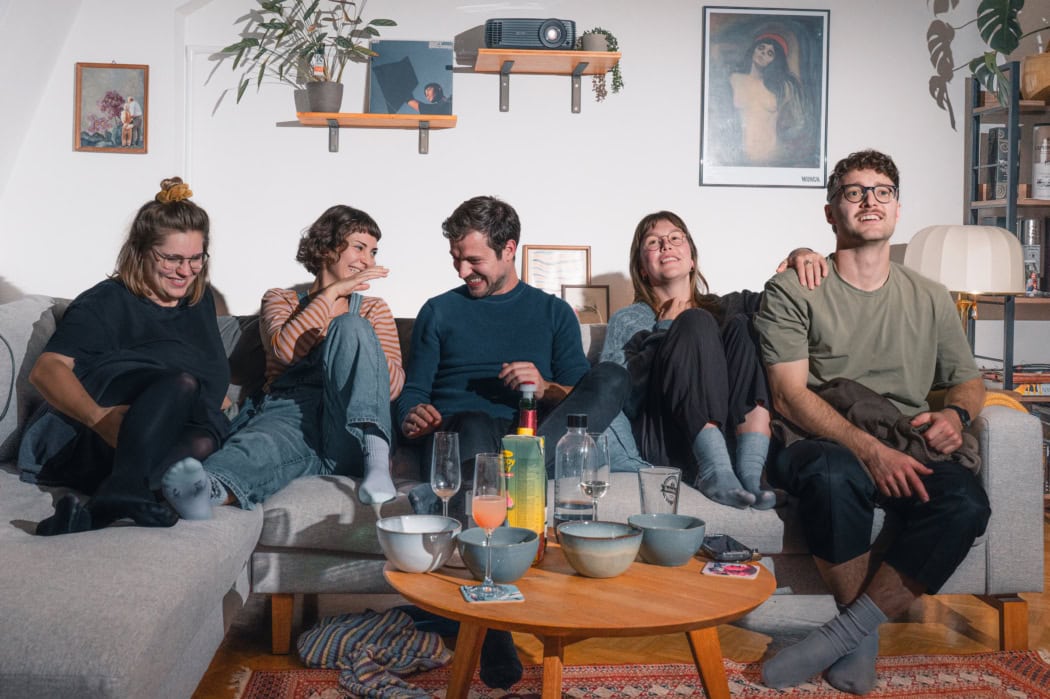 Dresden, November 2024.
A group of friends watches the final of the dating show ‘Die Bachelorette’. For many young people, watching reality TV together is a social event.
The reality TV boom
‘Temptation Island’, ‘Ex on the Beach’, ‘Princess Charming’, ‘Bauer sucht Frau’ (the German ‘Farmer Wants a Wife’), ‘Der Bachelor’. On a beach in the Caribbean on Mondays, on a farm in the Allgäu on Thursdays. That, or something like it, is probably how it goes in many shared flats in big cities when people get together for a collective trash TV night. The formats range from the familiar dating, casting and game shows to social experiments played out in public. Broadcasters advertise themselves with slogans such as ‘The home of the best reality shows’. They offer playlists, podcasts and magazines to go with the programmes. A whole universe of content where you can stock up on ‘background’ and ‘gossip’. An inexhaustible pool of intrigue, games and drama.
For a long time, reality TV was seen as a ‘guilty pleasure’, something you might do in secret but wouldn’t want to admit to. But the communal ‘trash TV night’ has now become a social event among young people. You meet up to gawp together and can swap views on what you’ve seen in real time. A shared experience and a welcome distraction from your own reality.
Mutual support through entertainment? An understandable reaction, given the state of the world. Escaping everyday life, satisfying the urge for light entertainment. Supporters see it as a chance to compare what they see with their own lives and to recognise and reflect on their own values. At the same time, the formats are criticised – among other things for crossing boundaries, gagging contracts, unchecked drinking, humiliation, toxic behaviour, manipulation, and exploitative conditions with poor pay, little sleep and no privacy.
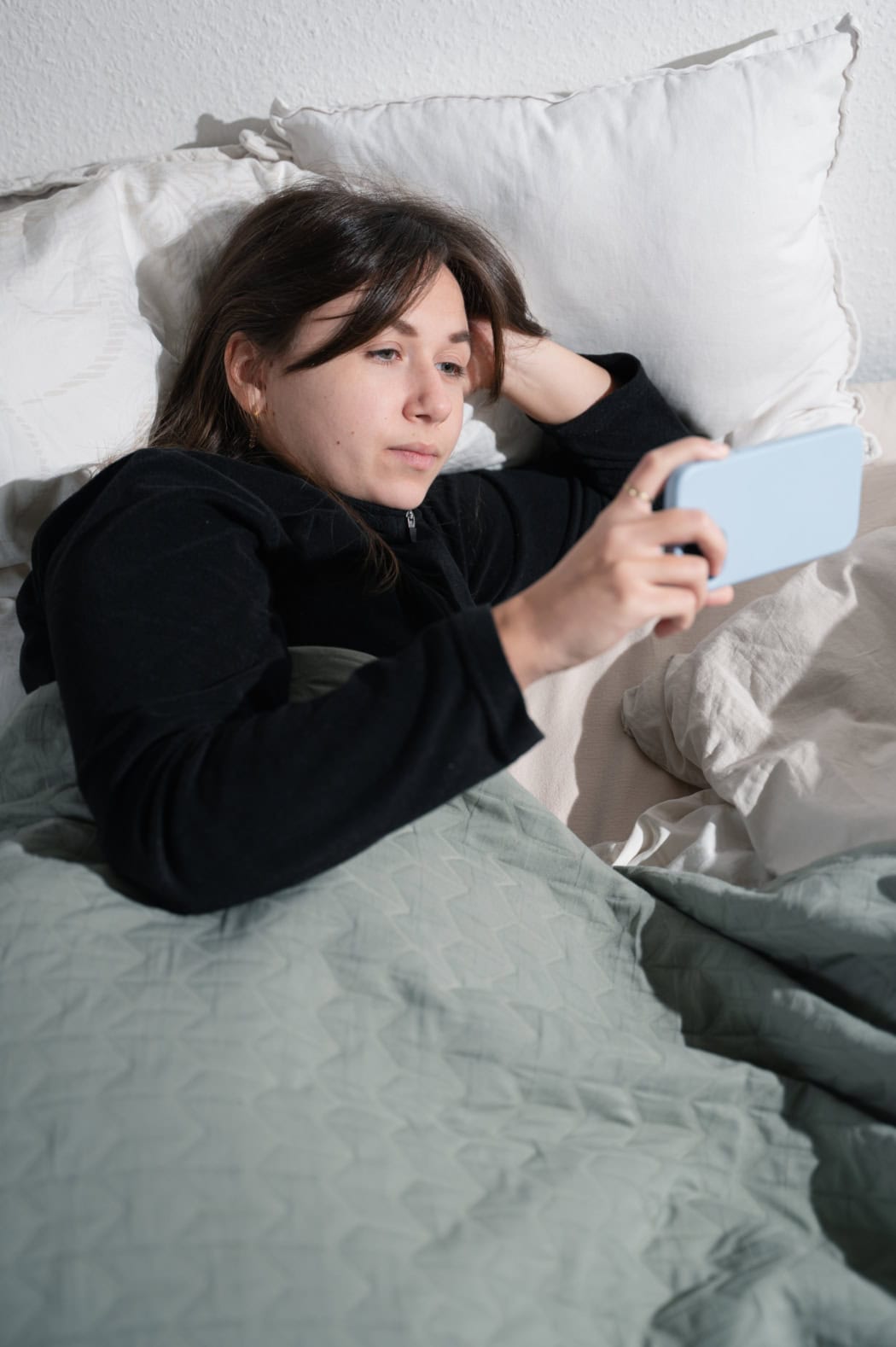 Hannover, December 2024.
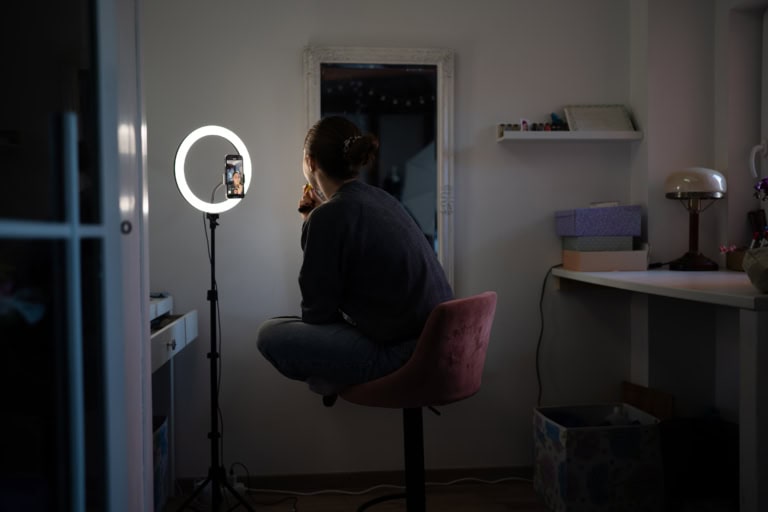
These days, Franzi watches almost only commentary versions, in which well-known YouTubers show clips from the original shows and comment on them. Watching reality TV helps her relax. At the same time, she engages critically with the content.
The viewer
Franzi has a master’s degree in intercultural psychology and enjoys watching reality TV. She got into it in a big way during the coronavirus pandemic, in a shared flat with seven people. Back then, watching together was a social event. Today Franzi mostly watches alone, often on her phone while doing other things. She now prefers the commentary versions, in which YouTubers put the most interesting scenes into context. ‘That can be dangerous, because you only see a fraction of what happened to judge a person by. Still, you get the feeling that you know these people.’
Franzi observes that production teams often assign contestants certain roles and edit them accordingly. Some of them are toxic – and are booked again and again precisely because of that. Broadcasters are too inconsistent about dropping people because of their behaviour. ‘The broadcasters only react when there’s strong pressure from outside. Otherwise they bank on polarising people to get more clicks and viewers. It escalates, and the contestants realise: ah, that’s my role, that’s why I get booked.’
People were screaming so much – that’s where the fun stops for me.
Reality TV is popular, she says, because people like talking about others. Franzi explains that ‘gossip has a very bad reputation, but it’s a natural urge. It’s how we judge which members of a society are good for us and which are bad.’ The contestants want attention too. What matters, though, is how people are talked about: Franzi draws the line at hate and incitement. Another reason people like watching reality TV, in her view, is a kind of craving for sensation. But with ‘Das Sommerhaus der Stars’ (‘The Summer House of the Stars’), Franzi thought about switching off. ‘People were screaming so much – that’s where the fun stops for me. It just isn’t entertaining any more.’
Franzi finds it problematic when podcasts, for example, speculate about contestants’ psychology. ‘These are real people. Attributing narcissism or a personality disorder to them is out of line.’
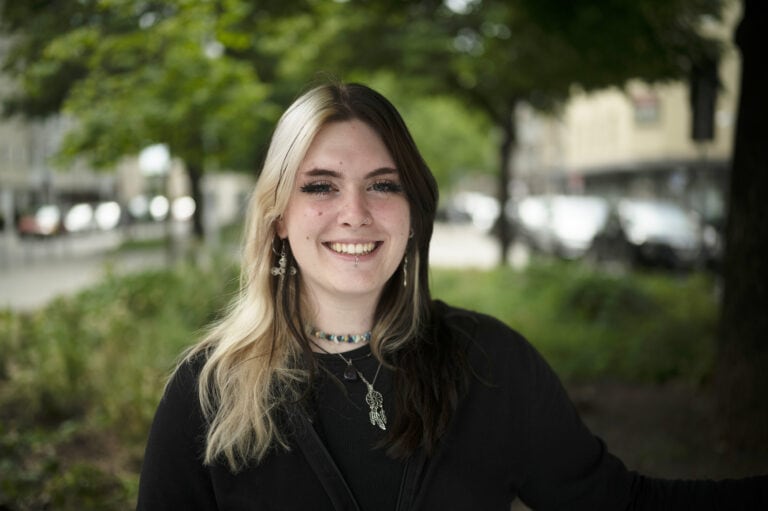
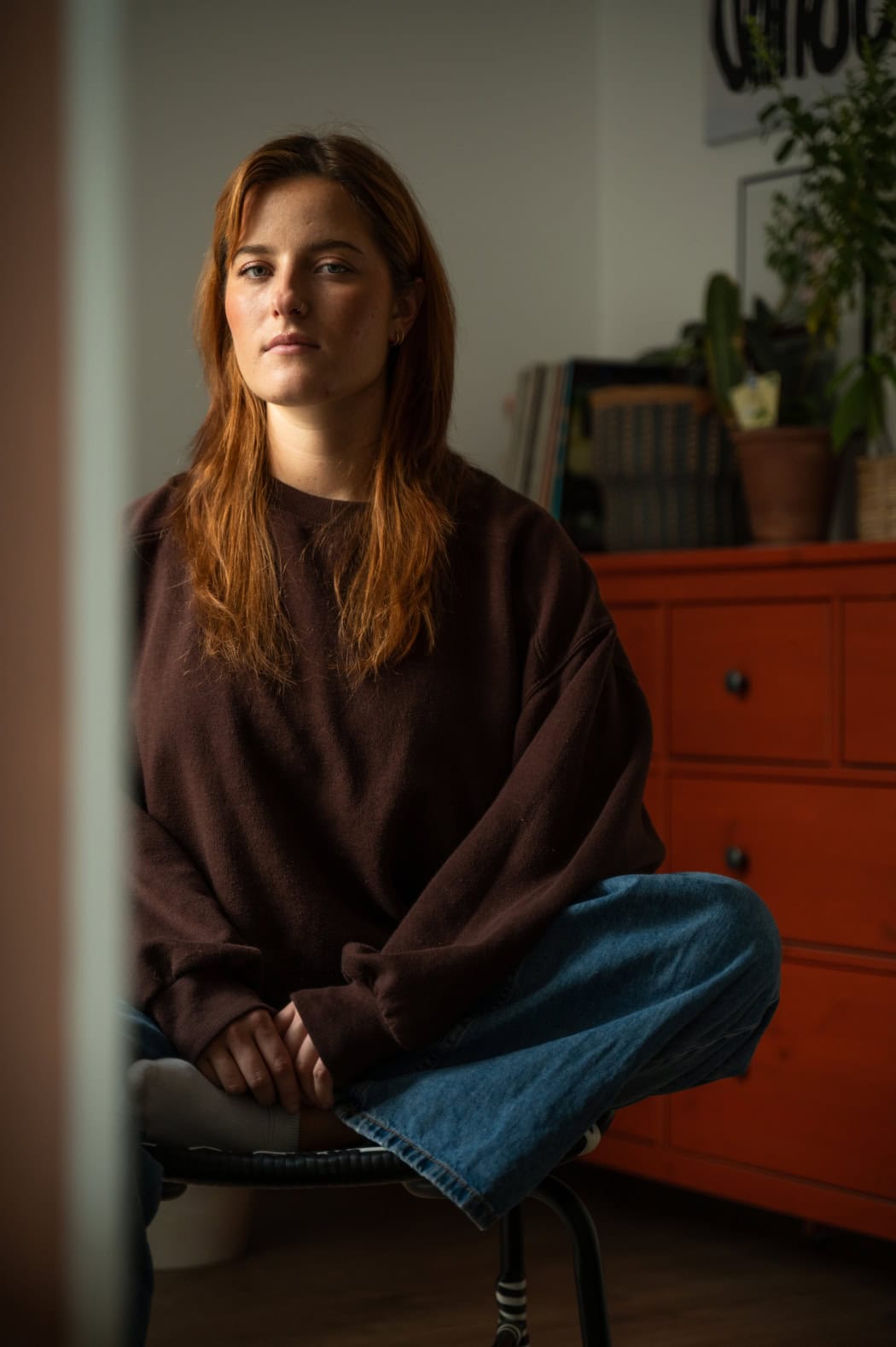 Berlin, November 2024.
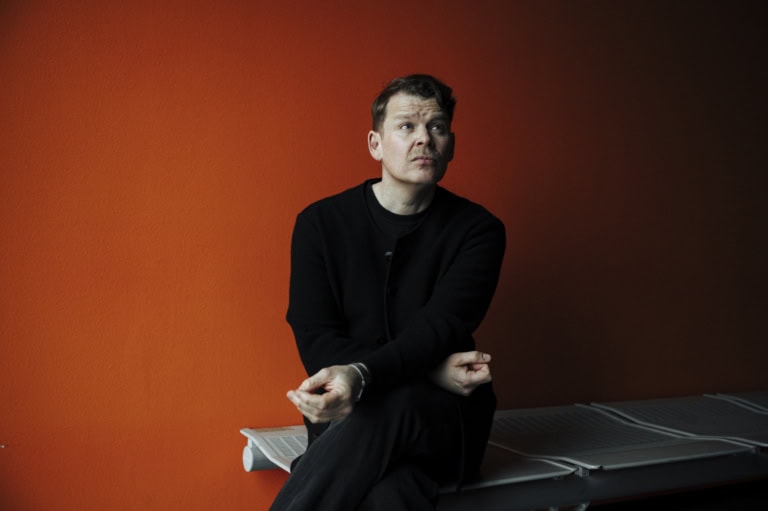
Portrait of Luisa. She is a journalist working in podcast production at a media company. In 2019 she worked on the set of a reality show as an editor.
The producer
Luisa is a journalist at a media company (anonymised at her request). In 2019 she worked on the set of a reality show as an editor. She loves reality TV. She used to keep quiet about it; now she talks about it openly. Her favourite format is ‘Das Sommerhaus der Stars’. But when things get too heated, she switches off: ‘You get the feeling that broadcasters provoke fights. The wilder, the better in reality TV.’
The wilder, the better in reality TV.
Luisa was on set and at the daily editorial meetings for the dating show. She can say quite clearly that nothing is scripted. Nor does the team tell participants what role they should play.
Even so, the team did intervene. There was one person, for example, who was getting a lot of airtime. That was a problem, because it meant no other storylines could develop. So she was sent on a fake date. But there are also situations in which it would be irresponsible of the production not to step in. On the dating show, one male contestant’s behaviour became toxic. The team watched what was happening for a few days and then decided to take him out of the villa. But hardly anything was explained to the audience, Luisa criticises.
According to Luisa, the way contestants behave and react is real. Still, there are conditions that influence the dynamics of the shows. One important factor, for example, is alcohol. ‘There are formats with limited alcohol so that people can’t get completely wasted. They lead to more conversations and things are somehow more serious. In formats with unlimited alcohol, things get correspondingly wilder and more dramatic.’
The edit can provoke and dramatise, but it can’t put words in your mouth.
The edit also has a big influence on a show’s dynamics. It is extremely powerful: ‘The edit can provoke and dramatise, but it can’t put words in your mouth.’ Sometimes, for instance, the edit shows a reaction that wasn’t the actual original one.
Luisa is critical when contestants are shown who clearly have problems and don’t know what they are doing. ‘If people aren’t well, they have no business being on reality TV. I think it’s important to pay more attention to people’s health than to the ratings.’
There are psychologists on site who advise the production. They sit in on the editorial meetings and are there to check that the contestants are all right and that the show doesn’t get ‘too wild’. However, Luisa admits that because they depend on the broadcasters, the psychologists are probably not always entirely objective. She says there have been cases in which broadcasters acted too late, which damaged their reputations.
For Luisa, one benefit of reality TV is that it can hold up a mirror to society. She thinks the shows get people talking about how others behave and, where appropriate, reflecting on it. She also sees it as positive that queer formats create more visibility and openness towards ways of living that aren’t heteronormative.
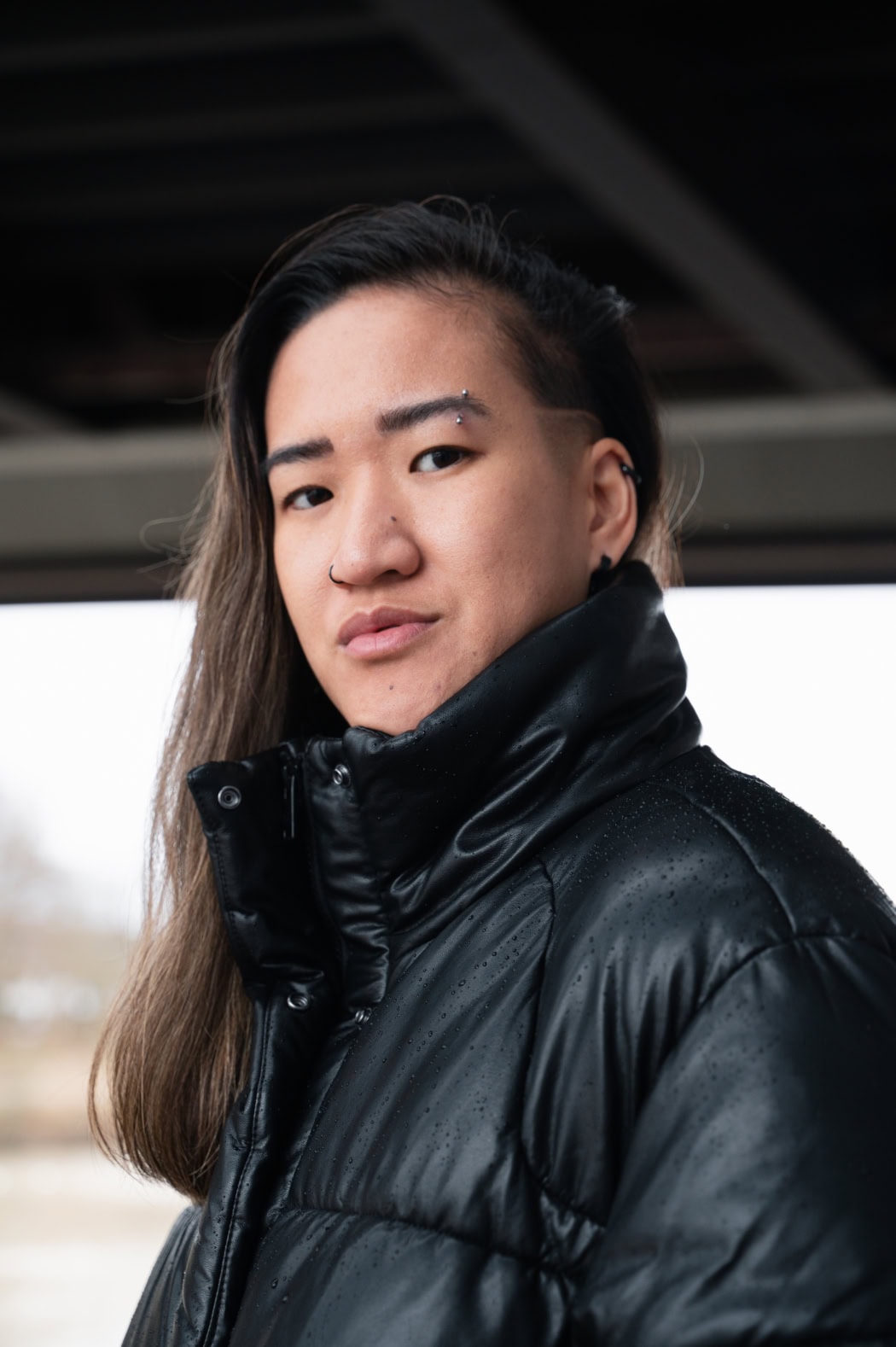 Hannover, January 2025
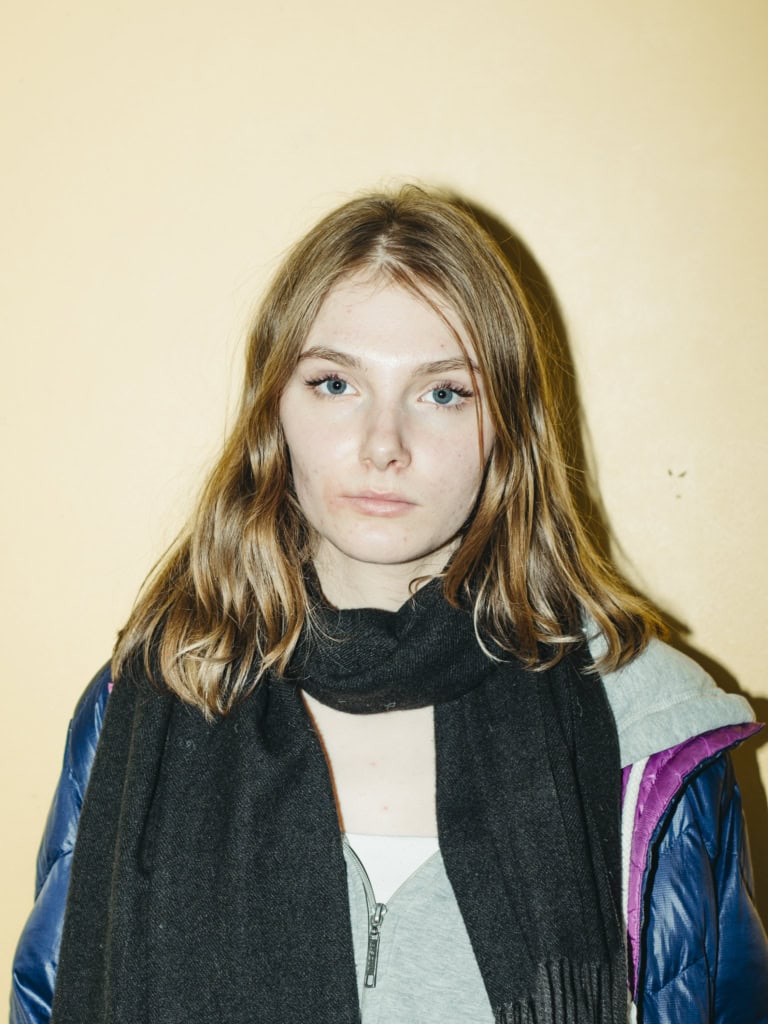
In 2024, Hang took part in the lesbian dating show ‘Princess Charming’. Her motivation was to tell her story and to empower other people.
The contestant
In 2024, Hang took part in the fourth series of the lesbian reality show ‘Princess Charming’. She wanted to show that people should come out despite having a Christian family and a migrant background. ‘I wanted to encourage people not to hide,’ she says. Her aim: to be authentic. She was surprised that nothing was scripted. At the same time, some scenes had to be shot several times, which didn’t feel real.
I lost three kilos because it was such a strain psychologically.
Hang describes her time in the Princess Charming villa as interesting and exciting. Nobody was allowed to leave the villa, which was fitted with cameras throughout. ‘It’s basically like being in prison,’ she says. Even so, she felt very comfortable most of the time. At first Hang was very careful about what she said, but after a few hours she forgot the cameras.
For Hang and other participants, though, it was hard that there was nowhere to retreat to, because the cameras were everywhere. They also had to wear their microphones at all times – even in the loo. Without any outside distractions, the time felt extremely intense. ‘A day feels like a week,’ she says. On top of that, the participants don’t know what time it is. The production often woke them with music after only a few hours’ sleep.
Hang criticises the fact that before filming began, the production isolated all the participants, alone in a hotel, with no phone and no contact. ‘I think they do it to make you go crazy.’ She believes many people underestimate what taking part involves and don’t know how much work goes into it. The psychological strain shouldn’t be played down, she says. ‘I lost three kilos because it was such a strain psychologically.’ You need patience and a thick skin – including after the show, when the hate comments come in. Hang herself came off well and is glad she took part. She now supports others via social media. In future, she would like to see more formats that show queerness.
Authenticity versus staging
In most reality formats there are cameras everywhere, sometimes even in the bathrooms. Several terabytes of data are generated every day. So why do people take part in these shows? For many, it’s a springboard to a career as an influencer or a way to become a so-called D-list celebrity. Others don’t realise what they’re letting themselves in for. The impact on their private lives and the psychological strain often only become clear afterwards.
For broadcasters, the motivation behind reality formats is clear: production costs are tiny compared with big film and TV series productions. The revenue from high viewing figures is enormous. And demand is rising. An estimated 4.5 million people watched the first series of ‘Too Hot To Handle Germany’.
For many, reality TV means experiencing authenticity. What they get to see is supposed to be real life with real people. But how much authenticity is possible when cameras and microphones are hidden everywhere? The Hawthorne effect describes how people change their behaviour when they know they are being observed. This distorts reality and leads to a loss of authenticity.
 Hannover, January 2025
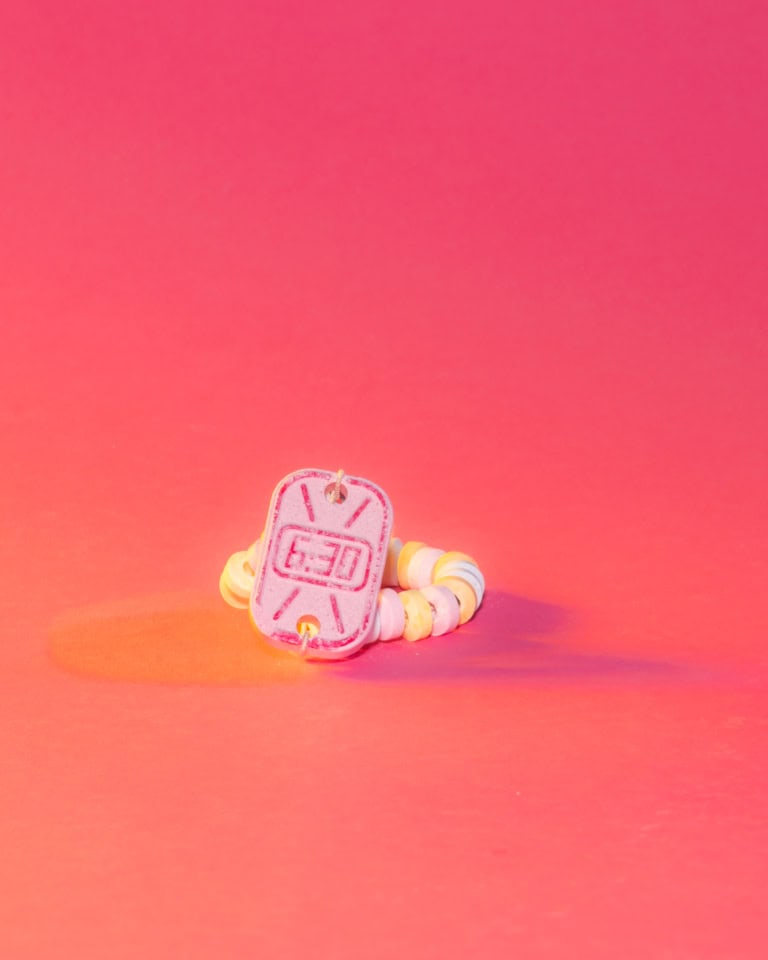
Sweet-themed clock in the studio. On reality shows, contestants have neither phones nor watches. With nothing to go by, many lose all sense of time – and experience the weeks of filming all the more intensely.
 Hannover, January 2025
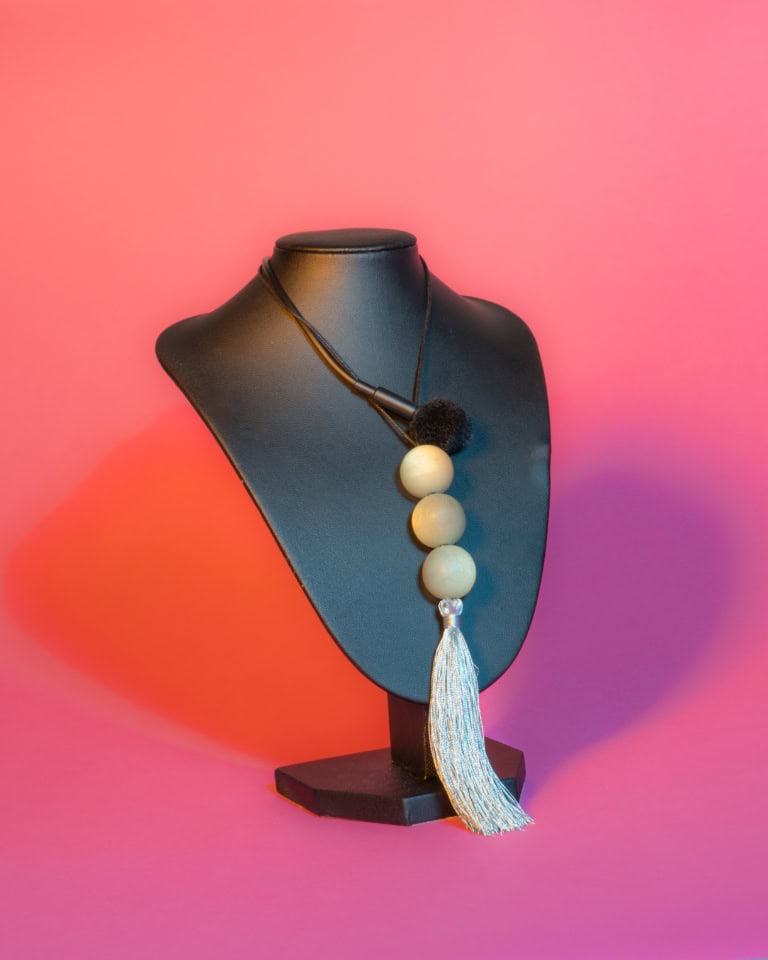
Microphone necklace in the studio. Reality TV thrives on constant presence: lack of sleep, alcohol and permanent observation create extreme situations that make for gripping television.
Participants in reality shows always have to wear their own microphone, round the clock. In some cases they aren’t allowed to take it off, not even on the loo. AI analyses the sheer mass of words spoken at the same time.
Conflicts in reality shows take viewers on an emotional roller coaster. They experience what their star experiences and feel very close to them. On social media, people discuss what’s happening in real time and follow their favourites. Because the shows feel so accessible, viewers begin to identify with the contestants. Parasocial relationships between viewers and participants are not unusual. Fans feel close to their stars and believe they know them well because they share in their everyday lives.
Reality TV and reality
The term ‘reality TV’ has become an umbrella term for a whole family of genres and subgenres. The line between real and fictional is blurring, and clear distinctions are hard to make. Broadcasters sometimes play with this, leaving it open what is reality and what is fiction. They don’t even need a script any more. On some shows, the desired dynamic is shaped during the selection process: characters are invited whose combination will later lead to conflict on screen. Conflict creates drama – and drama has held audiences spellbound since antiquity. It’s a simple calculation, and the production teams are happy to make it.