Photo essays Award winners Grey Grounds. More than 6,000 soldiers, two training areas, a town marching in lockstep. In Munster, the ‘Zeitenwende’ has long been part of everyday life. A photo essay about a place where people applaud the Bundeswehr. Award winners The Abortion Plot. Noemi Ehrat shows abortion as an everyday practice. Her long-term project asks not why but how: matter-of-fact, calm and beyond the political headlines. Award winners The invisible people on the waiting list. Germany lags behind the rest of Europe on organ donation – we show those who can’t wait any longer. Award winners In the land of the white mountains. Jasper Hill makes visible what a century of potash mining has left behind. Caught between food security and environmental damage, an industry faces a turning point. Award winners My house wrapped in clouds. Armina Ahmadinia returns to the Caspian Sea. Her photographic work tells of the retreating water, the loss of familiar places and a quiet longing for closeness and home. Award winners Dreamed for us. Markus Heft portrays older queer people in Germany. Since 2022, he has been creating intimate portraits collaboratively, complemented by still lifes and places. The project preserves queer history and makes visible the double marginalisation of old age. Final projects Waiting for war. For his bachelor’s project, photographer Patrick Slesiona travelled to Armenia. For years the democratic country has had to defend itself against its authoritarian neighbour Azerbaijan. Award winners Hospital on wheels. In “Diagnosis”, Emile Ducke photographs the unusual health care in the Russian hinterland. Award winners The dying river. Jonas Kako documents the water crisis along the Colorado River. Award winners Journey along the Yenisei River. For her work “Hiding from Baba Yaga” Nanna Heitmann crosses Siberia, as her grandmother once did. Award winners “For a long time, parents in Iran believed that good girls would not dance in public.”. Shirin Abedi returns to her native Tehran for a report on ballerinas. Award winners On the edge of the hail of bullets. Rafael Heygster questions society’s approach to war in “I Died 22 Times.” Award winners “Let there be snow.”. Elias Holzknecht sheds light on the consequences of climate change in the Alps. Award winners From trying to photograph the wind. Lithuania has the highest suicide rate in Europe. Hannes Jung examines the background in his work. Award winners City of steel. In Zenica, Bosnia, student Lasse Branding documents the impact of the local steel mill on the people of the town. Award winners Coal mining. Since 2017, graduate Daniel Chatard has been documenting the conflict in North Rhine-Westphalia. Award winners Youth in Lockdown. In the project “Between the Years”, student Valentin Goppel deals with the effects of the pandemic on his generation. Ideals The last bastion. Lützerath has been ‘excavated’ – despite resistance and occupation. Our author witnessed the activists’ daily life and struggle up to the eviction. Ideals All too human. Hunting divides opinion: some see it as necessary to stabilise damaged ecosystems. For others, hunting is only about trophies. Ideals Giving birth in a safe place. Birth centres are seen as an alternative to overcrowded delivery rooms. How do the midwives there work? A visit to Hannover-Herrenhausen. Ideals Behind the walls of the Rosicrucians. The spiritual community ‘International School of the Golden Rosycross’ is regarded as a sect. What ideals do its members pursue? Silence ‘I don’t look for silence – and yet it’s everywhere’. A young photographer drifts through the city and discovers quiet places that hardly anyone sees. Ideals Portrait of a displacement. Vivid graffiti, buzzing events – the Koch-Areal in Zurich was an alternative place to live. Its eviction sparked a debate about community and gentrification. Ideals Utopia versus state power. Student Tim Wagner accompanies the clearing of the Dannenröder Forest. Ideals How Najiba became Afghanistan’s first drag queen. Growing up in a conservative Afghan family, Najib was abused because of his queer identity. Today, as Najiba, he campaigns for the LGBTQIA+ community. Ideals Wildwuchs works. Community-supported agriculture aims to make environmentally friendly farming possible. Our author wanted to know whether it works and visited a farm. Ideals Small but defiant. While they were stranded during the pandemic, Circus Siola’s caravans were shot at and its performers insulted as ‘scum’. Is there no place in our society for Siola’s ‘classical old-European circus art’? Silence Groundhog Day for the humble sandwich: a homage. Simple, familiar, underrated: a photographic declaration of love to the simplest meal of the day. On the margins Sunday morning on the city’s edge: a walk along Hannover’s fringes. Quiet streets, empty squares, early light: a photographic approach to the fringes of a city. On the margins Nordhorn Range: ‘There’s nothing we can do about it, in court or otherwise’. For years, residents have been protesting against low-flying jets and bombing practice – and keep coming up against limits. On the margins Magic on the edge of town: what remains of a childhood on the fringes. Our author returns to the playgrounds and woods of his childhood – and discovers how sobering reality can be. On the margins ‘People here knock on a lot of doors’. In eastern Malmö, a neighbourhood is struggling with its reputation – and with the hope that doors will open for the people who live there. On the margins ‘Why would he need a raincoat? He’s got a car’. How tunnels and roads shape life on the Faroe Islands – sometimes with surprisingly dry logic. On the margins The war that stays invisible: exploring Poland and Moldova. How the Russian invasion shows itself in the border regions – and at the same time stays hidden. Pictures from the threshold of Europe. On the margins Fleeing the GDR in a car boot: ‘Inside, I was still on the run’. Veronika Schneider fled the GDR as a young woman – and only realised decades later how long the fear had kept its grip on her. On the margins GDR garage courts: the legacy of the ‘Typ I Dresden’. On the edges of eastern German towns they stand in their thousands – once a simple parking space, today a contested piece of everyday culture. On the margins ‘It was raining ice, and our feet were frozen’. A personal visit to the memorial: a survivor’s voice guides us through the history of the Bergen-Belsen concentration camp – between grief and new beginnings. Silence Turkey earthquake 2023: how a bereaved man is fighting for justice. A man loses his grandmother when a hospital building collapses in the earthquake – and takes up the fight against those responsible. Ideals Pet play: welcome to the Wuffel zone. Wearing dog masks to their regulars’ night, on a lead to a party – why some people enjoy slipping into animal roles. Silence ‘We want to give dying a place of the greatest possible security’. At Hospiz Luise in Hannover, carers accompany people on their final journey – and turn fear into a sense of safety. Silence Peatland protection: why bogs are among our most important climate savers. From carbon store to political issue: why wet soils matter so much for the climate – and four people who are fighting for them. Ideals A second life for building materials. The construction industry is one of the biggest consumers of raw materials and at the same time the world’s largest producer of waste. Reclaiming building components could help reduce the problem. Water Lake Neusiedl: tracing the salt pans. In 2022 Austria’s largest lake was at risk of drying up for the first time in 150 years. Our photographer Florian Sulzer investigated the causes. Water Burkinis at the swimming pool: the weight of other people’s stares. Just going for a swim – and being watched the whole time. Our author tells of prejudice at the poolside. Water The fisherwoman of Memmingen: the row over the Fischertag. Can a single woman break open a centuries-old male ritual? A small town in the Allgäu is struggling to find an answer. Water Cold and deep: how water shapes Iceland’s culture. Surrounded by ocean, criss-crossed by glaciers, enlivened by hot springs: one element shapes the identity of an entire nation. Water Water privatisation in Chile: a village fights for its water. In hardly any other country is this resource so completely in private hands. In Patagonia, one community is fighting back against the consequences. Water MS Norröna: by ferry across the North Atlantic to Iceland. From Denmark via the Faroe Islands to the far north: a passage through the rugged beauty of the sea. Water New shores: floating islands between art and ecology. Floating platforms like the ‘Zukunst’ in Hannover create green open spaces – a concept that is catching on around the world. Water ‘It’s like dancing in the water’. Flexibility, timing and blind trust: how a demanding sport shapes young athletes. Power and control Modern witches: how a musician finds empowerment in witchcraft. Between the stage and spells: how a young woman draws new strength from magic and community. Power and control Dülmen wild horses: truly wild or just a show? The annual round-up in the Münsterland draws thousands – and raises awkward questions about how we treat animals. Power and control Friedrich Merz: between BlackRock and the Chancellery. The CDU leader presents himself as a man of the people – despite a multimillion past in the world of finance. Why do so many listen to him? Power and control ‘The Taliban won’t change because of sanctions’. Julian Busch spent months living in Afghanistan as the only German journalist there – and explains why pressure from outside achieves little. Power and control Leaving the church: ‘Maybe this isn’t the right place for you’. The congregation once ruled every part of her life. Two years ago our author turned her back on it – and today she sees more clearly. Power and control ‘For me, power means having a say over my own life’. Six young people on how they leave the feeling of helplessness behind – and redefine strength. Traces Life in Transnistria: a state without recognition. What is it like to live in a place that doesn’t even exist on most maps? Young people tell their stories. Traces Irmela Mensah-Schramm: fighting Nazi slogans with a scraper and a heart. For decades one woman has been scraping messages of hate out of public spaces – she has removed more than 140,000 of them. The attacks go on. Traces ‘The wolf is a problem that can be solved’. Protect or shoot? How farmers and conservationists are struggling over the right way to deal with the returning predator. Traces Unexploded bombs beneath the city: the dangerous job of bomb disposal. Painstaking precision with deadly risk: a look at a profession in which every move has to be exactly right. Traces Into the bushes. From city parks to cemetery toilets: how public places became refuges for gay men – and why cruising still exists today.
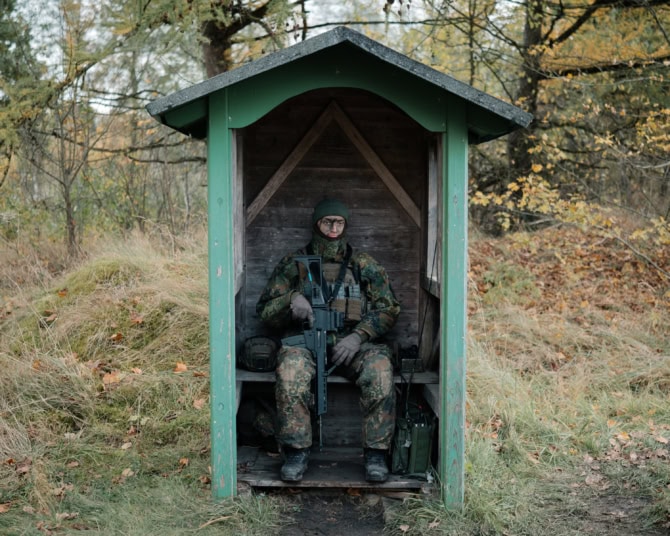
Award winners Grey Grounds. More than 6,000 soldiers, two training areas, a town marching in lockstep. In Munster, the ‘Zeitenwende’ has long been part of everyday life. A photo essay about a place where people applaud the Bundeswehr.
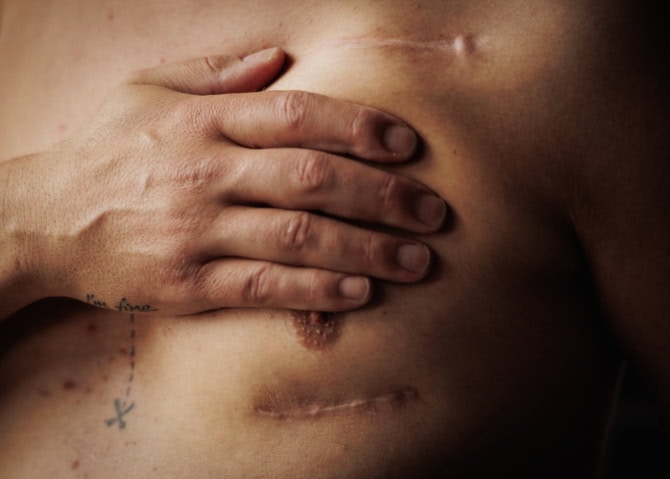
Award winners The Abortion Plot. Noemi Ehrat shows abortion as an everyday practice. Her long-term project asks not why but how: matter-of-fact, calm and beyond the political headlines.
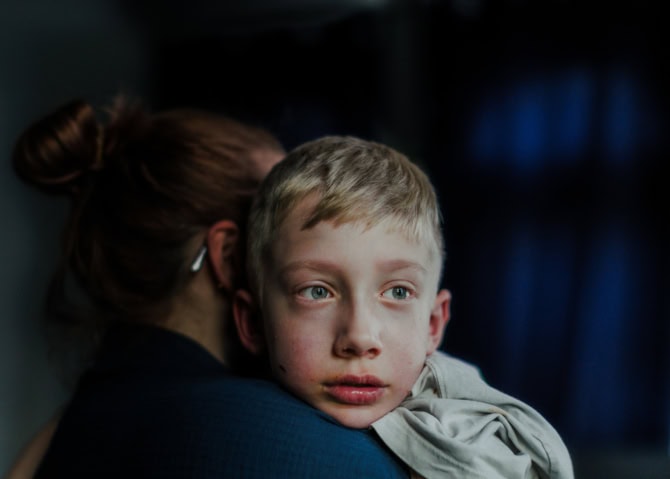
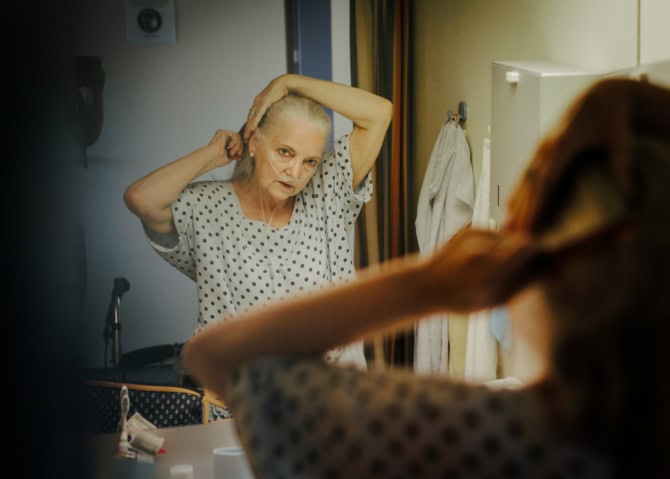
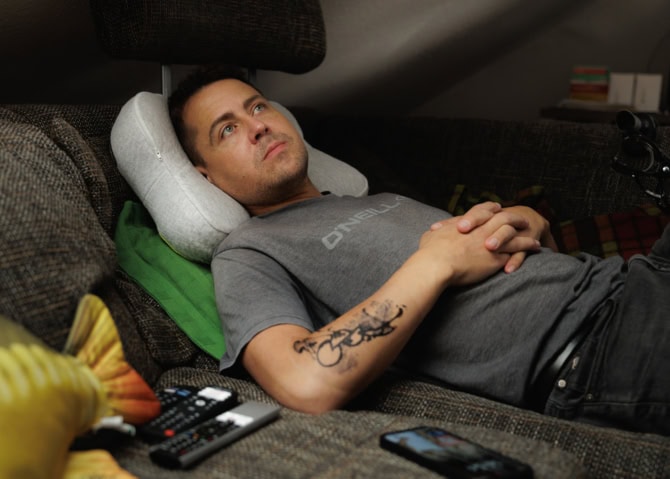
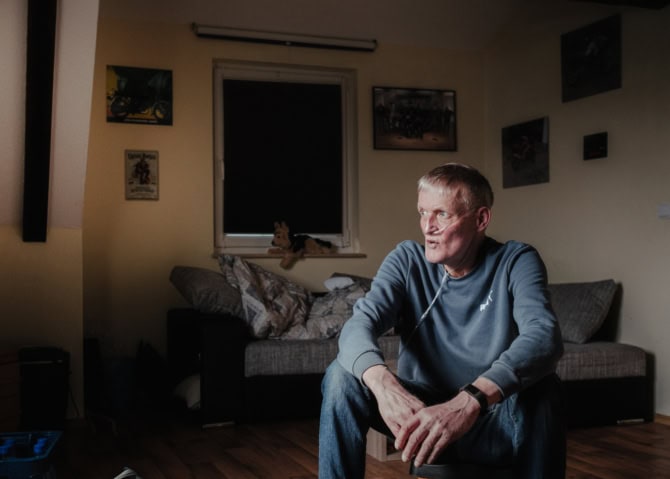
Award winners The invisible people on the waiting list. Germany lags behind the rest of Europe on organ donation – we show those who can’t wait any longer.
Award winners In the land of the white mountains. Jasper Hill makes visible what a century of potash mining has left behind. Caught between food security and environmental damage, an industry faces a turning point.
Award winners My house wrapped in clouds. Armina Ahmadinia returns to the Caspian Sea. Her photographic work tells of the retreating water, the loss of familiar places and a quiet longing for closeness and home.
Award winners Dreamed for us. Markus Heft portrays older queer people in Germany. Since 2022, he has been creating intimate portraits collaboratively, complemented by still lifes and places. The project preserves queer history and makes visible the double marginalisation of old age.
Final projects Waiting for war. For his bachelor’s project, photographer Patrick Slesiona travelled to Armenia. For years the democratic country has had to defend itself against its authoritarian neighbour Azerbaijan.
Award winners Hospital on wheels. In “Diagnosis”, Emile Ducke photographs the unusual health care in the Russian hinterland.
Award winners Journey along the Yenisei River. For her work “Hiding from Baba Yaga” Nanna Heitmann crosses Siberia, as her grandmother once did.
Award winners “For a long time, parents in Iran believed that good girls would not dance in public.”. Shirin Abedi returns to her native Tehran for a report on ballerinas.
Award winners On the edge of the hail of bullets. Rafael Heygster questions society’s approach to war in “I Died 22 Times.”
Award winners “Let there be snow.”. Elias Holzknecht sheds light on the consequences of climate change in the Alps.
Award winners From trying to photograph the wind. Lithuania has the highest suicide rate in Europe. Hannes Jung examines the background in his work.
Award winners City of steel. In Zenica, Bosnia, student Lasse Branding documents the impact of the local steel mill on the people of the town.
Award winners Coal mining. Since 2017, graduate Daniel Chatard has been documenting the conflict in North Rhine-Westphalia.
Award winners Youth in Lockdown. In the project “Between the Years”, student Valentin Goppel deals with the effects of the pandemic on his generation.
Ideals The last bastion. Lützerath has been ‘excavated’ – despite resistance and occupation. Our author witnessed the activists’ daily life and struggle up to the eviction.
Ideals All too human. Hunting divides opinion: some see it as necessary to stabilise damaged ecosystems. For others, hunting is only about trophies.
Ideals Giving birth in a safe place. Birth centres are seen as an alternative to overcrowded delivery rooms. How do the midwives there work? A visit to Hannover-Herrenhausen.
Ideals Behind the walls of the Rosicrucians. The spiritual community ‘International School of the Golden Rosycross’ is regarded as a sect. What ideals do its members pursue?
Silence ‘I don’t look for silence – and yet it’s everywhere’. A young photographer drifts through the city and discovers quiet places that hardly anyone sees.
Ideals Portrait of a displacement. Vivid graffiti, buzzing events – the Koch-Areal in Zurich was an alternative place to live. Its eviction sparked a debate about community and gentrification.
Ideals Utopia versus state power. Student Tim Wagner accompanies the clearing of the Dannenröder Forest.
Ideals How Najiba became Afghanistan’s first drag queen. Growing up in a conservative Afghan family, Najib was abused because of his queer identity. Today, as Najiba, he campaigns for the LGBTQIA+ community.
Ideals Wildwuchs works. Community-supported agriculture aims to make environmentally friendly farming possible. Our author wanted to know whether it works and visited a farm.
Ideals Small but defiant. While they were stranded during the pandemic, Circus Siola’s caravans were shot at and its performers insulted as ‘scum’. Is there no place in our society for Siola’s ‘classical old-European circus art’?
Silence Groundhog Day for the humble sandwich: a homage. Simple, familiar, underrated: a photographic declaration of love to the simplest meal of the day.
On the margins Sunday morning on the city’s edge: a walk along Hannover’s fringes. Quiet streets, empty squares, early light: a photographic approach to the fringes of a city.
On the margins Nordhorn Range: ‘There’s nothing we can do about it, in court or otherwise’. For years, residents have been protesting against low-flying jets and bombing practice – and keep coming up against limits.
On the margins Magic on the edge of town: what remains of a childhood on the fringes. Our author returns to the playgrounds and woods of his childhood – and discovers how sobering reality can be.
On the margins ‘People here knock on a lot of doors’. In eastern Malmö, a neighbourhood is struggling with its reputation – and with the hope that doors will open for the people who live there.
On the margins ‘Why would he need a raincoat? He’s got a car’. How tunnels and roads shape life on the Faroe Islands – sometimes with surprisingly dry logic.
On the margins The war that stays invisible: exploring Poland and Moldova. How the Russian invasion shows itself in the border regions – and at the same time stays hidden. Pictures from the threshold of Europe.
On the margins Fleeing the GDR in a car boot: ‘Inside, I was still on the run’. Veronika Schneider fled the GDR as a young woman – and only realised decades later how long the fear had kept its grip on her.
On the margins GDR garage courts: the legacy of the ‘Typ I Dresden’. On the edges of eastern German towns they stand in their thousands – once a simple parking space, today a contested piece of everyday culture.
On the margins ‘It was raining ice, and our feet were frozen’. A personal visit to the memorial: a survivor’s voice guides us through the history of the Bergen-Belsen concentration camp – between grief and new beginnings.
Silence Turkey earthquake 2023: how a bereaved man is fighting for justice. A man loses his grandmother when a hospital building collapses in the earthquake – and takes up the fight against those responsible.
Ideals Pet play: welcome to the Wuffel zone. Wearing dog masks to their regulars’ night, on a lead to a party – why some people enjoy slipping into animal roles.
Silence ‘We want to give dying a place of the greatest possible security’. At Hospiz Luise in Hannover, carers accompany people on their final journey – and turn fear into a sense of safety.
Silence Peatland protection: why bogs are among our most important climate savers. From carbon store to political issue: why wet soils matter so much for the climate – and four people who are fighting for them.
Ideals A second life for building materials. The construction industry is one of the biggest consumers of raw materials and at the same time the world’s largest producer of waste. Reclaiming building components could help reduce the problem.
Water Lake Neusiedl: tracing the salt pans. In 2022 Austria’s largest lake was at risk of drying up for the first time in 150 years. Our photographer Florian Sulzer investigated the causes.
Water Burkinis at the swimming pool: the weight of other people’s stares. Just going for a swim – and being watched the whole time. Our author tells of prejudice at the poolside.
Water The fisherwoman of Memmingen: the row over the Fischertag. Can a single woman break open a centuries-old male ritual? A small town in the Allgäu is struggling to find an answer.
Water Cold and deep: how water shapes Iceland’s culture. Surrounded by ocean, criss-crossed by glaciers, enlivened by hot springs: one element shapes the identity of an entire nation.
Water Water privatisation in Chile: a village fights for its water. In hardly any other country is this resource so completely in private hands. In Patagonia, one community is fighting back against the consequences.
Water MS Norröna: by ferry across the North Atlantic to Iceland. From Denmark via the Faroe Islands to the far north: a passage through the rugged beauty of the sea.
Water New shores: floating islands between art and ecology. Floating platforms like the ‘Zukunst’ in Hannover create green open spaces – a concept that is catching on around the world.
Water ‘It’s like dancing in the water’. Flexibility, timing and blind trust: how a demanding sport shapes young athletes.
Power and control Modern witches: how a musician finds empowerment in witchcraft. Between the stage and spells: how a young woman draws new strength from magic and community.
Power and control Dülmen wild horses: truly wild or just a show? The annual round-up in the Münsterland draws thousands – and raises awkward questions about how we treat animals.
Power and control Friedrich Merz: between BlackRock and the Chancellery. The CDU leader presents himself as a man of the people – despite a multimillion past in the world of finance. Why do so many listen to him?
Power and control ‘The Taliban won’t change because of sanctions’. Julian Busch spent months living in Afghanistan as the only German journalist there – and explains why pressure from outside achieves little.
Power and control Leaving the church: ‘Maybe this isn’t the right place for you’. The congregation once ruled every part of her life. Two years ago our author turned her back on it – and today she sees more clearly.
Power and control ‘For me, power means having a say over my own life’. Six young people on how they leave the feeling of helplessness behind – and redefine strength.
Traces Life in Transnistria: a state without recognition. What is it like to live in a place that doesn’t even exist on most maps? Young people tell their stories.
Traces Irmela Mensah-Schramm: fighting Nazi slogans with a scraper and a heart. For decades one woman has been scraping messages of hate out of public spaces – she has removed more than 140,000 of them. The attacks go on.
Traces ‘The wolf is a problem that can be solved’. Protect or shoot? How farmers and conservationists are struggling over the right way to deal with the returning predator.
Traces Unexploded bombs beneath the city: the dangerous job of bomb disposal. Painstaking precision with deadly risk: a look at a profession in which every move has to be exactly right.
Traces Into the bushes. From city parks to cemetery toilets: how public places became refuges for gay men – and why cruising still exists today.